



Steam Pressure Reducing Skid Manufacturer For Boiler Room Projects
2026-06-05 17:17Send Your Boiler Room Steam Parameters For A Quote
To design a suitable steam pressure reducing skid, please provide inlet steam pressure, inlet temperature, required outlet pressure, steam flow range, downstream equipment, safety requirements, control signal needs, and boiler room layout.
1. Why Boiler Room Projects Need Steam Pressure Reducing Skids
In many industrial boiler rooms, steam is generated at a higher pressure than downstream users actually need. Before steam enters process equipment, heat exchangers, heating networks, production lines, or utility systems, the pressure must be reduced and stabilized. If steam pressure is too high, downstream equipment may face safety risks. If pressure is unstable, production temperature, heating efficiency, and process quality may be affected.
A steam pressure reducing skid provides a compact and controlled solution. It can integrate pressure reducing control valve, safety valve, pressure transmitter, pressure gauge, drain valve, bypass line, control cabinet, piping, pipe supports, and skid-mounted steel frame. Compared with separate site assembly, a skid-mounted package is easier to inspect, install, test, and maintain.
For boiler room contractors, EPC companies, industrial plants, hotels, hospitals, food factories, chemical plants, textile mills, and power utility projects, a reliable steam pressure reducing skid helps improve steam distribution stability and reduce project installation risk.
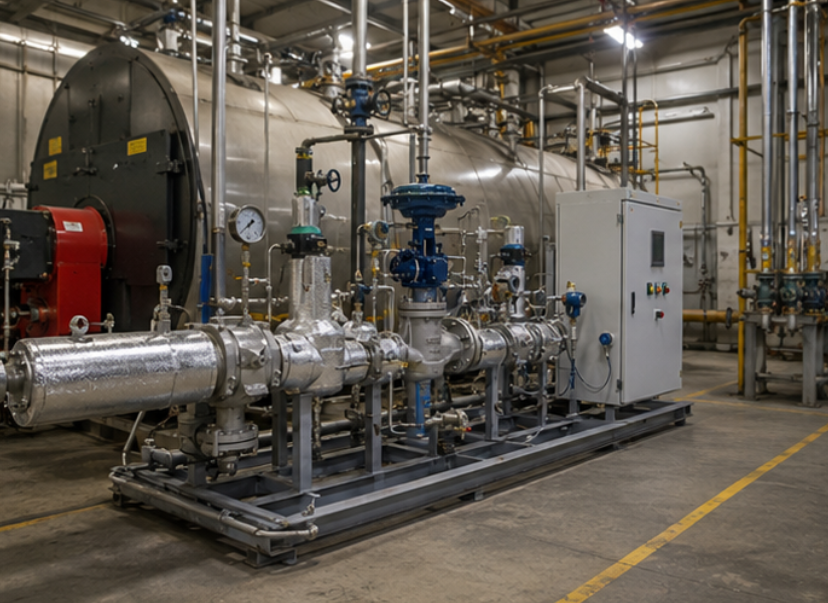
Typical Boiler Room Applications
Steam pressure reduction after boiler outlet
Steam supply for heat exchangers and heating systems
Utility steam distribution for industrial plants
Steam pressure control for process lines and production equipment
Boiler room steam systems for hotels, hospitals, factories, and industrial parks
Factory-assembled steam control skid packages for overseas projects
2. Key Parameters Needed Before Quotation
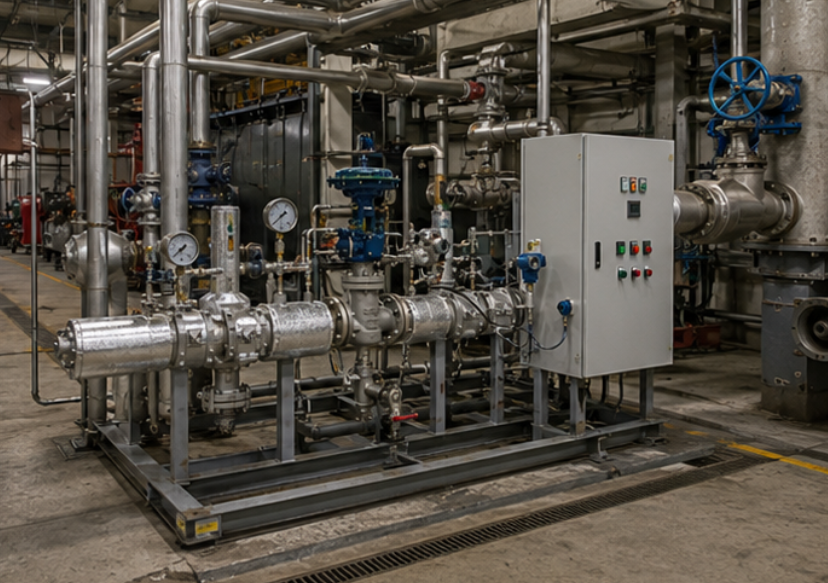
A steam pressure reducing skid should be selected according to real steam conditions, not only pipe size. The supplier needs to know inlet steam pressure, inlet steam temperature, required outlet pressure, minimum flow, normal flow, maximum flow, pipe size, downstream equipment, control accuracy, and site layout.
Boiler room steam demand may change during startup, standby, normal operation, and peak load. If the pressure reducing valve is oversized, it may cause pressure hunting and unstable control at low flow. If it is undersized, downstream equipment may not receive enough steam during peak demand.
Steam Skid Quotation Checklist
| Required Data | Why It Matters |
|---|---|
| Inlet Steam Pressure | Determines valve pressure class, pressure drop, and skid design basis. |
| Required Outlet Pressure | Matches the pressure required by downstream steam users. |
| Steam Temperature | Affects material selection, insulation, and whether desuperheating is needed. |
| Minimum / Normal / Maximum Flow | Ensures stable control under different boiler room operating loads. |
| Downstream Equipment | Affects control accuracy, response speed, safety protection, and drainage design. |
| Boiler Room Layout | Affects skid footprint, inlet/outlet direction, maintenance access, and installation space. |
3. Main Components Of A Steam Pressure Reducing Skid
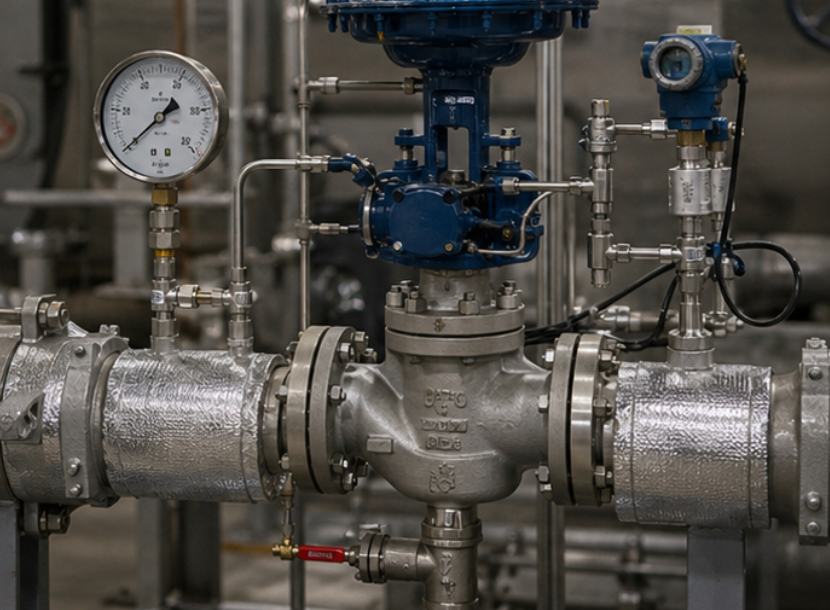
A complete steam pressure reducing skid for boiler room projects is usually more than a pressure reducing valve. It may include inlet isolation valve, strainer, pressure reducing control valve, actuator, positioner, safety valve, pressure gauges, pressure transmitters, drain valves, vent valves, bypass line, control cabinet, piping, pipe supports, and skid-mounted frame.
The strainer helps protect the valve from impurities. The control valve reduces and stabilizes steam pressure. The safety valve protects downstream equipment from overpressure. Drain valves help remove condensate during startup and operation. Instruments provide local indication, alarm output, and signal feedback for automatic control when required.
| Component | Function |
|---|---|
| Strainer | Removes impurities before steam enters the control valve. |
| Pressure Reducing Control Valve | Reduces high-pressure steam to the required outlet pressure. |
| Safety Valve | Protects downstream steam lines and equipment from overpressure. |
| Pressure Transmitter | Provides pressure feedback for monitoring, alarms, and automatic control. |
| Drain Valve | Removes condensate and helps reduce water hammer risk. |
| Control Cabinet | Supports local control, signal output, alarm logic, and plant system integration. |
4. Safety, Drainage, And Factory Testing Requirements
Steam systems must be designed with proper safety protection. Buyers should confirm safety valve sizing, set pressure, discharge direction, pressure transmitter location, alarm signal, emergency shutdown requirement, and downstream equipment pressure rating before ordering.
Drainage is also critical in steam pressure reducing systems. Condensate accumulation may cause water hammer, vibration, control valve damage, unstable pressure, and unsafe operation. The skid should include suitable drain points, vent points, pipe slope, and startup drainage arrangement.
A professional manufacturer should provide assembly inspection, pressure test, leak test, functional inspection, instrument check, FAT report when required, final inspection photos, P&ID, GA drawing, data sheets, manuals, and packing documents before shipment.
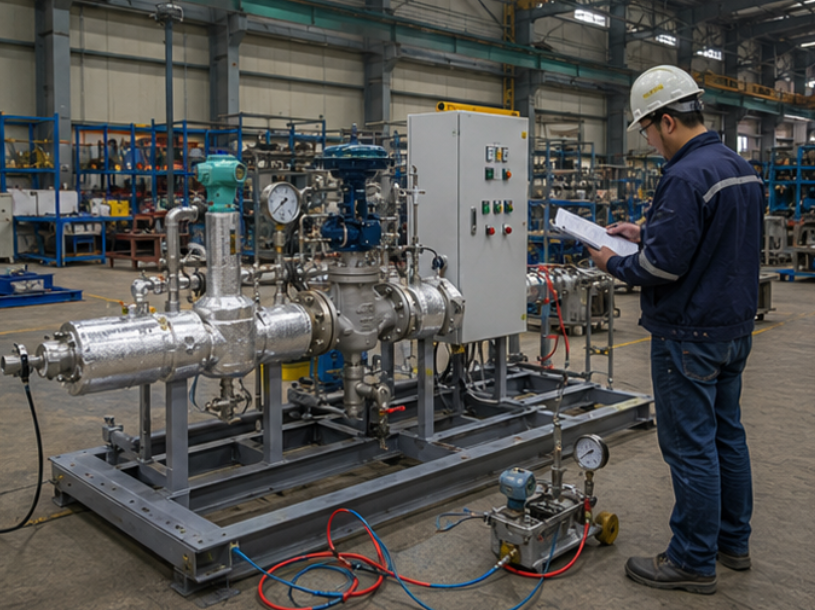
Safety And Testing Checklist
Confirm safety valve sizing and set pressure.
Review pressure reducing valve sizing and control range.
Check pressure transmitter and pressure gauge installation positions.
Confirm drain points, vent points, and condensate removal design.
Review control cabinet, alarm output, and PLC / DCS signal requirements.
Check skid footprint, inlet/outlet direction, and maintenance access.
Request pressure test, leak test, FAT report, and final inspection photos.
Confirm P&ID, GA drawing, valve data sheets, manuals, and packing documents.
5. Why Choose A Skid-Mounted Manufacturer For Boiler Room Projects
A skid-mounted steam pressure reducing system can be engineered, assembled, inspected, and tested before delivery. This helps reduce site welding, missing components, layout errors, installation delays, and commissioning uncertainty. It also makes project communication easier because the buyer can review drawings, component lists, photos, and test reports before shipment.
A qualified manufacturer should not only supply valves. The supplier should be able to review steam parameters, size the valve, design the skid layout, prepare drawings, arrange testing, provide documentation, support export packing, and offer technical communication for installation and commissioning.
Practical Tip
When comparing steam pressure reducing skid manufacturers, do not only compare the price of the valve. Check valve sizing, safety protection, drainage design, control system, factory testing, documentation, and engineering support.
Final Buyer Checklist
Provide inlet pressure, outlet pressure, steam temperature, and flow range.
Confirm downstream equipment and required pressure stability.
Review pressure reducing valve, safety valve, instruments, and control cabinet scope.
Check drainage design, vent arrangement, and condensate removal.
Confirm skid footprint, inlet/outlet direction, and maintenance access.
Request P&ID, GA drawing, component list, data sheets, and test reports.
Confirm FAT, packing method, lifting points, and delivery schedule.
Check supplier support for installation, commissioning, and spare parts.
Conclusion
A steam pressure reducing skid for boiler room projects should be designed according to real inlet pressure, outlet pressure, steam temperature, flow range, downstream equipment, safety requirements, drainage design, site layout, testing standards, and documentation needs.
For industrial buyers, choosing a qualified steam pressure reducing skid manufacturer can improve steam pressure stability, reduce installation risk, protect downstream equipment, and support reliable long-term boiler room operation.
FAQ
What is a steam pressure reducing skid?
It is a skid-mounted system used to reduce and stabilize steam pressure before steam enters downstream process equipment, heating lines, or utility systems.
What information is needed before quotation?
Buyers should provide inlet steam pressure, outlet pressure, steam temperature, steam flow range, downstream equipment, pipe size, control requirements, and boiler room layout.
Why is drainage important in steam pressure reducing systems?
Proper drainage helps remove condensate, reduce water hammer risk, protect valves and instruments, and improve long-term steam system reliability.
Can the steam pressure reducing system be skid-mounted?
Yes. A skid-mounted package can include valves, instruments, safety devices, drainage points, piping, control cabinet, testing, and documentation for easier installation and maintenance.
Need A Steam Pressure Reducing Skid For Your Boiler Room?
Send us your steam pressure, temperature, flow range, downstream equipment, control requirements, and boiler room layout. Our engineering team can help you review the working conditions and provide a suitable steam pressure reducing skid solution.
Get Quote Contact Us