



How To Choose A Gas Pressure Regulating Skid For Industrial Projects
2026-05-01 12:051. Start With The Real Working Conditions
Before selecting a gas pressure regulating skid, the first step is to confirm the actual working conditions of the project. Many procurement problems happen because the skid is quoted only by nominal pipe size or rough pressure data. For industrial applications, the supplier should understand the gas medium, inlet pressure, outlet pressure, flow rate, pressure fluctuation, temperature range, installation environment, operating mode, and required safety margin.
For example, a gas pressure regulating skid used in a city gas station is different from one used in a factory boiler room, LNG satellite station, petrochemical plant, or power generation project. The gas composition, flow stability, pressure drop, redundancy demand, and safety device configuration may all be different. If the working condition is not clearly confirmed, the skid may suffer from unstable outlet pressure, insufficient flow capacity, frequent regulator vibration, high noise, or unexpected shutdown.
A reliable selection process should begin with a technical requirement sheet. At minimum, the project team should provide inlet pressure range, required outlet pressure, maximum and minimum flow rate, gas type, design temperature, pipe connection standard, control accuracy requirement, and whether remote monitoring or automatic shutdown is needed.
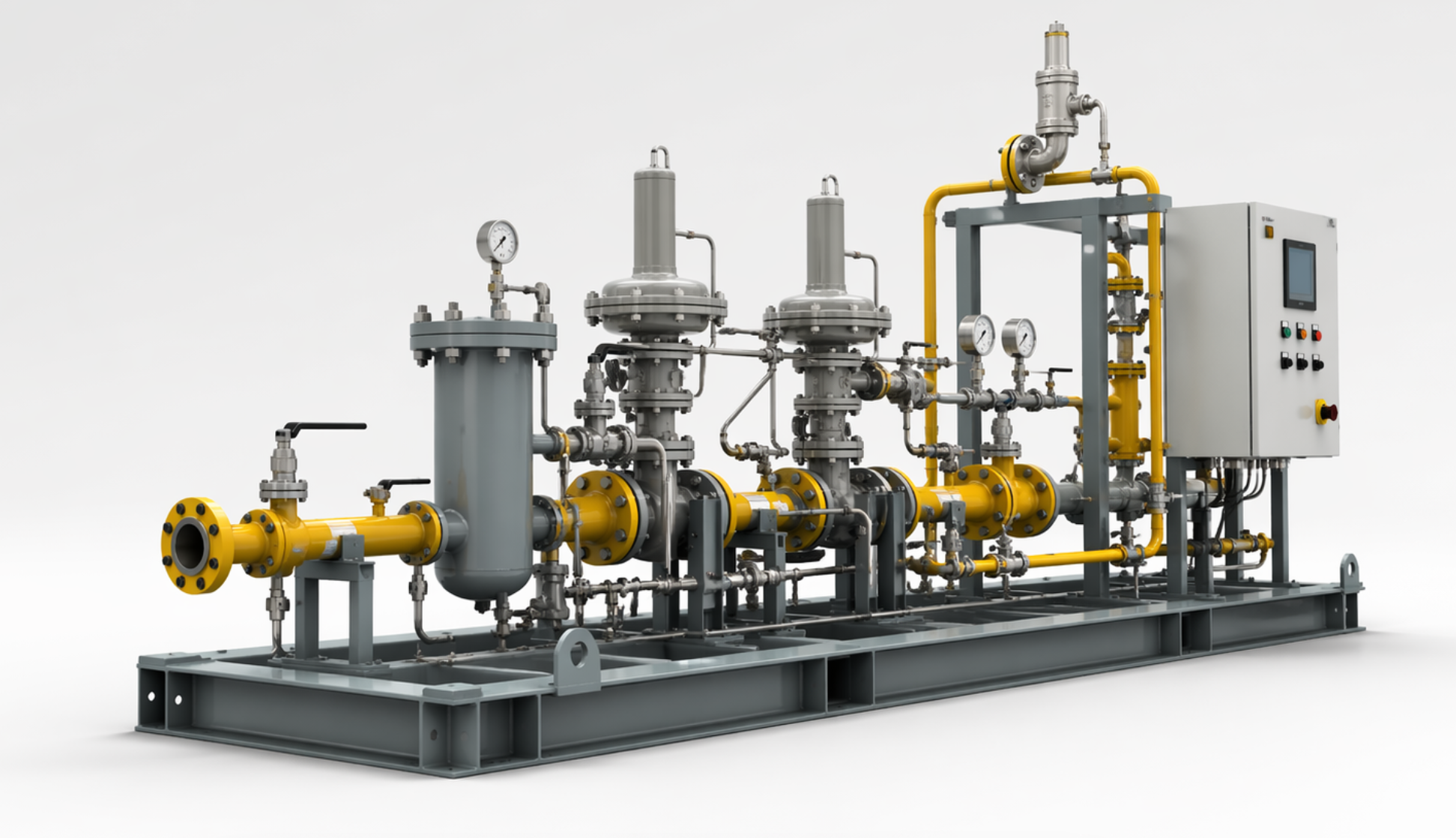
Key Data To Confirm Before Quotation
| Item | Why It Matters |
|---|---|
| Gas Medium | Determines material selection, sealing design, safety configuration, and filtration requirements. |
| Inlet Pressure Range | Affects regulator sizing, pressure rating, valve class, and safety relief design. |
| Outlet Pressure | Defines pressure control accuracy and downstream equipment protection. |
| Flow Rate | Ensures the skid can handle maximum demand without excessive pressure loss. |
| Installation Environment | Determines outdoor protection, anti-corrosion treatment, enclosure design, and instrument protection. |
2. Check The Main Configuration Of The Regulating Skid
A gas pressure regulating skid is not a single regulator installed on a pipe. It is usually a complete skid-mounted system that integrates filtering, pressure reduction, safety protection, flow measurement, pressure monitoring, shut-off control, bypass arrangement, and sometimes remote communication. For industrial projects, the configuration must match both operating requirements and safety requirements.
A typical gas pressure regulating skid may include inlet shut-off valve, filter separator, pressure regulator, safety relief valve, slam-shut valve, pressure gauges, temperature instruments, flow meter, bypass line, outlet shut-off valve, control cabinet, steel base frame, and connecting pipelines. For projects with high continuity requirements, a dual-line structure or one working line plus one standby line may be recommended.
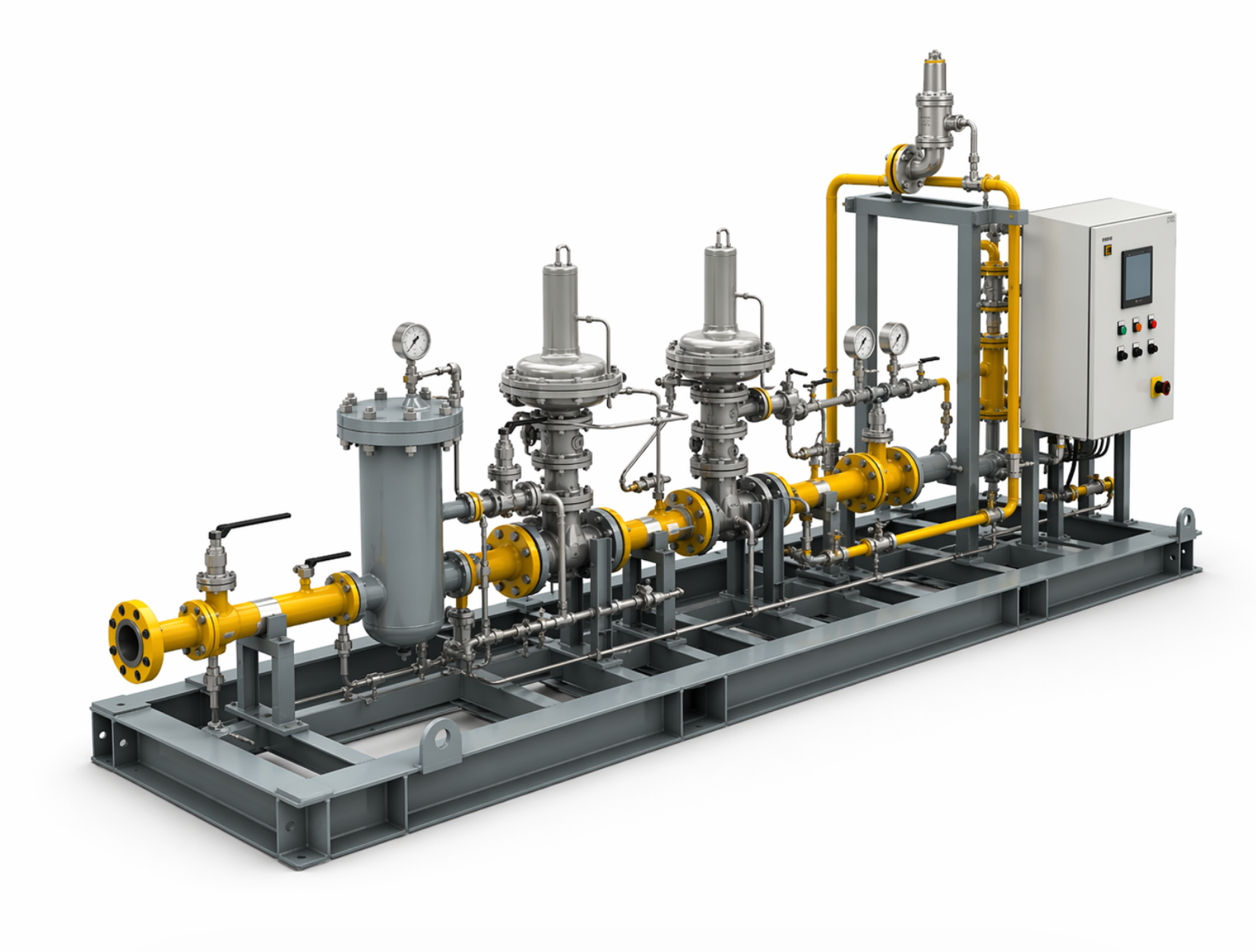
Common System Components
| Component | Function |
|---|---|
| Filter Separator | Removes solid particles and liquid impurities before pressure regulation. |
| Pressure Regulator | Reduces and stabilizes gas pressure according to downstream requirements. |
| Safety Shut-Off Valve | Cuts off gas supply when pressure exceeds or falls below the safe range. |
| Relief Valve | Releases excess pressure to protect the system and downstream equipment. |
| Pressure Gauges & Instruments | Allow operators to monitor inlet pressure, outlet pressure, and system status. |
| Control Cabinet | Supports automatic control, alarm output, signal transmission, and system monitoring. |
When reviewing a proposal, do not only check whether the supplier has listed these parts. You should also check the brand options, pressure rating, connection standard, material grade, maintenance space, drainage design, lifting design, and whether the skid layout is convenient for inspection and operation.
3. Compare Single-Line, Dual-Line, And Redundant Designs
The process design of the gas pressure regulating skid should match the importance of the gas supply system. For some small industrial users, a single-line regulating skid may be enough. For production lines, city gas stations, energy stations, and continuous-process plants, a dual-line or redundant design may be safer and more practical.
A single-line system has a simpler structure and lower initial cost, but maintenance may require shutdown. A dual-line system allows one line to operate while the other line is used as standby or maintenance line. A more advanced configuration can include automatic switching, pressure alarm, remote signal transmission, and emergency shut-off logic.
| Design Type | Best For | Main Advantage |
|---|---|---|
| Single-Line Design | Small or non-critical gas users | Lower cost and compact layout |
| Dual-Line Design | Industrial plants and utility stations | Better maintenance flexibility |
| One Working + One Standby | Continuous production projects | Improved gas supply reliability |
| Automatic Switching Design | High-safety or remote-control projects | Faster response and reduced manual operation |
4. Evaluate Safety, Testing, And Engineering Documentation
For industrial gas projects, safety is one of the most important selection factors. A low-cost skid may look similar from the outside, but the real difference appears in pressure protection logic, welding quality, leak testing, instrument calibration, material traceability, and factory acceptance testing.
A qualified gas pressure regulating skid should be designed with appropriate overpressure protection, emergency shut-off function, pressure monitoring points, venting or relief arrangement, and safe maintenance access. Before shipment, the system should pass pressure testing, leak testing, functional inspection, instrument checking, and visual inspection.
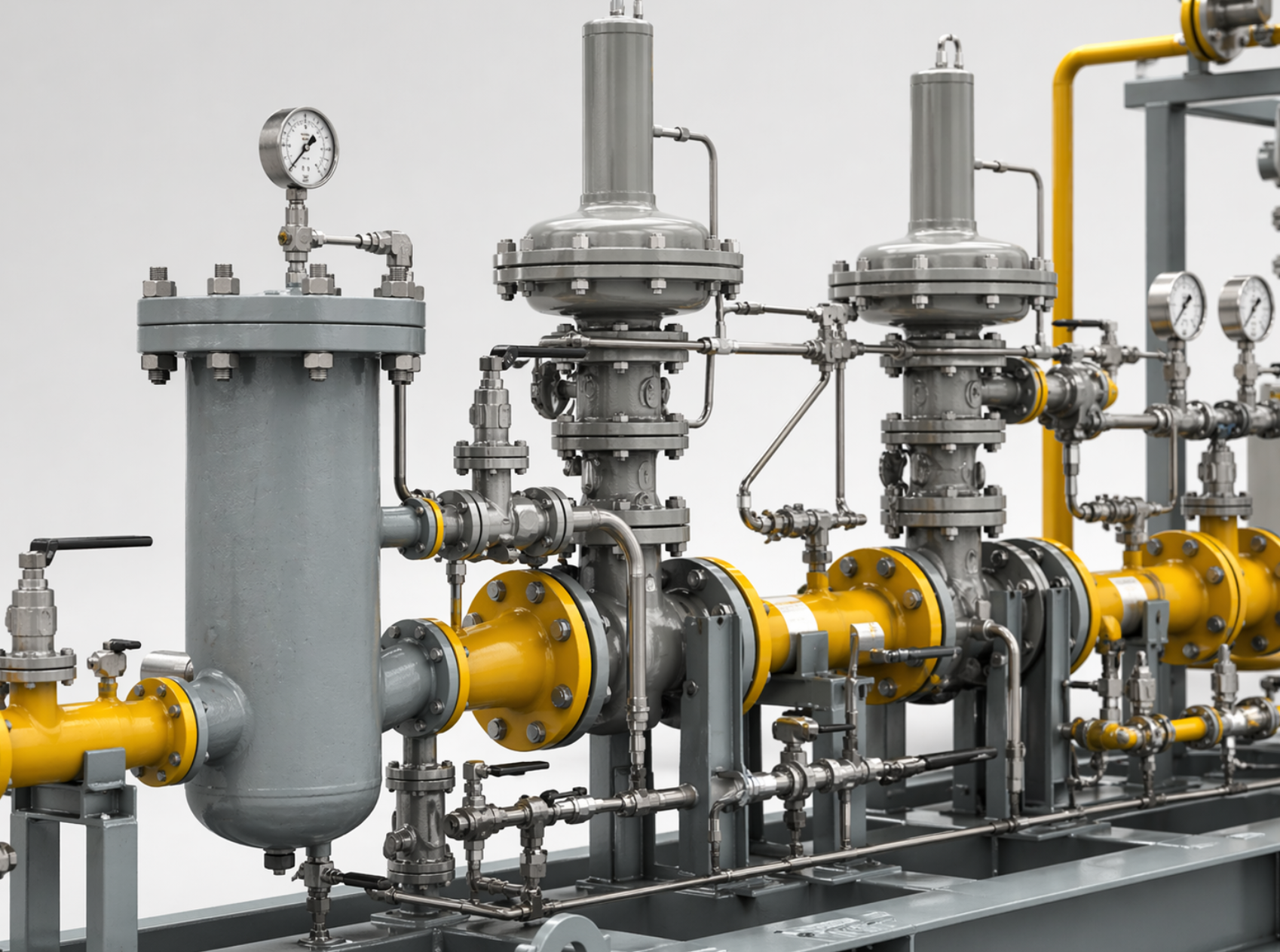
Documents You Should Request
General arrangement drawing
Piping and instrumentation diagram
Technical parameter sheet
Main component list
Material certificate when required
Pressure test report
Leak test report
Welding inspection record when applicable
Instrument calibration report when applicable
Operation and maintenance manual
These documents are important for project approval, installation, commissioning, maintenance, and future spare parts management. For overseas projects, clear documentation can also reduce communication cost between the project owner, contractor, installer, and end user.
5. Choose A Manufacturer With Real Custom Engineering Capability
A gas pressure regulating skid for industrial projects is usually customized. The manufacturer should not only provide standard equipment, but also support project-specific engineering. This includes process review, component selection, skid layout design, pipeline arrangement, control logic, fabrication, assembly, testing, and delivery.
When comparing different manufacturers, you should check whether they can understand your technical requirements, provide a clear proposal, design the skid according to actual site conditions, and support communication during project execution. A better supplier will ask questions about inlet and outlet pressure, flow rate, gas medium, control mode, installation space, safety requirements, and documentation needs before offering a final solution.
Price comparison is necessary, but it should not be the only standard. For industrial projects, the lowest price may lead to higher hidden cost if the skid requires modification after delivery, lacks proper testing, has poor maintenance access, or cannot meet the actual working condition.
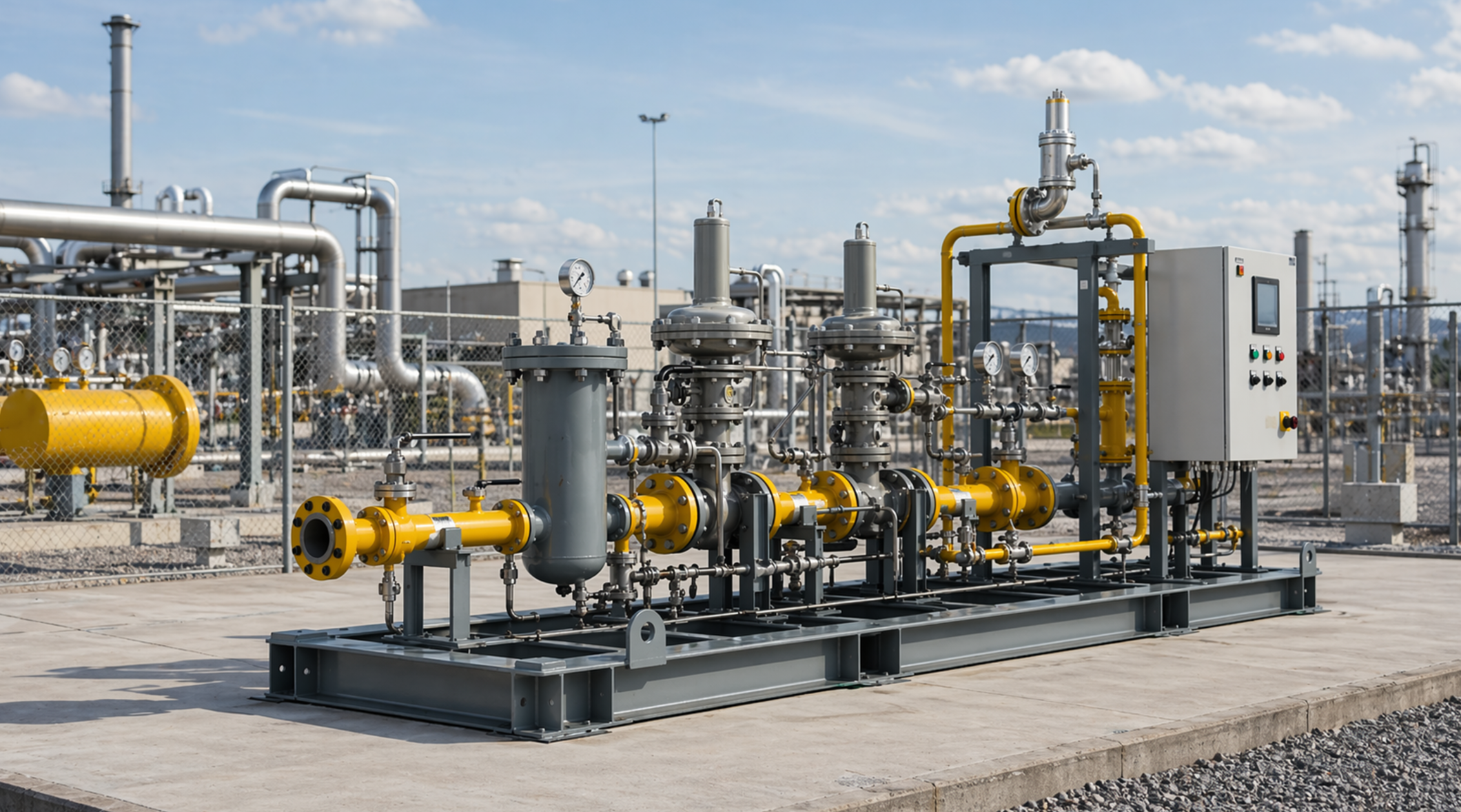
Practical Selection Tip
The best gas pressure regulating skid is not always the cheapest or the most complex one. It should be correctly sized, safely protected, easy to maintain, suitable for the installation environment, and supported by complete engineering documents.
FAQ: Gas Pressure Regulating Skid Selection
What is a gas pressure regulating skid?
It is a skid-mounted modular system used to reduce, stabilize, filter, monitor, and protect gas pressure in industrial gas supply systems.
What information is needed for quotation?
The main information includes gas medium, inlet pressure, outlet pressure, flow rate, temperature, pipe size, connection standard, control requirement, and installation environment.
Should I choose a single-line or dual-line skid?
A single-line skid is suitable for simple applications, while a dual-line or standby design is better for continuous production, utility stations, and projects where shutdown risk must be reduced.
Can the skid be customized?
Yes. Gas pressure regulating skids are commonly customized according to gas medium, pressure range, flow rate, site layout, control requirements, and project standards.
Why is factory testing important?
Factory testing helps confirm pressure resistance, leakage performance, instrument function, system assembly quality, and operating safety before shipment.
Need A Custom Gas Pressure Regulating Skid For Your Project?
Send us your gas medium, pressure range, flow rate, installation environment, and project requirements. Our engineering team can help you review the working condition and provide a customized skid-mounted gas pressure regulating solution.
Get Quote Contact Us