


Custom Skid-Mounted System For Energy And Utility Projects
2026-05-29 14:211. Why Energy And Utility Projects Need Custom Skid Systems
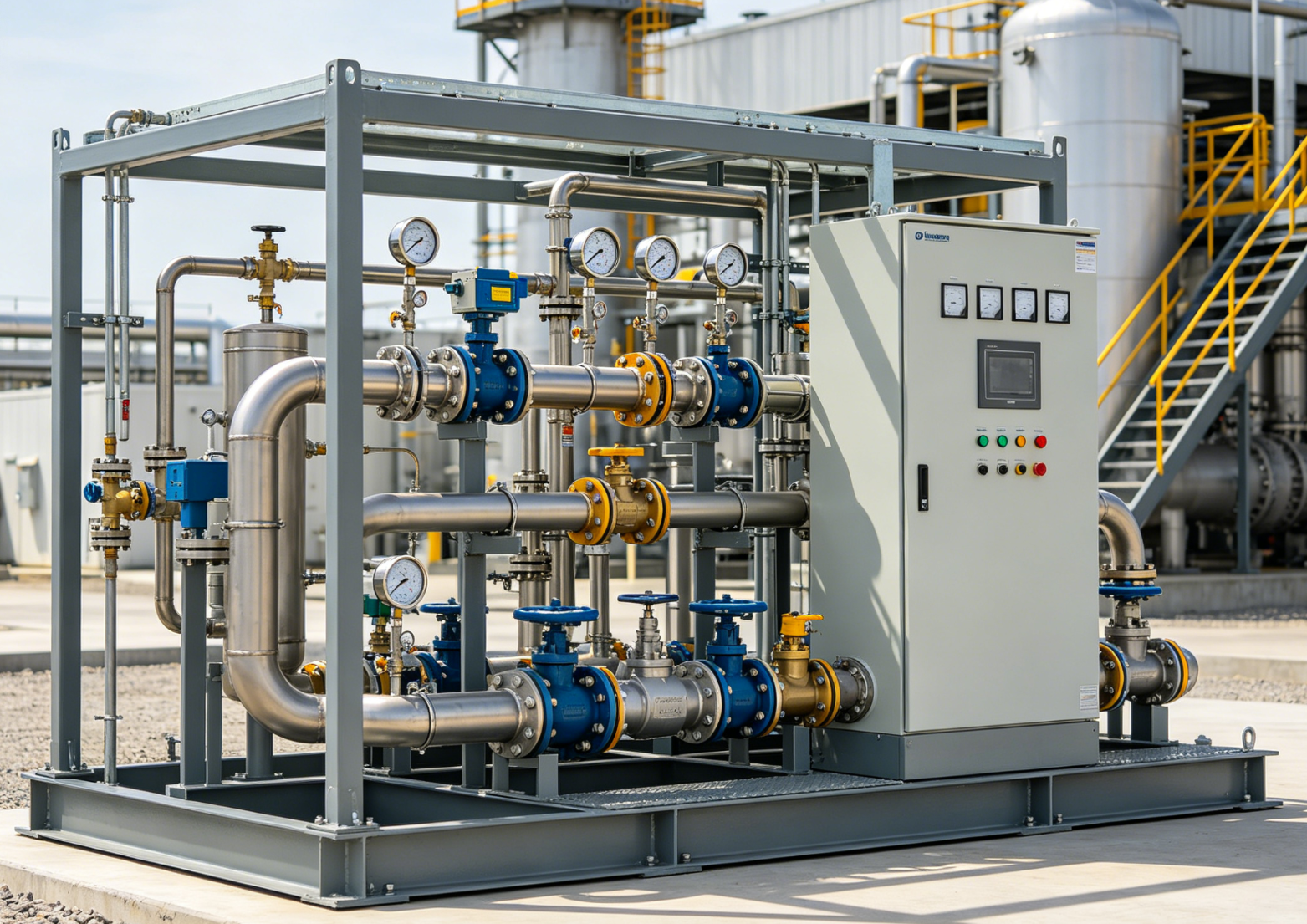
Energy and utility projects usually involve complex working conditions, multiple process interfaces, strict safety requirements, and limited installation schedules. Instead of purchasing separate valves, instruments, pipes, control cabinets, and accessories, many project owners prefer a skid-mounted system that can be engineered, assembled, tested, and delivered as a complete package.
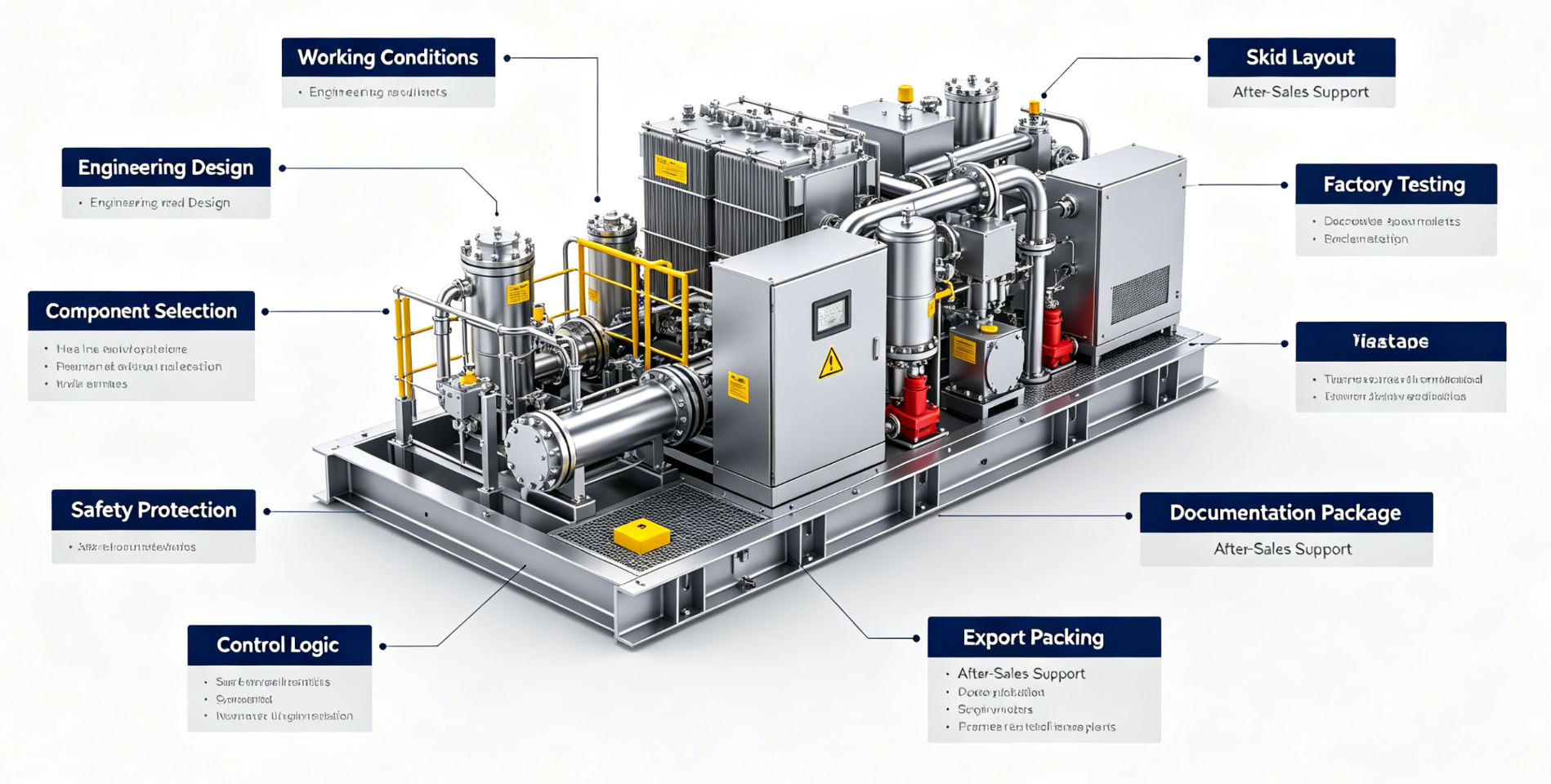
A custom skid-mounted system can be designed according to the project’s medium, pressure, temperature, flow rate, control logic, safety protection, site layout, and documentation standards. This helps avoid mismatched components, unclear scope of supply, site modification, and commissioning delays.
For overseas projects, skid-mounted delivery is especially useful because the buyer can review drawings, component lists, inspection reports, test records, final photos, and packing details before shipment.
Typical Application Areas
Gas pressure regulating systems for industrial fuel gas supply
Gas metering and regulating skids for natural gas stations
Steam pressure reducing systems for boiler rooms and utility networks
Steam pressure reducing and desuperheating systems for power plants
Custom utility skids for chemical, petrochemical, and manufacturing projects
Integrated filtration, monitoring, safety, and control packages
2. Key Project Data Required Before Skid Design
A custom skid-mounted system should not be designed only according to pipe size or a simple equipment list. The supplier needs to understand the complete working conditions and project requirements before selecting components and preparing drawings.
Buyers should provide medium type, inlet pressure, outlet pressure, operating temperature, flow range, process purpose, control requirements, safety requirements, connection standard, site layout, installation environment, and any project-specific standards. If the skid includes metering, required accuracy and calibration needs should also be confirmed. If the skid includes steam desuperheating, spray water conditions should be provided.
Complete project data helps the supplier design a more reliable skid system and avoids technical changes after production begins.
Custom Skid System Data Checklist
| Required Data | Why It Matters |
|---|---|
| Medium Type | Affects material selection, sealing, filtration, safety design, and instrument configuration. |
| Pressure And Temperature | Determines valve rating, pipe class, safety protection, and insulation requirements. |
| Flow Range | Ensures stable operation under minimum, normal, and maximum operating conditions. |
| Control Requirements | Defines control valve, actuator, transmitter, signal output, PLC / DCS interface, and alarm logic. |
| Site Layout | Affects skid footprint, inlet/outlet direction, lifting points, maintenance access, and installation space. |
3. Main Components Of A Custom Skid-Mounted System
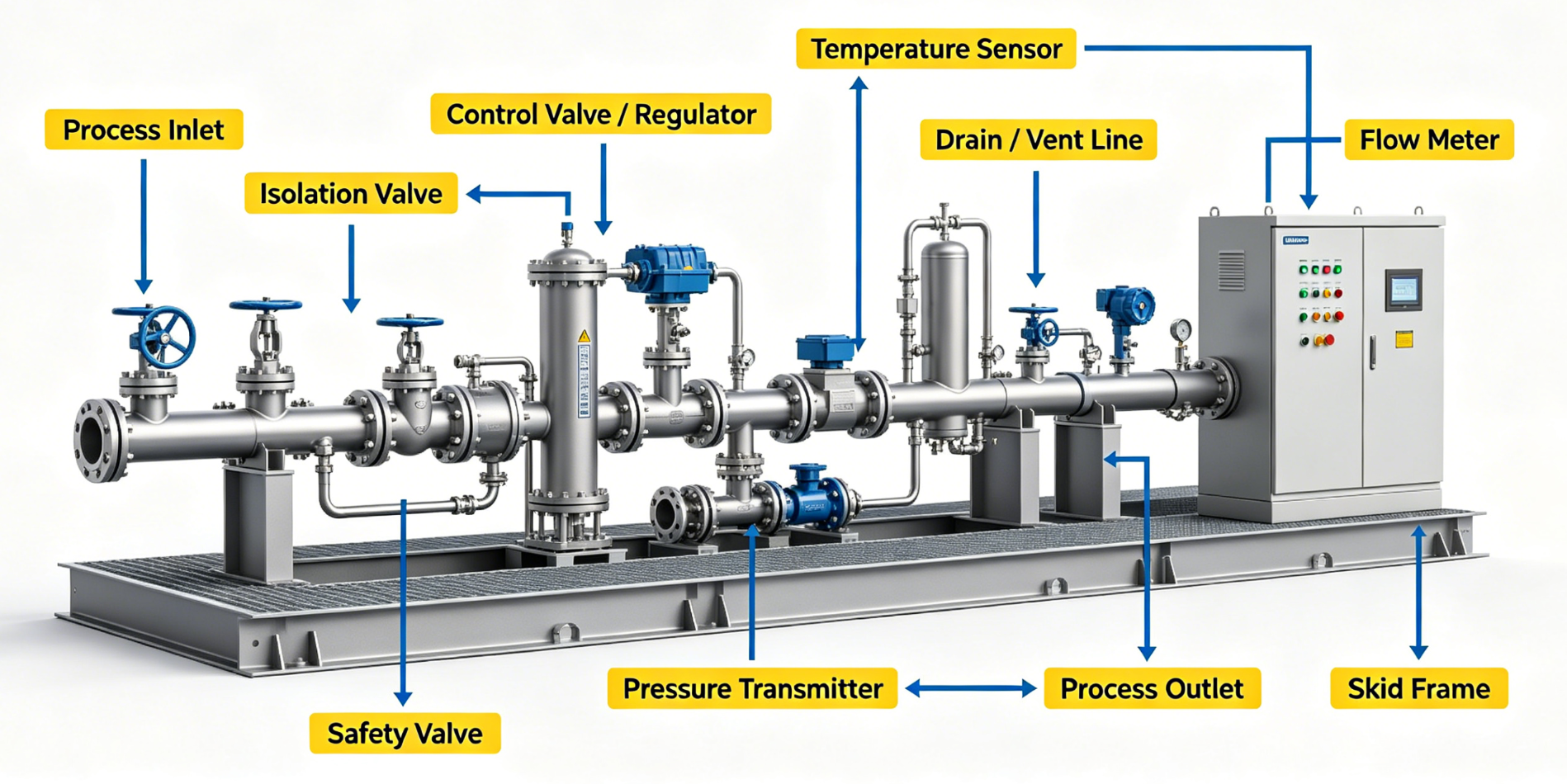
The configuration of a custom skid-mounted system depends on the project application. A gas skid may include filter separator, pressure regulator, safety shut-off valve, relief valve, flow meter, pressure transmitter, gas leak detector, and control cabinet. A steam skid may include pressure reducing control valve, safety valve, desuperheater, spray water control valve, drain valves, temperature sensors, and control system.
For utility projects, the skid should be designed as a complete system instead of a collection of loose components. The supplier should review process flow, component compatibility, safety logic, maintenance access, testing method, and final documentation together.
Buyers should compare supplier proposals by complete scope of supply, not only by the final price. Important items such as instruments, safety devices, control cabinet, testing, drawings, manuals, and packing may be excluded from lower quotations.
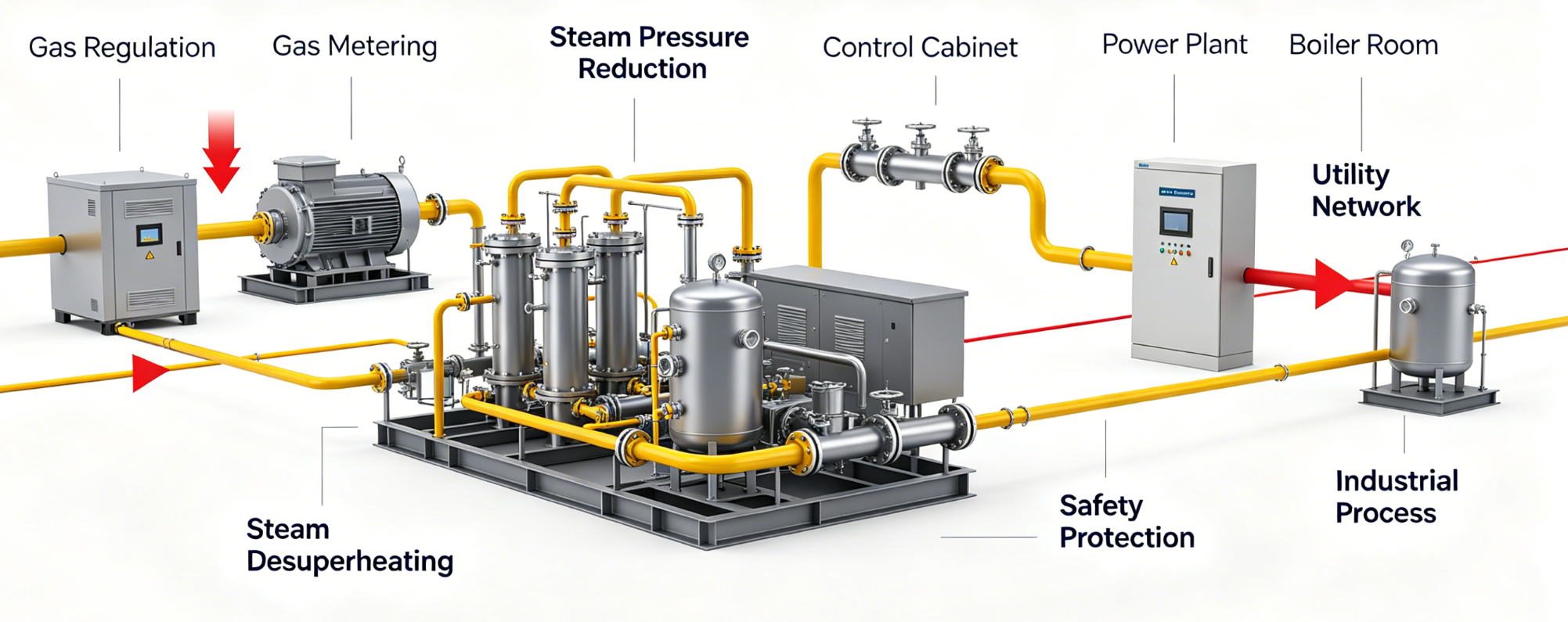
| System Section | Typical Components |
|---|---|
| Process Control Section | Control valves, regulators, actuators, positioners, flow meters, and transmitters. |
| Safety Protection Section | Safety valves, shut-off valves, relief valves, alarms, emergency isolation, and interlock logic. |
| Instrumentation Section | Pressure gauges, pressure transmitters, temperature sensors, flow instruments, and local displays. |
| Control And Electrical Section | Control cabinet, terminal box, wiring, signal output, PLC / DCS / SCADA interface. |
| Mechanical Structure | Piping, pipe supports, skid frame, lifting points, drainage, venting, and maintenance access. |
4. Engineering, Safety, And Layout Considerations
Custom skid systems must be engineered according to real project conditions. Safety devices should be selected according to pressure protection requirements, medium properties, operating risk, and downstream equipment protection. Instruments should be installed in suitable positions to provide accurate and stable feedback.
Layout is also important. The skid should provide enough space for valve operation, filter maintenance, instrument calibration, control cabinet access, drain operation, and future inspection. Inlet and outlet direction, skid footprint, lifting points, foundation requirements, and transportation limits should be confirmed before fabrication.
For outdoor utility projects, buyers should also confirm weather protection, corrosion protection, enclosure rating, insulation, electrical safety, and project-specific standards.
Engineering And Safety Checklist
Confirm pressure protection and safety device configuration.
Review control valve, regulator, flow meter, and instrument selection.
Check PLC / DCS / SCADA signal requirements and alarm logic.
Confirm drainage, venting, bypass, and emergency shut-off requirements.
Review skid footprint, inlet/outlet direction, and maintenance access.
Check corrosion protection, insulation, and outdoor installation conditions.
Confirm hazardous area or explosion-proof requirements if applicable.
Define FAT, pressure test, leak test, and final documentation scope.
5. Testing, Documentation, And Project Delivery Support
Testing and documentation are critical for custom skid-mounted systems. Before shipment, the supplier should complete assembly inspection, pressure test, leak test, functional inspection, instrument check, control cabinet inspection, and final visual inspection according to the agreed inspection and test plan.
Buyers should request P&ID, general arrangement drawing, main component list, valve data sheets, instrument data sheets, wiring diagram when applicable, test reports, FAT records, operation manual, maintenance instructions, packing list, and final inspection photos.
A complete document package helps the buyer, contractor, installer, and end user reduce communication errors and supports installation, commissioning, operation, troubleshooting, and future spare parts management.
Practical Tip
For energy and utility projects, buyers should compare custom skid suppliers by engineering capability, complete scope of supply, testing ability, documentation support, and project delivery experience, not price alone.
Final Buyer Checklist
Provide medium, pressure, temperature, flow range, and process purpose.
Confirm safety protection, control logic, and signal output requirements.
Review main components, instruments, valves, control cabinet, and skid frame scope.
Confirm skid footprint, interface direction, maintenance access, and installation environment.
Request P&ID, GA drawing, data sheets, manuals, and test reports.
Confirm pressure test, leak test, functional inspection, and FAT requirements.
Review packing method, lifting points, shipping protection, and delivery documents.
Check supplier support for installation, commissioning, spare parts, and after-sales communication.
Conclusion
A custom skid-mounted system for energy and utility projects should be designed according to real working conditions, process requirements, safety logic, control needs, site layout, testing standards, and documentation requirements. It is not only an equipment package, but an engineered solution for reliable project operation.
For industrial buyers, choosing a qualified skid system supplier can reduce project risk, simplify installation, improve quality control, and support long-term operation and maintenance for gas, steam, energy, and utility systems.
FAQ
What is a custom skid-mounted system?
It is a factory-assembled modular system that integrates valves, instruments, piping, safety devices, control cabinet, and steel frame according to specific project requirements.
What information is needed before quotation?
Buyers should provide medium type, pressure, temperature, flow range, process purpose, control requirements, safety requirements, connection standard, site layout, and project standards.
Can the skid system include both mechanical and control parts?
Yes. A custom skid can include piping, valves, instruments, safety devices, control cabinet, signal output, alarms, and PLC / DCS / SCADA interface when required.
Why choose skid-mounted design for energy and utility projects?
Skid-mounted design reduces site installation work, improves factory quality control, supports pre-shipment testing, and makes operation and maintenance easier.
Need A Custom Skid-Mounted System For Your Project?
Related product and article resources
For procurement comparison and technical evaluation, readers can continue with these related product pages and supporting articles.
- Products
- Product catalog
- Contact the sales team
- Contact us
- 3D Printing in Skid Component Prototyping
- 7 Strategic Advantages of Mature LNG Skid-Mounted Stations Revolutionizing Energy Infrastructure
- A Look Inside Shenqi's Factory: Quality Control in Skid Module Manufacturing
- Advantages of GAS PRESSURE REGULATING SKIDS
Send us your medium, pressure, temperature, flow range, process application, control requirements, and site layout. Our engineering team can help you review the working conditions and provide a suitable custom skid-mounted system solution.
Get Quote Contact Us