


Custom Skid-Mounted System Manufacturer For Energy And Utility Projects
2026-06-07 17:28Send Your Project Parameters For A Custom Skid Quote
To design a suitable skid-mounted system, please provide medium type, pressure, temperature, flow range, process purpose, control requirements, safety requirements, site layout, connection standard, and project documentation needs.
1. Why Energy And Utility Projects Need Custom Skid-Mounted Systems
Energy and utility projects usually involve different media, pressure levels, process interfaces, safety requirements, and installation conditions. If valves, instruments, pipes, control cabinets, and accessories are purchased separately, the project may face layout conflicts, missing components, site modification, wiring confusion, and commissioning delays.
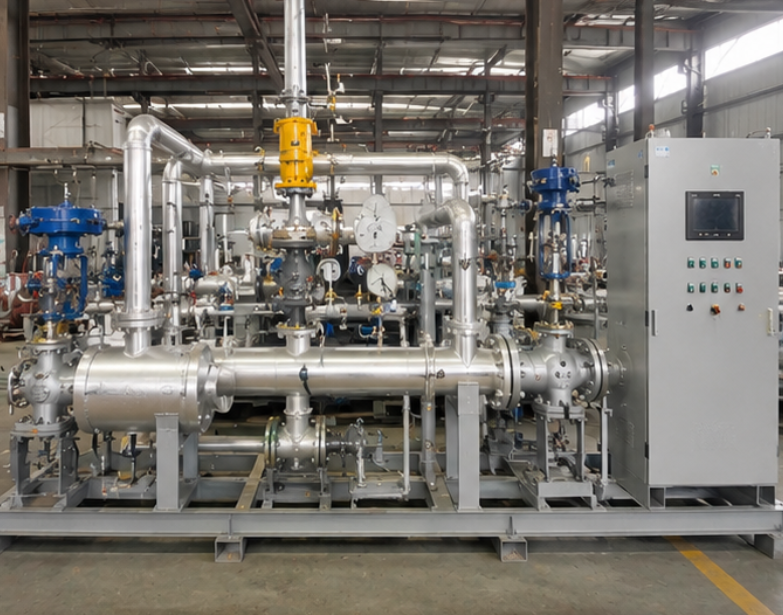
A custom skid-mounted system allows the main functional sections to be engineered, assembled, inspected, and tested before delivery. This helps project owners reduce site work, improve equipment integration, and make installation more predictable.
For overseas projects, skid-mounted delivery is especially valuable because buyers can review drawings, component lists, inspection reports, test records, final photos, and packing details before shipment.
Typical Application Areas
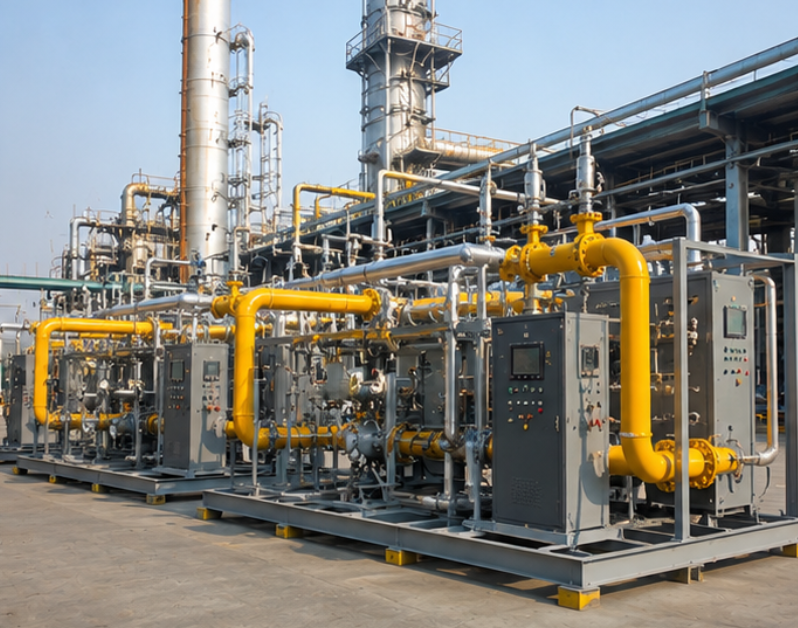
Gas pressure regulating skids for industrial fuel gas systems
Natural gas metering and regulating skids for gas station projects
Steam pressure reducing skids for boiler rooms and utility networks
Steam PRDS systems for pressure and temperature control
LNG satellite station gas regulating skid packages
Custom process and utility skid systems for chemical, petrochemical, and power plant projects
2. Key Project Data Needed Before Custom Skid Design
A custom skid-mounted system should not be quoted only by equipment name or pipe size. The supplier needs to understand the complete working conditions, process function, site interface, control logic, and safety requirements before preparing a reliable proposal.
For gas systems, buyers should provide gas medium, inlet pressure, outlet pressure, flow range, safety devices, and control requirements. For steam systems, buyers should provide inlet pressure, outlet pressure, steam temperature, flow range, desuperheating requirement, drainage design, and downstream application. For metering systems, accuracy, calibration, and signal output should also be confirmed.
Custom Skid Quotation Checklist
| Required Data | Why It Matters |
|---|---|
| Medium Type | Affects material selection, sealing, filtration, safety design, and instrument configuration. |
| Pressure And Temperature | Determines valve rating, pipe class, insulation, protection method, and testing requirements. |
| Minimum / Normal / Maximum Flow | Ensures stable operation across real project load conditions. |
| Control Requirements | Defines control valve, actuator, transmitter, signal output, PLC / DCS interface, and alarm logic. |
| Site Layout | Affects skid footprint, inlet/outlet direction, lifting points, maintenance access, and installation space. |
| Testing And Documentation | Defines FAT, pressure test, leak test, data sheets, manuals, and final delivery documents. |
3. What Can Be Included In A Custom Skid-Mounted System
The configuration of a custom skid-mounted system depends on the project purpose. A gas skid may include filter separator, pressure regulator, safety shut-off valve, relief valve, flow meter, pressure transmitter, gas leak detection interface, and control cabinet. A steam skid may include pressure reducing valve, safety valve, desuperheater, spray water control valve, drain valves, temperature sensors, and control system.
A complete skid system should be designed as an integrated package instead of a collection of loose components. The supplier should review process flow, safety protection, instrument positions, maintenance access, control logic, factory testing, and final documentation together.

| System Section | Common Components |
|---|---|
| Process Control Section | Control valves, regulators, flow meters, actuators, positioners, and transmitters. |
| Safety Protection Section | Safety valves, shut-off valves, relief valves, emergency isolation, alarms, and interlock logic. |
| Instrumentation Section | Pressure gauges, pressure transmitters, temperature sensors, flow instruments, and local displays. |
| Control And Electrical Section | Control cabinet, terminal box, wiring, signal output, PLC / DCS / SCADA interface. |
| Mechanical Structure | Piping, pipe supports, skid frame, lifting points, drainage, venting, and maintenance access. |
4. Engineering, Safety, Testing, And Documentation
Custom skid-mounted systems must be engineered according to real site conditions. Safety devices should be selected according to pressure protection requirements, medium properties, operating risks, and downstream equipment protection. Instruments should be installed in suitable positions to provide stable and useful feedback.
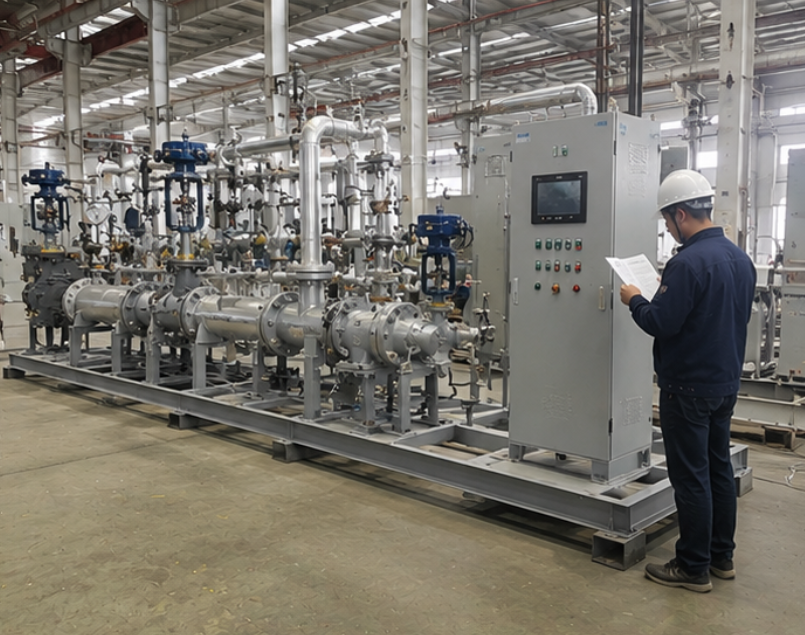
Testing and documentation are also important. A professional manufacturer should provide assembly inspection, pressure test, leak test, functional inspection, instrument check, control cabinet inspection, FAT report when required, final inspection photos, drawings, data sheets, manuals, and packing documents.
Engineering And Delivery Checklist
Confirm process medium, pressure, temperature, and flow range.
Review valve, regulator, flow meter, and instrument selection.
Check safety valve, shut-off valve, relief protection, and emergency logic.
Confirm control cabinet, signal output, and PLC / DCS / SCADA interface.
Review skid footprint, inlet/outlet direction, and maintenance access.
Confirm pressure test, leak test, FAT, and inspection report requirements.
Request P&ID, GA drawing, component list, data sheets, manuals, and packing documents.
Check supplier support for installation, commissioning, spare parts, and after-sales communication.
5. How To Compare Custom Skid-Mounted System Manufacturers
When comparing custom skid-mounted system manufacturers, buyers should not only compare the final price. A lower quotation may exclude instruments, safety devices, control cabinet, testing, drawings, documentation, packing, or engineering support. These missing items can increase project risk later.
A reliable manufacturer should understand working conditions, provide clear scope of supply, support engineering communication, prepare layout drawings, assemble the skid properly, complete factory testing, and provide useful documents for installation and operation.
Practical Tip
For energy and utility projects, the right skid supplier is not just a fabricator. The supplier should help buyers convert working conditions into an engineered package with clear drawings, components, safety logic, testing, documentation, and delivery support.
Final Supplier Evaluation Checklist
Can the supplier review project parameters before quotation?
Is the scope of supply clear and complete?
Are major valves, instruments, and safety devices clearly listed?
Can the supplier provide P&ID and general arrangement drawing?
Are pressure test, leak test, FAT, and inspection photos included?
Are manuals, data sheets, packing list, and delivery documents provided?
Does the supplier support custom layout and site interface requirements?
Can the supplier provide after-sales communication for installation and commissioning?
Conclusion
A custom skid-mounted system for energy and utility projects should be designed according to real working conditions, process requirements, safety logic, control needs, site layout, testing standards, and documentation requirements.
For industrial buyers, choosing a qualified custom skid-mounted system manufacturer can reduce project risk, simplify installation, improve quality control, and support long-term operation for gas, steam, energy, and utility systems.
FAQ
What is a custom skid-mounted system?
It is a factory-assembled modular system that integrates valves, instruments, piping, safety devices, control cabinet, and steel frame according to specific project requirements.
What information is needed before quotation?
Buyers should provide medium type, pressure, temperature, flow range, process purpose, control requirements, safety requirements, connection standard, site layout, and project standards.
Can one skid include mechanical and control parts?
Yes. A custom skid can include piping, valves, instruments, safety devices, control cabinet, signal output, alarms, and PLC / DCS / SCADA interface when required.
Why choose skid-mounted design for energy projects?
Skid-mounted design reduces site installation work, improves factory quality control, supports pre-shipment testing, and makes operation and maintenance easier.
Need A Custom Skid-Mounted System For Your Project?
Related product and article resources
For procurement comparison and technical evaluation, readers can continue with these related product pages and supporting articles.
- Products
- Product catalog
- Contact the sales team
- Contact us
- 3D Printing in Skid Component Prototyping
- 7 Strategic Advantages of Mature LNG Skid-Mounted Stations Revolutionizing Energy Infrastructure
- A Look Inside Shenqi's Factory: Quality Control in Skid Module Manufacturing
- Advantages of GAS PRESSURE REGULATING SKIDS
Send us your medium, pressure, temperature, flow range, process application, control requirements, and site layout. Our engineering team can help you provide a suitable custom skid-mounted system solution.
Get Quote Contact Us