

Why Custom Skid Systems Fail During Site Commissioning
2026-07-09 17:07Need A Custom Skid System That Commissions Smoothly?
Send us your medium type, pressure, temperature, flow range, site layout, connection standard, control signals, safety requirements, testing scope, and documentation needs. Our engineering team can help review the working conditions and provide a suitable custom skid-mounted system solution.
1. Why Commissioning Failure Happens Even With Factory-Built Skids
A skid-mounted system is assembled in a factory, but it must still connect to a real project site. If the site conditions are different from the design basis, commissioning problems can appear after installation. These problems may include pressure instability, leakage, wrong signal feedback, valve hunting, flow shortage, alarms, safety device trips, or failure to meet downstream process requirements.
For gas skids, steam skids, PRDS systems, LNG station skids, metering skids, and utility skids, commissioning success depends on both factory quality and project interface accuracy. The skid must match the real medium, pressure, flow, temperature, control logic, power supply, piping direction, foundation, and downstream equipment.
A good skid supplier should not only fabricate equipment. The supplier should help buyers review working conditions, interface drawings, component selection, testing scope, packing, installation documents, and commissioning support before shipment.
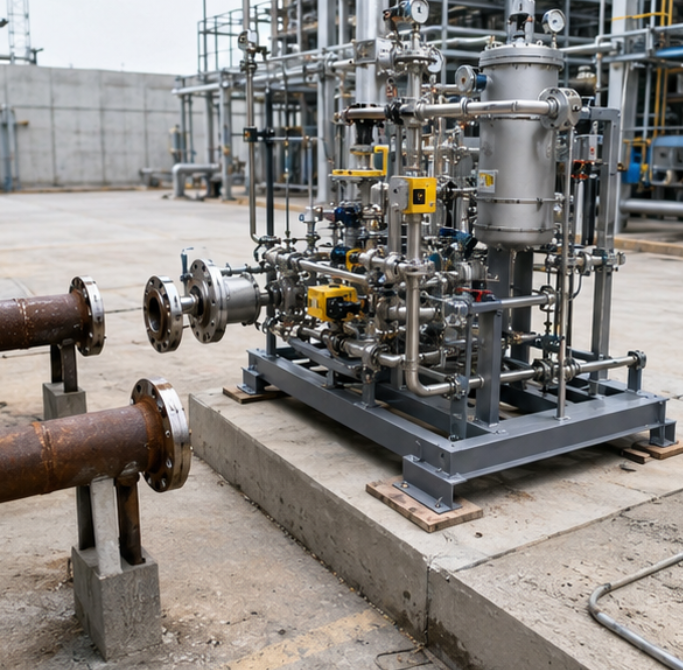
Common Commissioning Failure Symptoms
Skid inlet or outlet does not match site piping direction.
Pressure cannot stabilize after startup.
Flow capacity is lower than the project requirement.
Valve actuator or transmitter signal does not match the site control system.
Safety valve, shut-off valve, or alarm logic trips unexpectedly.
Operators cannot commission the skid because drawings, manuals, or wiring details are incomplete.
2. Main Reasons Custom Skid Systems Fail During Commissioning
Most commissioning failures are caused by missing information before manufacturing. If working conditions, control interface, site layout, and downstream requirements are not confirmed clearly, the skid may pass basic factory inspection but still fail at site.
Troubleshooting Table
| Possible Cause | Typical Commissioning Problem | What To Check |
|---|---|---|
| Incomplete Working Conditions | Valves, instruments, or pipes do not match real operation. | Medium, pressure, temperature, minimum / normal / maximum flow. |
| Wrong Site Interface | Inlet, outlet, flange, elevation, or skid footprint does not match site. | GA drawing, foundation drawing, connection standard, pipe direction. |
| Control Signal Mismatch | Actuator, transmitter, or control cabinet cannot communicate with site system. | 4-20mA, Modbus, PLC, DCS, power supply, alarm output. |
| Valve Or Regulator Sizing Error | Pressure hunting, low flow, noise, vibration, or unstable control. | Real flow range, pressure drop, load changes, turndown range. |
| Insufficient Factory Testing | Problems are discovered only after delivery. | Pressure test, leak test, functional test, control test, FAT scope. |
| Incomplete Documentation | Site team cannot install, wire, operate, or maintain the skid correctly. | P&ID, GA drawing, wiring diagram, manual, data sheets, test reports. |
3. Site Interface Mistakes Are A Major Hidden Risk
Many custom skid systems are delayed during commissioning because the physical interface does not match the site. The skid may be technically correct, but the inlet and outlet direction may be wrong, flange standard may not match, connection elevation may be different, or maintenance space may be too small.
In overseas projects, these mistakes are expensive because site modification takes time and may require local contractors, welding, new pipe supports, new foundations, or additional customs delays for replacement parts.
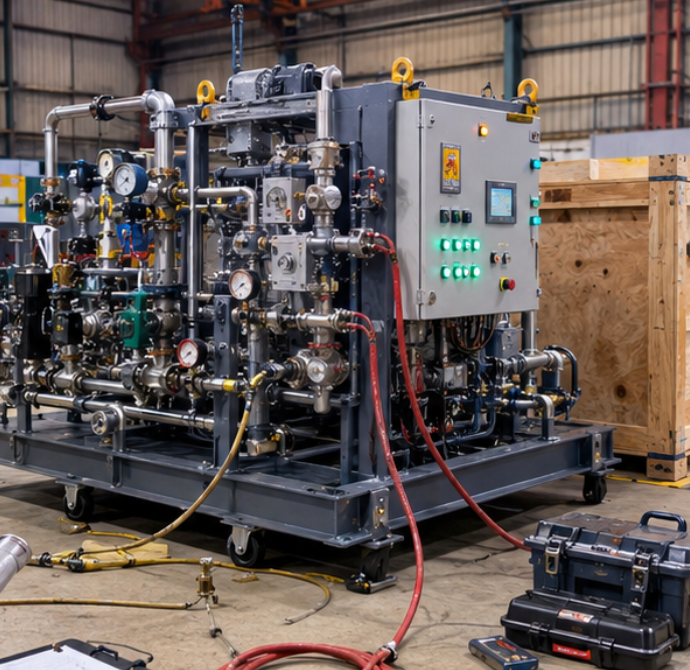
Site Interface Checklist
Skid footprint and available installation space.
Inlet and outlet direction.
Pipe elevation and flange connection standard.
Foundation bolt position and skid base dimensions.
Maintenance space for filters, valves, instruments, and control cabinet.
Lifting points, transportation route, and unloading method.
4. Control And Instrument Signal Problems Delay Commissioning
A custom skid may include pressure transmitters, temperature sensors, flow meters, valve actuators, positioners, safety shut-off valves, control cabinet, alarm outputs, and PLC / DCS / SCADA interface. If signal type and wiring are not confirmed before manufacturing, commissioning may stop at the electrical and control stage.
For example, the site may require 4-20mA signal, but the supplied instrument may have a different output. The actuator may require different power supply. Alarm logic may not match the plant control system. These are not small details; they directly affect startup success.
Control Interface Checklist
Instrument signal type and range.
Actuator power supply and control signal.
PLC / DCS / SCADA communication requirement.
Alarm output, interlock logic, and emergency shutdown signal.
Control cabinet wiring diagram and terminal list.
Local control, remote control, and manual operation mode.
5. Factory Testing Should Match Real Commissioning Needs
Factory testing should not stop at visual inspection. For custom skid systems, factory testing can include dimensional inspection, pressure test, leak test, valve operation test, instrument signal check, control cabinet inspection, alarm simulation, functional test, and FAT when required.
If factory testing is too limited, problems may only be found after site installation. At that point, correction becomes much harder and more expensive. Testing scope should be agreed before manufacturing, especially for gas skids, steam PRDS skids, LNG station skids, and automated utility systems.
Factory Testing Checklist
Dimensional inspection against GA drawing.
Pressure test and leak test.
Valve operation and actuator response test.
Pressure, temperature, and flow instrument signal check.
Control cabinet wiring and terminal inspection.
Alarm simulation and interlock logic test.
Final inspection photos and test reports before shipment.
6. How To Reduce Custom Skid Commissioning Failure Risk
To reduce commissioning failure, buyers should provide complete working conditions and site interface information before quotation. The supplier should confirm design basis, component selection, P&ID, GA drawing, control interface, safety logic, testing scope, packing method, and documentation before production.
A reliable custom skid-mounted system should be treated as an engineered package, not a collection of valves and pipes. It should be designed for actual operation, tested before delivery, and supported with clear documents for site installation and commissioning.
Practical Tip
If a custom skid fails during commissioning, do not only blame fabrication. Check whether working conditions, site interface, control signals, testing scope, and documentation were clearly confirmed before production.
Pre-Commissioning Review Checklist
Confirm real medium, pressure, temperature, and flow range.
Review P&ID and general arrangement drawing before manufacturing.
Confirm site piping direction, elevation, and connection standard.
Check valve, regulator, flow meter, and instrument selection.
Confirm control signal, power supply, alarm logic, and wiring details.
Agree pressure test, leak test, functional test, and FAT scope.
Request complete data sheets, manuals, wiring diagrams, and test reports.
Prepare site installation and commissioning plan before shipment arrives.
Conclusion
Custom skid systems may fail during site commissioning because of incomplete working conditions, wrong site interface, control signal mismatch, valve sizing errors, missing safety logic, insufficient factory testing, or incomplete documentation.
A successful skid-mounted system project should combine accurate engineering input, clear drawings, proper component selection, complete testing, useful documentation, and commissioning support before the skid reaches the site.
FAQ
Why do custom skid systems fail during commissioning?
Common reasons include incomplete working conditions, wrong site interface, control signal mismatch, valve sizing errors, insufficient testing, and incomplete documentation.
Can a skid pass factory inspection but fail at site?
Yes. If factory testing does not simulate real site conditions or if site interface data is wrong, the skid may still face commissioning problems after installation.
What documents are important for commissioning?
Important documents include P&ID, GA drawing, component list, data sheets, wiring diagram, terminal list, operation manual, test reports, and FAT documents if required.
How can commissioning risk be reduced?
Commissioning risk can be reduced by confirming working conditions, site interface, control signals, testing scope, safety logic, documentation, and installation requirements before manufacturing.
Need A Custom Skid System For Your Project?
Send us your medium, pressure, temperature, flow range, site layout, control requirements, testing scope, and documentation needs. Our engineering team can help provide a suitable custom skid-mounted system solution for smoother installation and commissioning.
Get Quote Contact UsRelated Product Paths For This Project
Why Custom Skid Systems Fail During Site Commissioning should connect the troubleshooting topic with Shenqi's real equipment categories. For gas pressure, steam pressure reducing, PRDS, skid module, valve, and prefabricated pipeline projects, buyers usually need to compare the fault symptom with the full system scope before requesting a quotation. The related pages below help the engineering team move from diagnosis to product selection without leaving the site.
- Gas Pressure Regulating Skid
- Temperature and Pressure Reducing Device
- Prefabricated Pipeline
- Skid Module
- Pressure Vessel
- Accessories
- Valves
- Contact Shenqi Machinery
For a project specific review, prepare inlet pressure, outlet pressure, flow range, medium, temperature, control accuracy, valve configuration, instrument requirement, site layout, and commissioning schedule before contacting Shenqi Machinery.