


How To Prevent Burner Shutdown Caused By Gas Pressure Drop
2026-07-08 17:00Need To Prevent Burner Shutdown In Your Gas System?
Send us your gas medium, inlet pressure, burner inlet pressure, gas flow range, burner capacity, shutdown alarm record, filter condition, regulator model, pipe layout, and startup sequence. Our engineering team can help review whether your gas pressure regulating skid needs sizing, filtration, or layout optimization.
1. Why Gas Pressure Drop Causes Burner Shutdown
Industrial burners require stable gas pressure for safe ignition, flame stability, and continuous combustion. If gas pressure drops below the burner protection setting, the control system may stop the burner to prevent unsafe operation.
This pressure drop may happen only during real operation. For example, pressure may look normal when the burner is stopped, but when the burner starts, reaches high fire, or runs together with other burners, gas flow increases and dynamic pressure drops.
To prevent shutdown, buyers should check the whole gas supply path, including upstream pressure, filter separator, regulator, safety shut-off valve, branch pipeline, pressure switch, burner gas train, and gas pressure regulating skid.
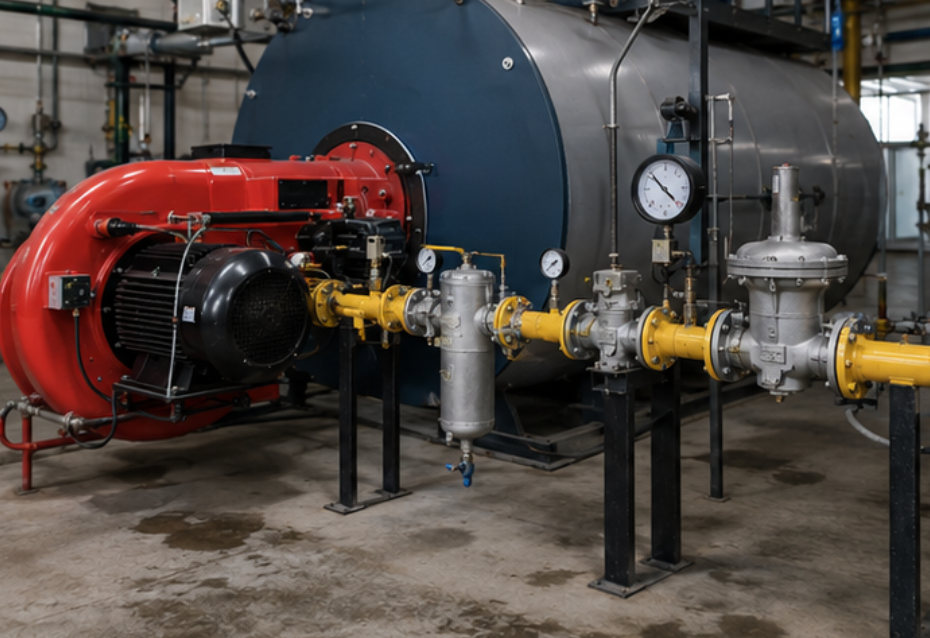
Common Shutdown Symptoms
Burner shuts down during ignition or high-fire operation.
Low gas pressure alarm appears only under load.
Gas pressure looks normal before startup but drops during operation.
Shutdown happens when multiple boilers or burners run together.
Burner flame becomes unstable before shutdown.
Pressure gauge near the burner inlet fluctuates quickly.
2. Main Causes Of Burner Shutdown From Gas Pressure Drop
Burner shutdown is often caused by a pressure drop somewhere between the gas source and the burner inlet. The pressure regulating skid, filter, regulator, downstream pipe network, and burner gas train should all be checked before replacing any single component.
Troubleshooting Table
| Possible Cause | Typical Result | What To Check |
|---|---|---|
| Blocked Gas Filter | Gas flow is restricted before the regulator or burner. | Filter element, differential pressure, rust, liquid, and dirt. |
| Regulator Undersized | Outlet pressure drops during high burner demand. | Minimum, normal, and maximum gas flow. |
| Insufficient Inlet Pressure | Regulator cannot maintain required outlet pressure. | Minimum upstream pressure during peak demand. |
| Downstream Pipe Loss | Pressure is normal at skid outlet but low at burner inlet. | Pipe diameter, pipe length, elbows, valves, and branch lines. |
| Peak Gas Demand | Pressure drops when several burners start together. | Total gas consumption and simultaneous startup sequence. |
| Wrong Pressure Switch Setting | Burner trips too easily during small pressure changes. | Pressure switch setting, location, and alarm delay. |
3. Measure Dynamic Pressure During Burner Operation
Static pressure is measured when gas flow is low or stopped. Dynamic pressure is measured while the burner is actually running. Many shutdown problems are missed because operators only check static pressure before startup.
To prevent burner shutdown, pressure should be recorded during ignition, low fire, high fire, and simultaneous operation of multiple gas users. This helps identify whether pressure drop happens at the filter, regulator, skid outlet, downstream branch line, or burner inlet.
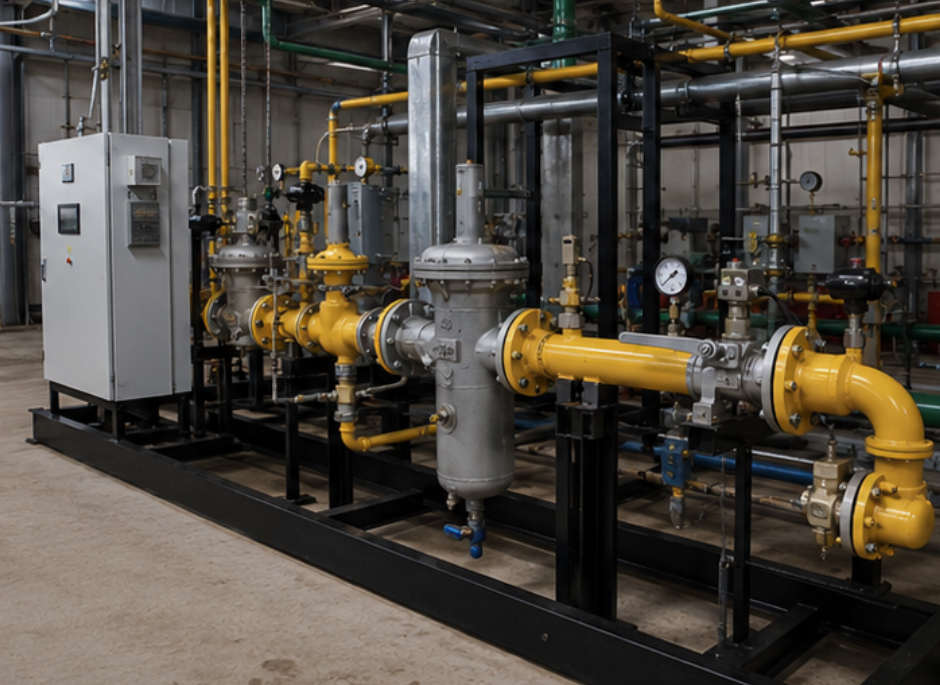
Pressure Points To Record
Upstream pressure before the gas pressure regulating skid.
Pressure before and after the filter separator.
Regulator inlet and outlet pressure.
Pressure at the burner gas train inlet.
Pressure during ignition, low fire, and high fire.
Pressure when multiple burners or boilers start together.
4. Check Filter Blockage Before Changing Burner Settings
A blocked filter separator is one of the most common hidden causes of burner shutdown. When gas demand is low, the pressure drop may not be obvious. But when the burner reaches high fire, the blocked filter restricts flow and causes pressure drop before the regulator or burner.
If a filter is dirty or undersized, adjusting burner settings may not solve the problem. The filter element, drain valve, differential pressure, and gas quality should be checked first.
Filter Inspection Checklist
Check differential pressure before and after the filter.
Inspect the filter element for dust, rust, liquid, or oil residue.
Confirm whether the filter is sized for peak gas demand.
Check whether dirty gas is entering from upstream pipeline.
Inspect drain valve and separator liquid collection.
Review filter replacement schedule and maintenance records.
5. Match Regulator Capacity With Burner Peak Demand
A regulator must match the real gas demand of the burner system. If it is undersized, the outlet pressure may drop during high fire. If it is oversized, it may hunt or become unstable during low fire. Both cases can lead to burner alarms or shutdown.
In multi-boiler or multi-burner projects, total gas demand should include all burners that may run together. The regulator should be selected based on minimum, normal, and maximum gas flow, not only pipe size.
Regulator And Burner Demand Checklist
Burner gas demand during ignition.
Low-fire and high-fire gas consumption.
Total gas flow when multiple burners run together.
Minimum and maximum inlet pressure.
Required burner inlet pressure.
Regulator flow capacity under real pressure drop.
6. How A Gas Pressure Regulating Skid Helps Prevent Burner Shutdown
A gas pressure regulating skid can integrate filtration, pressure regulation, safety shut-off, relief protection, pressure monitoring, control cabinet, bypass line, vent line, pipe supports, and skid-mounted frame into one engineered package.
For burner shutdown prevention, the skid should be designed according to inlet pressure range, outlet pressure requirement, filter pressure drop, burner gas demand, peak flow, pressure switch logic, downstream pipe loss, and maintenance access.
Practical Tip
If burner shutdown is caused by gas pressure drop, do not only reset the burner. Record dynamic pressure during operation and check filter pressure drop, regulator capacity, pipe pressure loss, pressure switch setting, and peak gas demand together.
Engineering Review Checklist
Confirm gas medium, inlet pressure, and required outlet pressure.
Record pressure during burner ignition, low fire, and high fire.
Check pressure before and after the filter separator.
Review regulator capacity under peak gas demand.
Calculate downstream pipeline pressure loss.
Check burner pressure switch location and setting.
Review startup sequence when multiple burners run together.
Consider a custom gas pressure regulating skid for stable burner operation.
Conclusion
Burner shutdown caused by gas pressure drop can be prevented by diagnosing the full gas supply system. Key checks include dynamic pressure measurement, filter pressure drop, regulator sizing, downstream pipe loss, burner pressure switch settings, peak gas demand, and startup sequence.
A properly designed gas pressure regulating skid can help stabilize burner inlet pressure, reduce low-pressure alarms, protect combustion equipment, and support safer long-term boiler room or factory operation.
FAQ
Why does gas pressure drop cause burner shutdown?
If gas pressure falls below the burner protection setting, the burner control system may shut down to avoid unsafe combustion conditions.
Why does pressure look normal before startup but drop during operation?
Static pressure may look normal when gas flow is low. During burner operation, dynamic pressure can drop because gas demand increases.
Can a blocked gas filter cause burner shutdown?
Yes. A blocked filter restricts gas flow and may cause pressure drop during high burner demand, triggering low-pressure protection.
How can burner shutdown be prevented?
Measure dynamic pressure, check filters, size regulators correctly, reduce pipe pressure loss, review pressure switch settings, and use a properly designed gas pressure regulating skid.
Need Help Preventing Burner Shutdown?
Send us your gas pressure, flow range, burner demand, shutdown alarm record, filter condition, regulator data, and site layout. Our engineering team can help review the working conditions and provide a suitable gas pressure regulating skid solution.
Get Quote Contact UsRelated Product Paths For This Project
How To Prevent Burner Shutdown Caused By Gas Pressure Drop should connect the troubleshooting topic with Shenqi's real equipment categories. For gas pressure, steam pressure reducing, PRDS, skid module, valve, and prefabricated pipeline projects, buyers usually need to compare the fault symptom with the full system scope before requesting a quotation. The related pages below help the engineering team move from diagnosis to product selection without leaving the site.
- Gas Pressure Regulating Skid
- Temperature and Pressure Reducing Device
- Prefabricated Pipeline
- Skid Module
- Pressure Vessel
- Accessories
- Valves
- Contact Shenqi Machinery
For a project specific review, prepare inlet pressure, outlet pressure, flow range, medium, temperature, control accuracy, valve configuration, instrument requirement, site layout, and commissioning schedule before contacting Shenqi Machinery.