


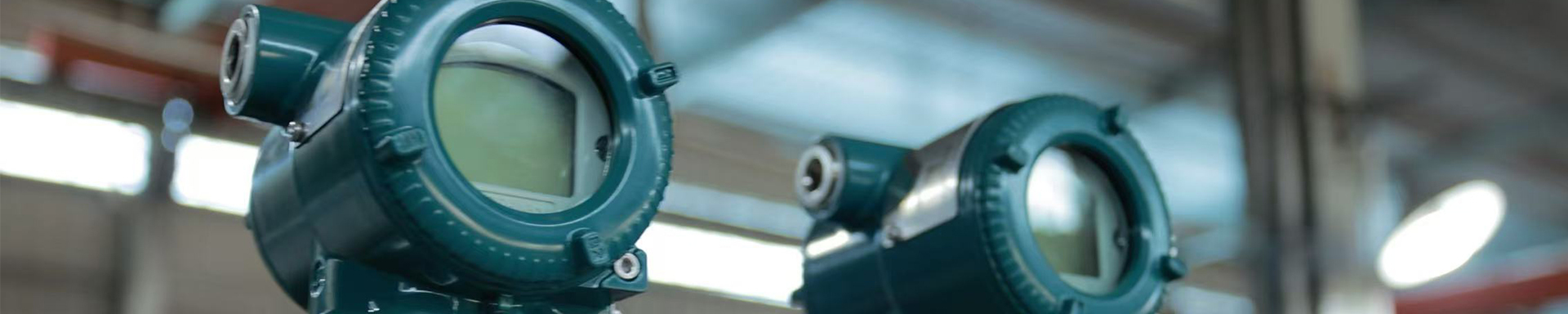
Why LNG Station Gas Supply Becomes Unstable In Cold Weather
2026-07-07 16:52Need To Stabilize LNG Station Gas Supply In Cold Weather?
Send us your LNG vaporizer capacity, lowest ambient temperature, vaporizer outlet pressure, gas temperature, required outlet pressure, peak gas demand, frost condition, filter separator data, and gas regulating skid layout. Our engineering team can help review whether your LNG station needs vaporizer capacity review, heating protection, filtration improvement, or skid optimization.
1. Why Cold Weather Affects LNG Station Gas Supply
LNG must be vaporized before it is supplied as natural gas to downstream users. In many LNG satellite stations, ambient air vaporizers use surrounding air as the heat source. When the ambient temperature drops, the vaporizer receives less heat from the air, and the vaporization process may become less stable.
During winter, industrial users may also consume more gas for boilers, heating systems, furnaces, dryers, and process equipment. This means the station may face lower vaporization efficiency and higher gas demand at the same time. If the vaporizer, filter separator, regulator, and downstream pipeline were designed only for normal weather, cold-weather operation may expose hidden capacity problems.
In many projects, instability appears as outlet pressure drop, low gas temperature, regulator hunting, pressure alarm, burner shutdown, or delayed response from the gas pressure regulating skid.
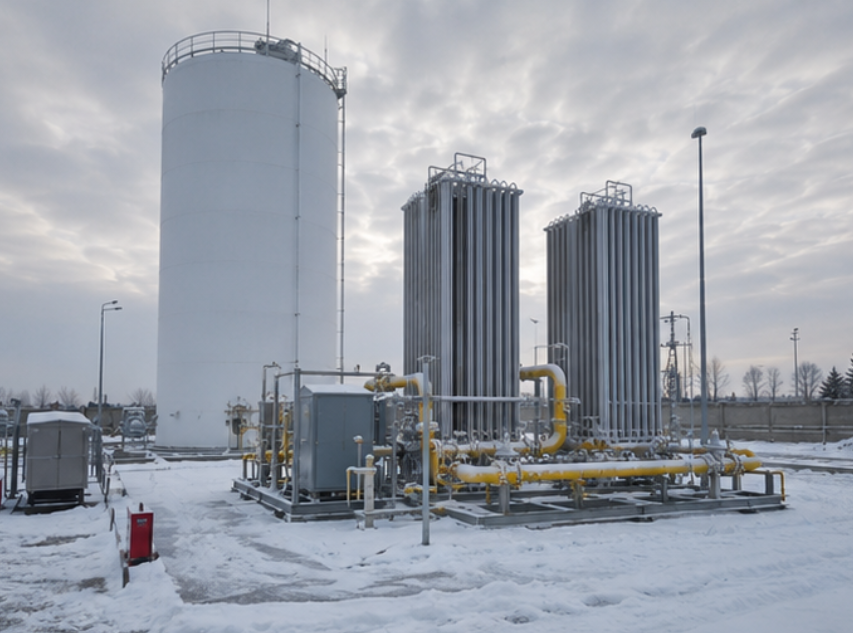
Common Cold-Weather Symptoms
Vaporizer outlet pressure drops during cold weather operation.
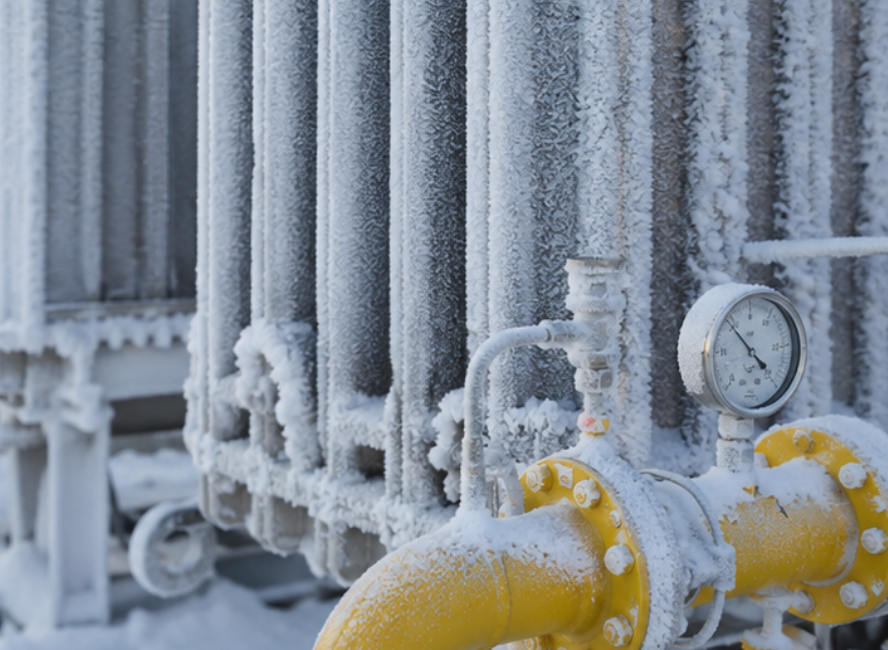
Heavy frost appears on ambient vaporizer fins.
Gas temperature after vaporization becomes too low.
Gas pressure regulating skid outlet pressure becomes unstable.
Low pressure alarm occurs during peak winter demand.
Boilers or burners shut down when multiple users start together.
2. Main Causes Of LNG Gas Supply Instability In Cold Weather
Cold-weather instability should be checked across the complete LNG station. The problem may come from vaporizer capacity, frost, gas temperature, regulator freeze-up, filter separator pressure drop, moisture, instrument freezing, or downstream peak gas demand.
Troubleshooting Table
| Possible Cause | Typical Result | What To Check |
|---|---|---|
| Low Ambient Temperature | Vaporizer heat exchange capacity decreases. | Lowest site temperature, wind, snow, and vaporizer design margin. |
| Heavy Frost On Vaporizer | Gas temperature and outlet pressure become unstable. | Frost thickness, airflow, switching schedule, and standby vaporizer capacity. |
| Peak Winter Gas Demand | Pressure drops when boilers and heaters run together. | Maximum gas flow, downstream users, and simultaneous startup demand. |
| Regulator Freeze-Up | Pressure regulation becomes slow, unstable, or blocked. | Gas temperature, moisture, pressure drop, and heating protection. |
| Filter Separator Blockage | Regulator inlet pressure becomes insufficient. | Differential pressure, liquid, frost, rust, and filter element condition. |
| Frozen Instrument Lines | Pressure signals become delayed or inaccurate. | Impulse tubing, transmitter protection, heat tracing, and enclosure heating. |
3. Vaporizer Capacity Should Be Reviewed For Winter Conditions
Ambient vaporizers may perform differently in summer and winter. A vaporizer that works well during normal weather may not provide enough heat exchange during low ambient temperature. If downstream gas demand increases at the same time, the outlet pressure may drop sharply.
Buyers should compare the vaporizer rated capacity with the real winter peak demand. If the station has added new users, expanded boiler capacity, or changed operation mode, the existing vaporizer may no longer match the actual requirement.
Vaporizer Winter Review Checklist
Rated vaporization capacity under design ambient temperature.
Lowest actual winter temperature at the project site.
Gas outlet temperature during peak demand.
Outlet pressure before the gas regulating skid.
Frost condition after continuous operation.
Whether standby vaporizers or switching operation are available.
4. Regulator Freeze-Up And Filter Problems Can Make The System Worse
After LNG vaporization, the gas may still be cold. If the gas contains moisture or liquid carryover, pressure reduction through the regulator can further reduce gas temperature and increase freeze-up risk. Ice can affect regulator movement, pilot lines, small tubing, filter drains, and pressure instruments.
A blocked or iced filter separator can reduce regulator inlet pressure. Operators may think the regulator is failing, but the real problem may be upstream filtration and liquid removal. Differential pressure monitoring before and after the filter is important in winter.
Regulator And Filter Winter Checklist
Gas temperature before and after pressure regulation.
Filter separator differential pressure.
Liquid or ice found at filter drain.
Regulator response during low and peak flow.
Heat tracing or insulation on critical sections.
Protection for pressure transmitters, impulse lines, and pilot lines.
5. Peak Winter Demand Must Be Calculated Correctly
In cold weather, industrial users may increase gas consumption. Boilers may run longer, heating systems may operate at higher load, and multiple burners may start together. If the LNG station was designed only for average demand, the system may become unstable during winter peak operation.
Peak demand should include all users that may operate at the same time. It should also consider startup demand, cold equipment heating load, and possible future expansion.
Peak Demand Checklist
Number of boilers, burners, furnaces, dryers, or heating users.
Gas consumption of each downstream user.
Maximum simultaneous gas demand in winter.
Morning startup and cold equipment heat-up demand.
Required outlet pressure for far-end equipment.
Factory expansion or new gas users added after original design.
6. How A Proper Gas Regulating Skid Improves Cold-Weather Stability
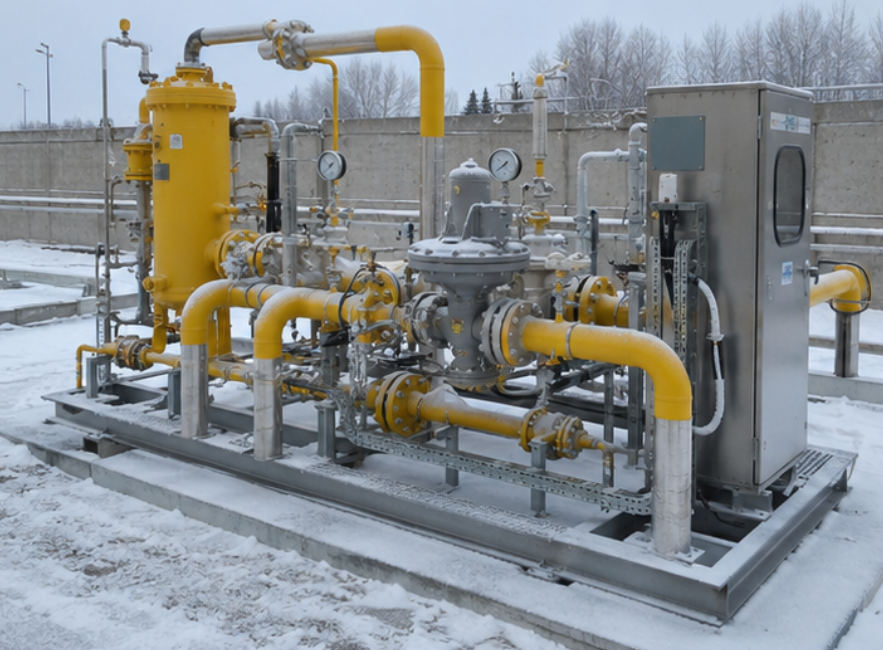
A gas regulating skid after LNG vaporization should be designed for real station conditions. It may include filter separator, pressure regulator, safety shut-off valve, relief valve, pressure gauges, pressure transmitters, drain points, heating protection, control cabinet, pipe supports, and skid-mounted frame.
For cold-weather applications, the skid should also consider gas temperature, moisture, liquid carryover, filter pressure drop, regulator freeze-up risk, heat tracing, insulation, instrument enclosure protection, and winter maintenance access.
Practical Tip
If LNG station gas supply becomes unstable only in cold weather, do not check the regulator alone. Review vaporizer capacity, frost condition, gas temperature, filter pressure drop, regulator freeze-up risk, heat tracing, and peak winter demand together.
Engineering Review Checklist
Confirm LNG vaporizer capacity under lowest ambient temperature.
Measure vaporizer outlet pressure and gas temperature.
Check frost condition during continuous high-flow operation.
Inspect filter separator differential pressure and drain condition.
Review regulator sizing and freeze-up protection.
Check heat tracing, insulation, and instrument enclosure protection.
Calculate peak winter gas demand of all downstream users.
Consider a custom gas regulating skid for cold-weather operation.
Conclusion
LNG station gas supply may become unstable in cold weather because low ambient temperature reduces vaporizer performance, frost affects heat exchange, peak winter demand increases, regulator freeze-up occurs, filters become restricted, or instruments and small lines are not properly protected.
A reliable LNG gas supply system should match vaporizer capacity, cold-weather protection, filter separator performance, gas regulating skid design, pressure monitoring, and peak winter gas demand together.
FAQ
Why does LNG station gas supply become unstable in cold weather?
Common causes include reduced vaporizer capacity, heavy frost, low gas temperature, regulator freeze-up, filter blockage, frozen instrument lines, and peak winter gas demand.
Can vaporizer frost cause pressure drop?
Yes. Heavy frost reduces heat exchange efficiency, which can reduce gas temperature and vaporizer outlet pressure during high demand.
Can gas regulators freeze after LNG vaporization?
Yes. Cold gas, moisture, liquid carryover, and pressure reduction can increase freeze-up risk in regulators, pilot lines, instruments, and small tubing.
How can cold-weather instability be reduced?
Review vaporizer capacity, add standby or switching capacity if needed, improve filter separation, protect regulators and instruments, use heat tracing or insulation, and design the gas regulating skid for peak winter demand.
Need Help With LNG Station Cold-Weather Instability?
Send us your vaporizer capacity, lowest ambient temperature, gas pressure, gas temperature, frost condition, peak gas demand, filter separator data, and skid layout. Our engineering team can help review the working conditions and provide a suitable gas regulating skid solution.
Get Quote Contact UsRelated Product Paths For This Project
Why LNG Station Gas Supply Becomes Unstable In Cold Weather should connect the troubleshooting topic with Shenqi's real equipment categories. For gas pressure, steam pressure reducing, PRDS, skid module, valve, and prefabricated pipeline projects, buyers usually need to compare the fault symptom with the full system scope before requesting a quotation. The related pages below help the engineering team move from diagnosis to product selection without leaving the site.
- Gas Pressure Regulating Skid
- Temperature and Pressure Reducing Device
- Prefabricated Pipeline
- Skid Module
- Pressure Vessel
- Accessories
- Valves
- Contact Shenqi Machinery
For a project specific review, prepare inlet pressure, outlet pressure, flow range, medium, temperature, control accuracy, valve configuration, instrument requirement, site layout, and commissioning schedule before contacting Shenqi Machinery.