


How To Diagnose Gas Pressure Problems Before Replacing A Regulator
2026-07-06 16:45Need To Diagnose Gas Pressure Problems?
Send us your gas medium, inlet pressure, outlet pressure, gas flow range, filter condition, regulator model, downstream equipment demand, pressure readings at different points, and site layout. Our engineering team can help review whether the regulator should be replaced or whether the complete gas regulating skid needs optimization.
1. Why Replacing The Regulator First Can Be A Mistake
A gas regulator is only one part of the gas pressure regulating system. If downstream pressure is unstable, the regulator may appear to be the problem, but the real cause may be upstream or downstream of the regulator.
For example, a blocked filter can reduce regulator inlet pressure. A small downstream pipe can create pressure loss near the burner. A wrong pressure gauge position can mislead operators. Peak demand from multiple boilers or burners can exceed the original system capacity.
Replacing the regulator without checking these conditions may waste time, increase cost, and leave the original problem unresolved.
Common Signs That Need Diagnosis
Outlet pressure drops only during peak gas demand.
Burners shut down even when inlet pressure looks normal.
Pressure before the regulator is unstable.
Pressure after the filter is much lower than before the filter.
Regulator makes noise or vibrates during boiler operation.
Pressure is normal near the skid but low near downstream equipment.
2. Check Pressure At Multiple Points
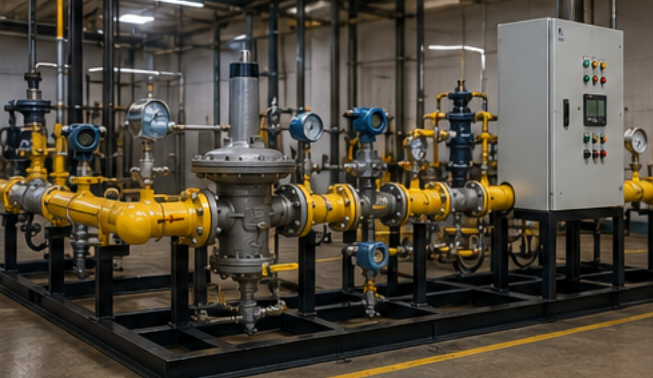
One pressure gauge is not enough to diagnose a gas pressure problem. Pressure should be checked at several points: upstream supply, filter inlet, filter outlet, regulator inlet, regulator outlet, downstream branch line, and equipment inlet.
If the pressure drop happens before the regulator, replacing the regulator may not help. If pressure is normal after the regulator but low at the equipment, the downstream pipe network should be reviewed. If pressure only drops during peak load, the issue may be system capacity rather than regulator damage.
Pressure Diagnosis Table
| Pressure Point | What It Reveals | Possible Problem |
|---|---|---|
| Upstream Supply Pressure | Whether the gas source is stable. | Insufficient gas supply or unstable upstream station. |
| Before And After Filter | Whether the filter is restricting flow. | Blocked filter element or dirty gas. |
| Regulator Inlet Pressure | Whether the regulator receives enough pressure. | Upstream pressure loss or filter pressure drop. |
| Regulator Outlet Pressure | Whether pressure regulation is stable. | Regulator sizing, setting, or response issue. |
| Equipment Inlet Pressure | Whether downstream equipment gets enough pressure. | Pipe pressure loss, small branch line, or local restriction. |
3. Check The Filter Before Blaming The Regulator
A blocked filter is one of the most common reasons for low or unstable gas pressure. When the filter element becomes dirty, it restricts gas flow before the regulator. The regulator may then fail to maintain outlet pressure, especially during peak boiler or burner demand.
Operators may think the regulator is undersized or damaged, but the true problem may be that the regulator is not receiving enough gas because of filter pressure drop.
Filter Diagnosis Checklist
Compare pressure before and after the filter.
Check differential pressure across the filter element.
Inspect filter element for dust, rust, liquid, or oil residue.
Check filter drain for liquid carryover.
Confirm the filter is sized for maximum gas flow.
Review filter replacement and maintenance records.
4. Check Whether The Regulator Matches Actual Flow Range
If the filter and upstream supply are normal, the regulator itself should be checked against the real working conditions. A regulator may be oversized, undersized, or incorrectly selected for the actual pressure reduction ratio and gas flow range.
An oversized regulator may hunt or chatter at low flow. An undersized regulator may fail during peak demand. A regulator selected only by pipe size may not match real boiler or burner operation.
Regulator Sizing Checklist
Minimum, normal, and maximum gas flow.
Minimum and maximum inlet pressure.
Required outlet pressure.
Pressure reduction ratio.
Boiler capacity or burner gas demand.
Whether multiple burners or boilers run together.
5. Check Downstream Pipe Loss And Peak Demand
Gas pressure may be stable at the regulator outlet but low at the equipment inlet. This often happens when the downstream pipe is too small, too long, or connected to too many gas users. Pressure loss becomes more obvious during peak demand.
Before replacing a regulator, operators should confirm whether downstream pipe loss is the real reason for low pressure at boilers, burners, furnaces, ovens, dryers, or other production equipment.
Downstream Review Checklist
Pipe diameter from regulator outlet to equipment inlet.
Pipeline length, elbows, reducers, valves, and branch lines.
Gas consumption of each downstream user.
Total peak demand when multiple users run together.
Pressure at far-end equipment inlet.
Whether factory expansion increased total gas demand.
6. When The Regulator Really Should Be Replaced
After checking upstream pressure, filter pressure drop, downstream pipe loss, and real flow demand, the regulator may still be the root cause. Replacement may be needed if the regulator cannot meet the required flow range, has unstable response, damaged internal parts, leakage, severe noise, or poor pressure control.
However, replacement should be based on correct sizing and system review. If the new regulator has the same sizing or installation problems as the old one, the pressure issue may return.
Practical Tip
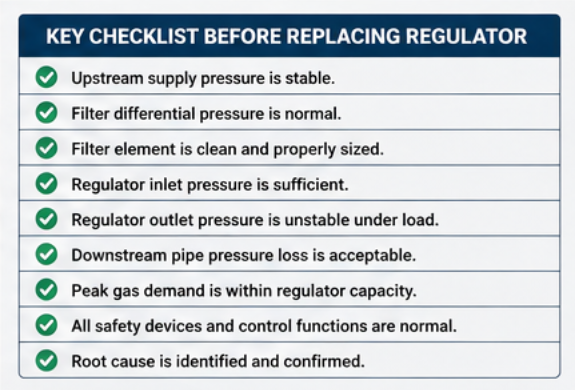
Before replacing a gas regulator, always check pressure before and after the filter, regulator inlet pressure, regulator outlet pressure, equipment inlet pressure, peak gas demand, and downstream pipe pressure loss.
Final Diagnosis Checklist
Confirm upstream gas supply pressure is stable.
Check filter differential pressure and element condition.
Measure regulator inlet and outlet pressure under real load.
Record pressure at downstream equipment inlet.
Review regulator sizing against real flow range.
Calculate downstream pipeline pressure loss.
Check whether pressure problems happen only during peak demand.
Consider a custom gas pressure regulating skid if the complete system needs redesign.
Conclusion
Gas pressure problems should be diagnosed before replacing a regulator. The root cause may be upstream supply instability, filter pressure drop, dirty gas, blocked filter elements, wrong pressure measurement points, regulator sizing mismatch, downstream pipe pressure loss, or peak gas demand.
A proper diagnosis can reduce unnecessary replacement, identify the real restriction, protect downstream equipment, and help buyers decide whether a single regulator replacement or a complete gas pressure regulating skid upgrade is needed.
FAQ
Should I replace a gas regulator when pressure is unstable?
Not immediately. First check upstream pressure, filter pressure drop, regulator inlet and outlet pressure, downstream pipe loss, and peak demand.
Can a blocked filter look like a regulator problem?
Yes. A blocked filter reduces regulator inlet pressure, making the regulator seem unable to maintain outlet pressure even if the regulator is not damaged.
What pressure points should be measured?
Measure upstream supply pressure, filter inlet and outlet pressure, regulator inlet and outlet pressure, branch line pressure, and equipment inlet pressure.
When is a complete gas regulating skid needed?
A complete skid may be needed when pressure problems involve filtration, regulation, safety devices, monitoring, piping, control logic, and downstream demand together.
Need Help Diagnosing Gas Pressure Problems?
Send us your pressure readings, flow range, filter condition, regulator data, downstream equipment demand, and site layout. Our engineering team can help review the working conditions and provide a suitable gas pressure regulating skid solution.
Get Quote Contact UsRelated Product Paths For This Project
How To Diagnose Gas Pressure Problems Before Replacing A Regulator should connect the troubleshooting topic with Shenqi's real equipment categories. For gas pressure, steam pressure reducing, PRDS, skid module, valve, and prefabricated pipeline projects, buyers usually need to compare the fault symptom with the full system scope before requesting a quotation. The related pages below help the engineering team move from diagnosis to product selection without leaving the site.
- Gas Pressure Regulating Skid
- Temperature and Pressure Reducing Device
- Prefabricated Pipeline
- Skid Module
- Pressure Vessel
- Accessories
- Valves
- Contact Shenqi Machinery
For a project specific review, prepare inlet pressure, outlet pressure, flow range, medium, temperature, control accuracy, valve configuration, instrument requirement, site layout, and commissioning schedule before contacting Shenqi Machinery.