

Common Mistakes In Steam Pressure Reducing System Procurement
2026-05-10 13:081. Quoting With Incomplete Steam Data
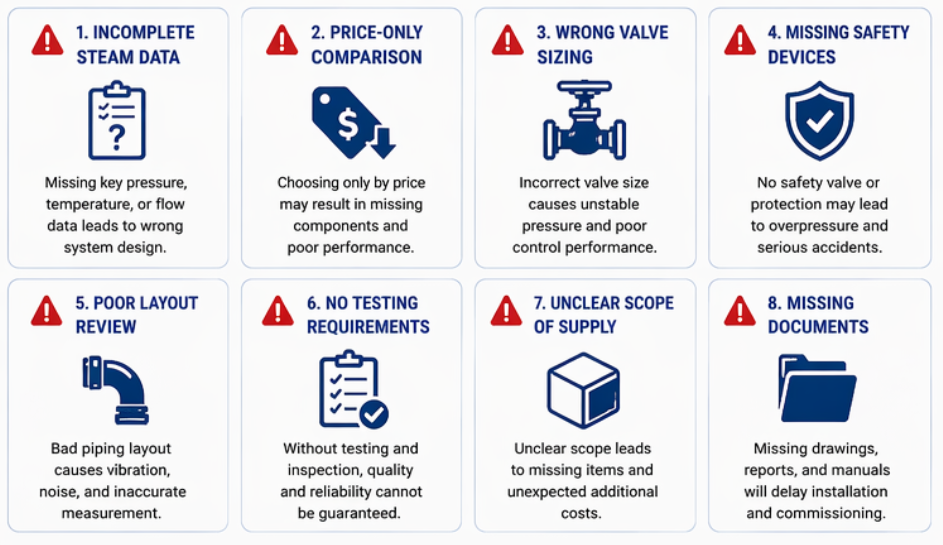
One of the most common mistakes is asking for a quotation without providing complete steam conditions. A buyer may only provide pipe size or a simple pressure value, but a steam pressure reducing system cannot be selected accurately from pipe size alone.
The manufacturer needs inlet pressure, inlet temperature, outlet pressure, outlet temperature, maximum flow, normal flow, minimum flow, steam type, and downstream process requirements. If desuperheating is needed, spray water pressure, temperature, quality, and available flow should also be confirmed.
Incomplete data can lead to wrong valve sizing, poor low-flow control, unstable outlet pressure, inaccurate temperature control, excessive noise, and unexpected cost after technical clarification.
Minimum Data Buyers Should Provide
| Required Data | Why It Matters |
|---|---|
| Inlet Pressure And Temperature | Determines valve pressure class, material, and pressure drop condition. |
| Outlet Pressure And Temperature | Defines the required process steam condition after regulation. |
| Steam Flow Range | Helps select a valve that works at minimum, normal, and peak load. |
| Steam Type | Confirms whether the steam is saturated or superheated. |
| Downstream Process | Affects control accuracy, response speed, and safety design. |
2. Choosing The System Only By Price
Another common mistake is comparing quotations only by the final price. A steam pressure reducing system may look similar in a quotation, but the real scope can be very different. One quotation may include control valve, desuperheater, safety valve, instruments, control cabinet, skid frame, testing, and documents. Another may only include a simplified mechanical assembly.
A low price may mean missing instruments, lower-grade valve trim, no low-noise design, limited documentation, no control cabinet, or reduced factory testing. These omissions can create higher installation cost, commissioning problems, or long-term maintenance issues.
Buyers should compare the complete technical scope, not only the total amount. A clear scope comparison table can quickly show which proposal is actually more complete and safer.
Price Comparison Should Include
Control valve type, trim design, actuator, and positioner
Desuperheater and spray water control valve
Pressure gauges, transmitters, and temperature sensors
Safety valve and drain or vent arrangement
Control cabinet, wiring, and signal interface
Skid frame, piping, supports, and insulation interface
Factory testing, inspection records, and final documents
Packing, lifting design, and delivery scope
3. Ignoring Control Valve Sizing And Low-Flow Performance
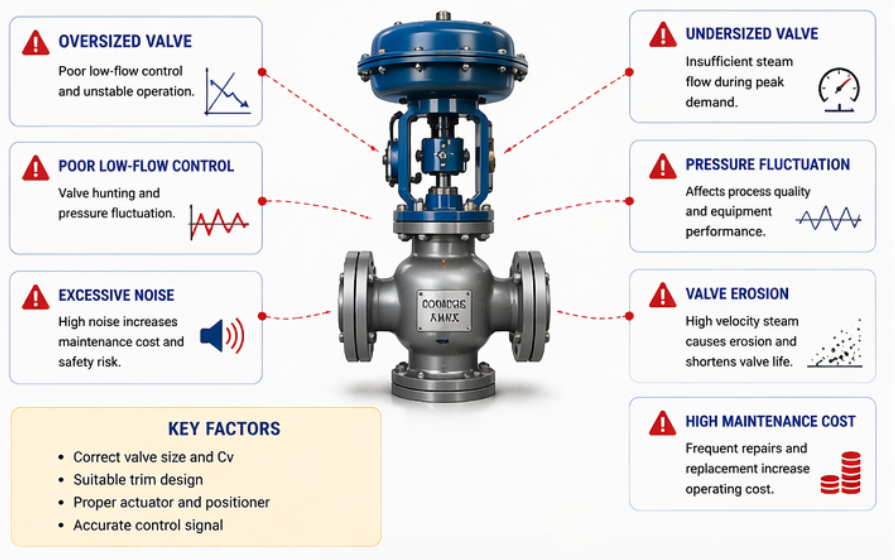
The control valve is the core component of a steam pressure reducing system. A frequent procurement mistake is selecting the valve only according to pipe diameter instead of actual steam pressure, flow range, pressure drop, and control accuracy.
If the valve is oversized, it may operate at a very small opening and cause unstable pressure control. If the valve is undersized, it may not provide enough steam during peak demand. If the trim is not suitable for high pressure drop, the system may produce excessive noise, vibration, erosion, or frequent maintenance.
Buyers should ask for valve sizing basis, Cv value, minimum and maximum flow performance, trim type, actuator type, positioner configuration, and noise control consideration.
| Valve Selection Mistake | Possible Result |
|---|---|
| Oversized Control Valve | Poor low-flow control and pressure hunting. |
| Undersized Control Valve | Insufficient steam supply during peak demand. |
| Incorrect Trim Design | Noise, vibration, erosion, and shorter valve life. |
| Wrong Actuator Selection | Slow response or unstable valve movement. |
4. Overlooking Safety Devices, Drainage, And Site Layout
Some procurement teams focus heavily on the pressure reducing valve but forget the supporting safety and layout details. A reliable steam pressure reducing system should include suitable safety valve protection, pressure and temperature monitoring, drain points, vent points, pipe supports, and maintenance access.
Steam systems can be affected by condensate, water hammer, thermal expansion, noise, and vibration. If drainage and piping layout are not properly considered, the system may have unstable operation or increased maintenance risk after installation.
For skid-mounted systems, buyers should also confirm inlet and outlet direction, skid dimensions, lifting points, foundation requirements, control cabinet position, and maintenance space before fabrication.
Details That Are Often Missed
Safety valve sizing and set pressure
Drain and vent arrangement
Condensate removal and startup drainage
Pressure transmitter position
Control cabinet location and wiring route
Pipe support and vibration control
Maintenance access for valve and actuator
Skid footprint and transportation limits
5. Not Confirming Testing, Documents, And Acceptance Criteria
A steam pressure reducing system should be inspected and tested before delivery. However, some buyers only confirm the equipment list and do not define testing and documentation requirements. This can cause problems when the system arrives at site and the project team needs drawings, reports, or proof of inspection.
The purchase agreement should define whether the supplier will provide pressure test, leak test, functional inspection, instrument check, control cabinet inspection, visual inspection, and final documentation review. For overseas projects, photos and test reports are especially useful before shipment.
Buyers should also confirm the final document package, including general arrangement drawing, P&ID, technical data sheets, component list, test reports, operation manual, packing information, and recommended spare parts list if required.
Practical Tip
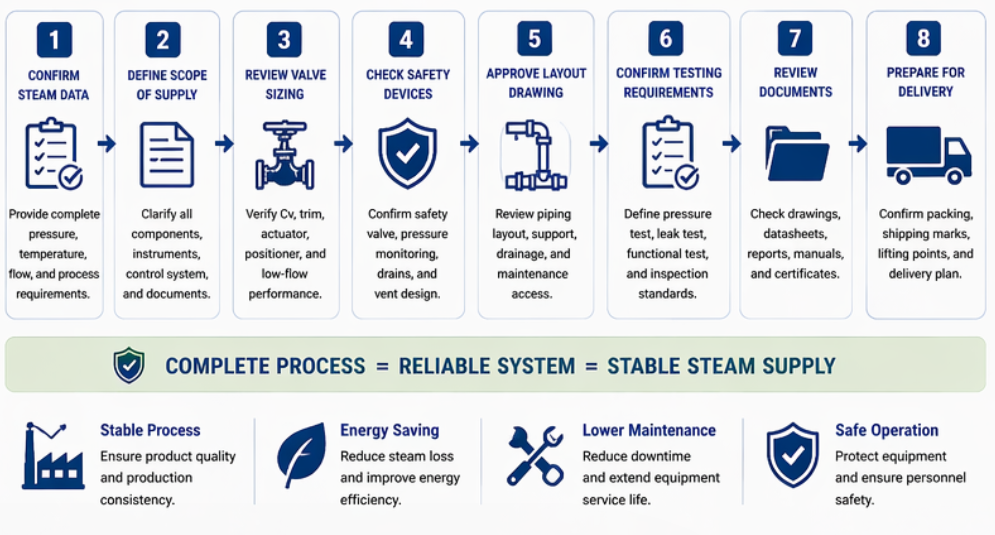
A good procurement process should confirm technical data, scope of supply, valve selection, safety design, layout, testing, and documents before production. This prevents most project disputes and reduces commissioning risk.
Procurement Mistake Prevention Checklist
Provide complete steam pressure, temperature, and flow data.
Compare quotations by full technical scope, not only price.
Review control valve sizing, Cv value, trim, actuator, and positioner.
Confirm desuperheating and spray water requirements if needed.
Check safety valve, drain, vent, and pressure monitoring arrangement.
Confirm skid layout, interface direction, and maintenance access.
Define factory testing and inspection requirements.
Request drawings, test reports, manuals, and packing information.
Conclusion
The most common mistakes in steam pressure reducing system procurement include incomplete steam data, price-only comparison, poor control valve selection, missing safety and layout details, and unclear testing requirements. These mistakes can lead to unstable pressure, excessive noise, temperature control problems, installation delays, and higher maintenance costs.
A safer procurement process starts with complete technical information and a clear scope of supply. Buyers should work with a manufacturer that can review the full steam system, not only provide individual components. A well-specified steam pressure reducing system improves process stability, safety, and long-term reliability.
FAQ
What is the most common mistake when buying a steam pressure reducing system?
The most common mistake is requesting a quotation without complete steam pressure, temperature, flow, and process data.
Why should buyers avoid choosing only by the lowest price?
A lower price may exclude important components, instruments, safety devices, testing, or documents, which can increase project risk later.
Why is control valve sizing important?
Incorrect control valve sizing can cause unstable pressure, poor low-flow control, insufficient flow, noise, vibration, and erosion.
What documents should be requested before delivery?
Buyers should request final drawings, P&ID, data sheets, test reports, inspection records, operation manual, and packing information.
Need Help Avoiding Steam System Procurement Risks?
Send us your steam pressure, temperature, flow range, process conditions, and project requirements. Our engineering team can help you review the technical scope and provide a suitable steam pressure reducing system solution.
Get Quote Contact Us