


How To Ensure Stable Steam Pressure For Industrial Process Lines
2026-05-09 13:051. Understand The Real Steam Demand Of The Process Line
The first step to stable steam pressure is understanding the real steam demand of the process line. Many pressure instability problems start because the system is designed only according to nominal pipe size or rough flow data. In real industrial production, steam demand may change between startup, normal operation, peak load, and standby conditions.
A well-designed steam pressure control system should be based on minimum, normal, and maximum steam flow. It should also consider whether the process load changes gradually or suddenly. For example, dryers, reactors, and sterilization systems may have different steam demand patterns. If the system cannot respond smoothly to these changes, outlet pressure may fluctuate.
Buyers should provide complete operating data before selecting a steam pressure reducing skid. This allows the manufacturer to size the control valve, safety valve, piping, instruments, and control system correctly.
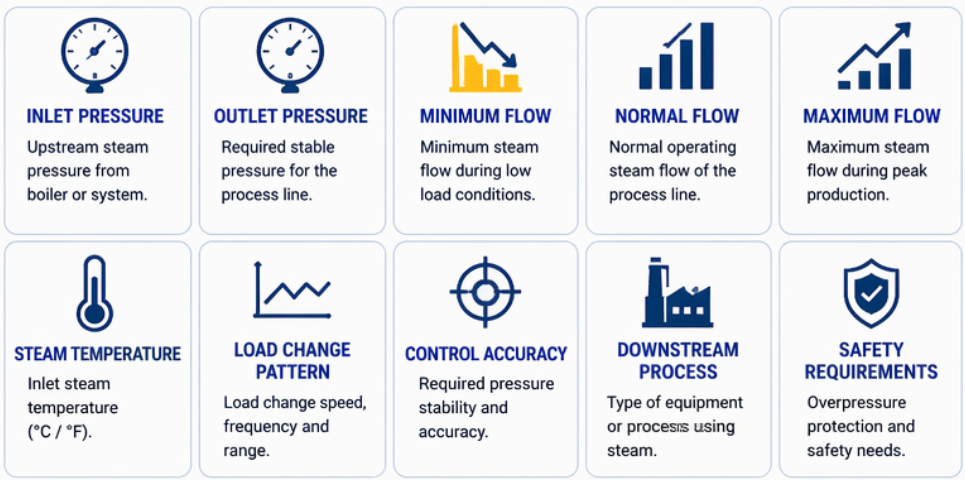
Key Data For Stable Steam Pressure
| Required Data | Why It Matters |
|---|---|
| Inlet Steam Pressure | Determines pressure reducing valve design and pressure drop condition. |
| Required Outlet Pressure | Defines the stable pressure target for downstream equipment. |
| Minimum Steam Flow | Helps avoid poor low-flow control and valve hunting. |
| Maximum Steam Flow | Ensures the system can meet peak process demand. |
| Load Change Pattern | Affects control valve response, actuator selection, and control logic. |
2. Select The Right Pressure Reducing Valve And Control Valve
The control valve is the heart of a steam pressure reducing system. It determines how smoothly the system can reduce high-pressure steam to the required outlet pressure. If the valve is oversized, it may operate at a very small opening and cause unstable control. If the valve is undersized, it may not provide enough steam during peak demand.
Stable steam pressure requires correct valve sizing, suitable Cv value, proper valve trim, reliable actuator, accurate positioner, and suitable control signal. For high pressure drop conditions, low-noise trim or multi-stage pressure reduction trim may be required to reduce vibration, noise, and erosion.
Buyers should ask whether the valve selection is based on actual steam conditions rather than only pipe diameter. A professional proposal should explain the valve sizing basis, flow range, pressure drop, actuator type, and control accuracy.
Control Valve Factors That Affect Stability
| Factor | Impact On Steam Pressure Stability |
|---|---|
| Valve Size | Incorrect size can cause unstable control or insufficient steam flow. |
| Cv Value | Determines whether the valve can handle the required flow range. |
| Valve Trim | Affects pressure drop, noise, vibration, erosion, and control precision. |
| Actuator | Controls valve response speed and operating force. |
| Positioner | Improves valve response accuracy and repeatability. |
3. Use Accurate Instruments And Proper Control Logic
Stable steam pressure cannot be achieved by mechanical equipment alone. The system also needs reliable instruments and proper control logic. Pressure transmitters, pressure gauges, temperature sensors, control cabinet, actuator feedback, and signal interface all influence system response.
Pressure transmitters should be installed in suitable positions to provide accurate feedback. If the measurement point is too close to turbulent flow, elbows, valves, or unstable piping sections, the control signal may fluctuate and cause the control valve to hunt. A stable feedback signal is essential for stable outlet pressure.
For automated process lines, the control system should be able to handle load changes smoothly. Alarm signals, interlocks, remote monitoring, and control cabinet design should be reviewed together with the steam skid.
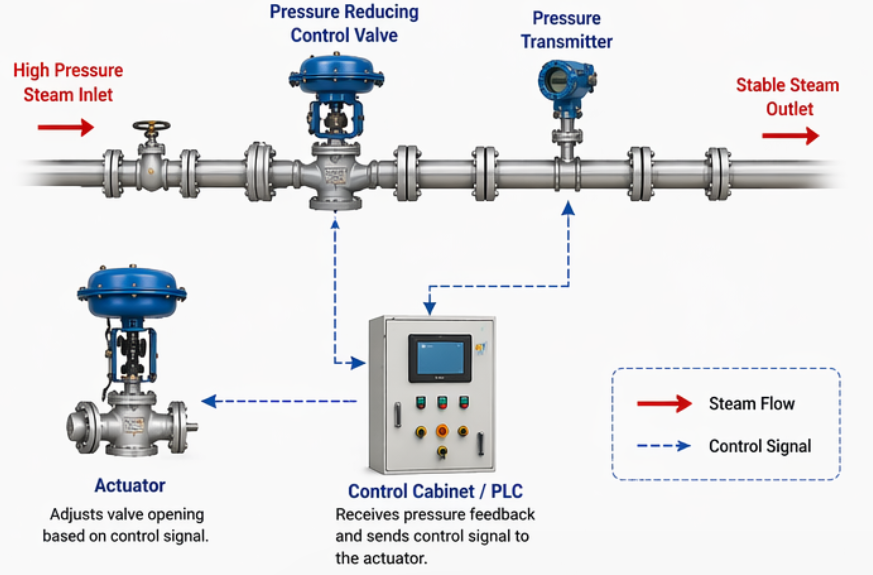
Instrumentation Items To Confirm
Inlet pressure gauge and transmitter
Outlet pressure gauge and transmitter
Temperature sensor when desuperheating is included
Control valve actuator and positioner
Control cabinet and signal interface
Local display and alarm output
Remote monitoring or plant DCS interface
Emergency shutdown or interlock logic when required
4. Optimize Piping Layout, Drainage, And Safety Protection
Piping layout also affects pressure stability. Poor layout can create turbulence, pressure loss, vibration, water hammer, and inaccurate measurement. A steam pressure reducing skid should be designed with suitable inlet and outlet piping, proper pipe support, sufficient maintenance space, and correct instrument placement.
Drainage is especially important in steam systems. Condensate accumulation can cause water hammer, unstable operation, and damage to valves or instruments. The system should include proper drain points, vent points, and startup procedures.
Safety protection should also be included. A safety valve or other overpressure protection device should be sized according to downstream pressure protection requirements. Pressure relief, drainage, venting, and maintenance access should be considered during the skid design stage.
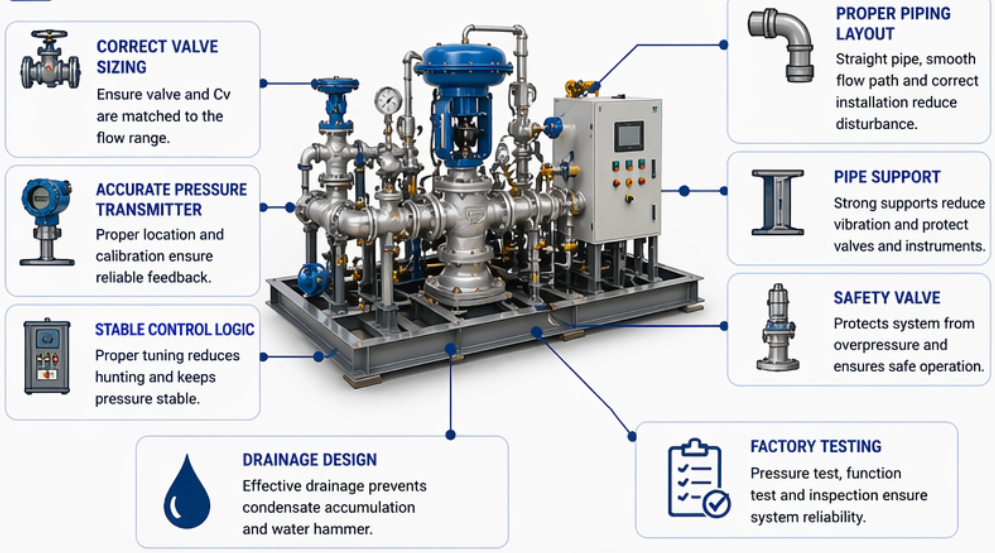
| Design Area | How It Supports Stable Pressure |
|---|---|
| Straight Pipe Arrangement | Reduces turbulence and improves measurement accuracy. |
| Pipe Support | Reduces vibration and protects valves and instruments. |
| Drainage Design | Prevents condensate accumulation and water hammer. |
| Safety Valve | Protects downstream equipment from overpressure. |
| Maintenance Access | Allows inspection, adjustment, and replacement without layout problems. |
5. Test The System Before Delivery And Monitor Performance After Startup
Factory testing is an important step for ensuring stable steam pressure. Before delivery, the system should be checked for assembly quality, pressure resistance, leakage, instrument connection, valve action, control cabinet wiring, and documentation completeness.
During commissioning, the control valve should be adjusted according to actual operating conditions. Pressure response, valve opening range, control signal, actuator movement, and downstream process stability should be observed. For systems with frequent load changes, tuning may be required to improve response and reduce pressure fluctuation.
Stable steam pressure is not achieved by one component alone. It depends on correct engineering design, suitable valve selection, accurate instruments, proper piping layout, factory testing, and on-site commissioning.
Final Stability Checklist
Confirm complete steam pressure, temperature, and flow data.
Select the control valve based on actual minimum and maximum flow.
Review valve trim, actuator, and positioner configuration.
Install pressure transmitters in suitable measurement positions.
Confirm control cabinet, alarm, and remote signal requirements.
Optimize piping layout, drainage, and pipe support.
Include safety valve and overpressure protection.
Perform pressure test, leak test, and functional inspection before shipment.
Check control response during startup and commissioning.
Conclusion
Stable steam pressure for industrial process lines depends on more than a single pressure reducing valve. It requires accurate steam demand analysis, correct control valve sizing, reliable instruments, suitable control logic, proper piping layout, safety protection, and thorough testing.
For project buyers, the safest approach is to provide complete operating data and work with a manufacturer that can review the system as a complete steam pressure control skid. A well-designed system helps improve production stability, reduce energy waste, protect downstream equipment, and lower long-term maintenance risk.
FAQ
Why does steam pressure fluctuate in process lines?
Common causes include changing steam demand, incorrect valve sizing, unstable control signals, poor piping layout, condensate problems, and unsuitable control logic.
What is the most important component for pressure stability?
The control valve is one of the most important components, but stable pressure also depends on transmitters, actuator, positioner, piping layout, and control system tuning.
Can an oversized valve cause unstable steam pressure?
Yes. An oversized valve may operate at a very small opening, which can make control less accurate and cause pressure hunting.
Why is drainage important in steam pressure control?
Proper drainage prevents condensate accumulation and water hammer, helping protect valves, instruments, and downstream equipment.
Need A Stable Steam Pressure Control Solution?
Send us your steam pressure, temperature, flow range, process conditions, and control requirements. Our engineering team can help you review the working conditions and provide a suitable steam pressure reducing skid solution for industrial process lines.
Get Quote Contact Us