



Why Control Valve Selection Matters In Steam Pressure Reducing Systems
2026-05-08 13:021. The Control Valve Determines Pressure Stability
A steam pressure reducing system is designed to reduce high-pressure steam to a lower and more stable pressure for downstream equipment. The control valve performs the actual pressure reduction and flow adjustment. If the valve is incorrectly selected, the outlet pressure may fluctuate, especially when the steam load changes.
In many industrial plants, steam demand is not constant. Boilers, heat exchangers, dryers, reactors, sterilization equipment, and process lines may require different steam loads during operation. A properly selected control valve must maintain stable outlet pressure across minimum, normal, and maximum flow conditions.
If the valve is oversized, it may operate at a very small opening and become difficult to control accurately. If the valve is undersized, it may not provide enough flow during peak demand. Both situations can lead to poor pressure control and unstable process performance.
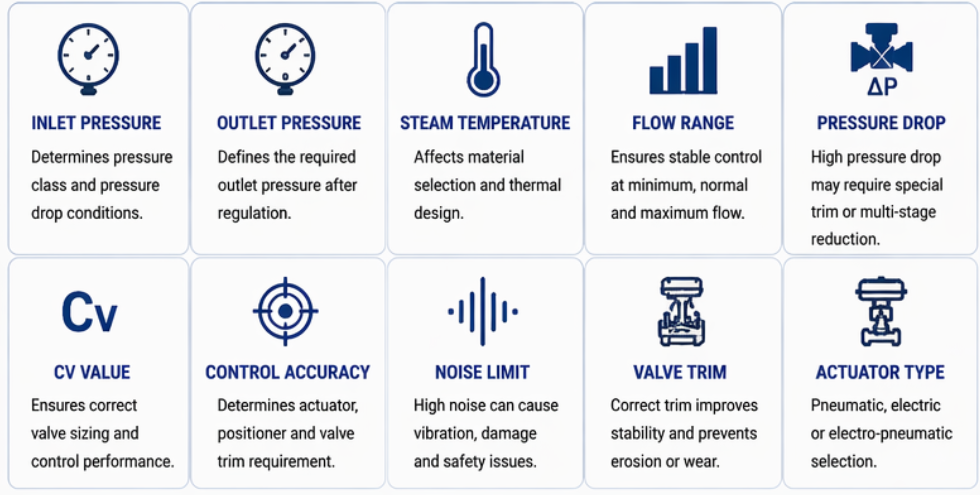
Key Data Needed For Valve Selection
| Selection Data | Why It Matters |
|---|---|
| Inlet Steam Pressure | Defines valve pressure class and pressure drop conditions. |
| Outlet Steam Pressure | Determines the required pressure reduction target. |
| Steam Temperature | Affects material, sealing, and actuator selection. |
| Flow Range | Helps confirm valve size, Cv value, and turndown performance. |
| Control Accuracy | Determines actuator, positioner, and valve trim requirements. |
2. Wrong Valve Sizing Can Cause Noise, Vibration, And Erosion
Steam pressure reduction often involves high pressure drop, high velocity, and high temperature. If the control valve is not designed for these conditions, the system may suffer from excessive noise, vibration, flashing, erosion, or unstable valve movement.
Noise and vibration are not only comfort issues. They can damage piping, reduce valve life, loosen fittings, affect instruments, and increase maintenance cost. In severe cases, high velocity steam can erode valve trim, seat surfaces, and downstream pipe sections.
For high-pressure steam systems, a standard single-seat valve may not be enough. The project may require multi-stage pressure reduction trim, low-noise trim, cage-guided structure, anti-erosion materials, or special valve internals designed for severe service conditions.
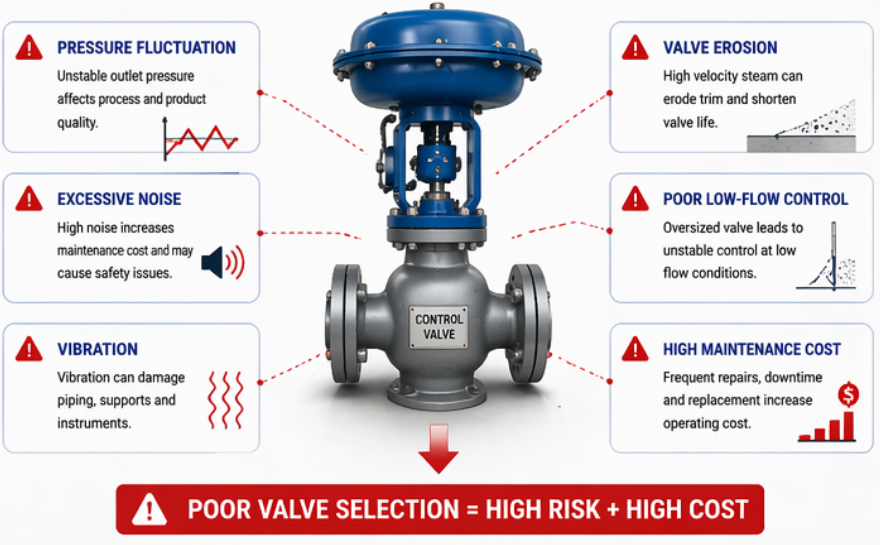
Common Problems Caused By Poor Valve Selection
| Problem | Possible Result |
|---|---|
| Oversized Valve | Poor control accuracy and unstable small-opening operation. |
| Undersized Valve | Insufficient steam flow during peak demand. |
| Incorrect Trim Design | High noise, vibration, erosion, and shorter service life. |
| Wrong Actuator Selection | Slow response, weak control force, or unstable valve movement. |
3. Valve Trim, Actuator, And Positioner Must Work Together
A control valve is not only the valve body. Its performance depends on the valve body, trim, actuator, positioner, signal type, and control logic. In a steam pressure reducing system, all of these elements must work together to provide stable pressure control.
The valve trim determines how steam pressure is reduced inside the valve. The actuator provides the force to move the valve. The positioner helps the valve respond accurately to control signals. If one of these elements is not properly matched, the valve may not respond smoothly or may fail to maintain stable outlet pressure.
Buyers should confirm whether the valve is pneumatic, electric, or electro-pneumatic, and whether the project requires local control, remote control, fail-open, fail-close, or fail-last position. These details affect safety, automation, and process reliability.
Control Valve Configuration Items
Valve body type and pressure rating
Valve size and calculated Cv value
Trim type and material
Low-noise or multi-stage trim requirement
Actuator type and operating force
Positioner type and control signal
Fail-safe position requirement
Manual override requirement
Local or remote control interface
Practical Tip
When comparing quotations, do not only check the valve diameter. Ask for valve sizing basis, Cv calculation, trim type, actuator type, positioner configuration, and noise control consideration.
4. Control Valve Selection Affects The Whole Steam Skid Design
In a skid-mounted steam pressure reducing system, the control valve selection affects more than the valve itself. It influences piping layout, support design, drain arrangement, safety valve sizing, pressure transmitter position, control cabinet design, and maintenance access.
If the valve produces high noise or vibration, the skid may require stronger pipe supports, better layout design, or special downstream piping arrangements. If the valve has a large actuator, the skid layout must provide enough installation and maintenance space. If the system includes desuperheating, the pressure reducing valve and spray water control system must also be coordinated.
This is why the control valve should be selected as part of the full steam skid engineering design, not as an isolated component.
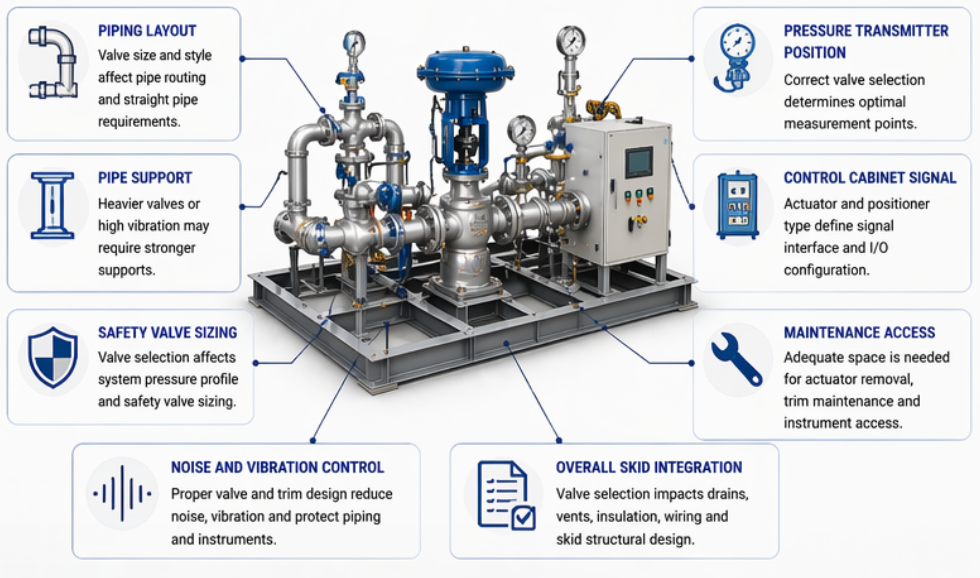
| Skid Design Area | Influence Of Control Valve Selection |
|---|---|
| Piping Layout | Determines installation space, straight pipe length, and flow direction. |
| Pipe Support | May require stronger supports for heavy valves or vibration control. |
| Safety Protection | Affects safety valve sizing and downstream overpressure protection. |
| Control System | Determines actuator, positioner, signal, alarm, and feedback requirements. |
| Maintenance Access | Requires enough space for actuator, trim, and valve body maintenance. |
5. How Buyers Should Evaluate Control Valve Proposals
When reviewing a steam pressure reducing system proposal, buyers should ask whether the valve has been selected based on actual steam conditions. A professional proposal should not only list a valve model. It should explain why that valve is suitable for the pressure drop, flow range, temperature, noise level, and control requirement.
Buyers should also check whether the supplier can provide a complete skid solution, including the pressure reducing valve, safety valve, instruments, control cabinet, piping, skid frame, testing, and documentation. A good steam pressure reducing system requires coordinated engineering, not only a good individual valve.
Buyer Review Checklist
Has the valve been selected based on actual inlet and outlet pressure?
Is the valve suitable for minimum, normal, and maximum steam flow?
Is the calculated Cv value reasonable?
Is the pressure drop too high for a standard valve structure?
Is low-noise or multi-stage trim required?
Is the actuator suitable for the operating force and response speed?
Is the positioner compatible with the control signal?
Are pressure transmitters and safety valves included in the system?
Is the valve layout suitable for maintenance and operation?
Are drawings, data sheets, and test documents included?
Conclusion
Control valve selection is one of the most important decisions in a steam pressure reducing system. The right valve can provide stable outlet pressure, accurate flow control, lower noise, reduced vibration, longer service life, and safer operation. The wrong valve can cause unstable pressure, excessive noise, erosion, maintenance problems, and poor system performance.
For industrial projects, buyers should evaluate control valves based on actual steam pressure, temperature, flow range, pressure drop, valve trim, actuator, positioner, safety requirements, and full skid integration. A reliable steam pressure reducing system depends on correct engineering selection, not only component price.
FAQ
Why is control valve sizing important in steam pressure reducing systems?
Control valve sizing affects pressure stability, flow capacity, control accuracy, noise, vibration, and valve service life.
What happens if the control valve is oversized?
An oversized valve may operate at a very small opening, making pressure control unstable and reducing control accuracy.
When is low-noise trim required?
Low-noise trim may be required when the pressure drop is high, steam velocity is high, or the system has strict noise and vibration requirements.
Should the control valve be selected separately from the skid?
No. It should be selected as part of the complete steam pressure reducing skid because it affects piping, safety protection, control logic, and maintenance layout.
Need Help Selecting A Steam Pressure Reducing System?
Send us your inlet pressure, outlet pressure, steam temperature, flow range, control accuracy, and project requirements. Our engineering team can help you review the control valve selection and provide a suitable steam pressure reducing skid solution.
Get Quote Contact Us