



What Information Is Needed Before Quoting A Steam Pressure Control Skid
2026-05-07 12:571. Basic Steam Parameters Required For Quotation
The first information needed before quoting a steam pressure control skid is the basic steam condition. This includes inlet pressure, inlet temperature, outlet pressure, outlet temperature, steam flow rate, and steam type. These parameters determine valve sizing, pipe diameter, pressure class, material selection, desuperheating requirement, and overall skid configuration.
Buyers should not only provide normal operating data. Maximum, minimum, and normal values are all important because steam demand may change during production. A system designed only for the maximum flow may perform poorly at low flow. A system designed only for normal flow may fail during peak demand.
If the steam is superheated, the quotation should also include desuperheating requirements. If the steam is saturated, the design focus may be different. Clear steam data helps the manufacturer select the correct pressure reducing valve, desuperheater, safety valve, and control instruments.
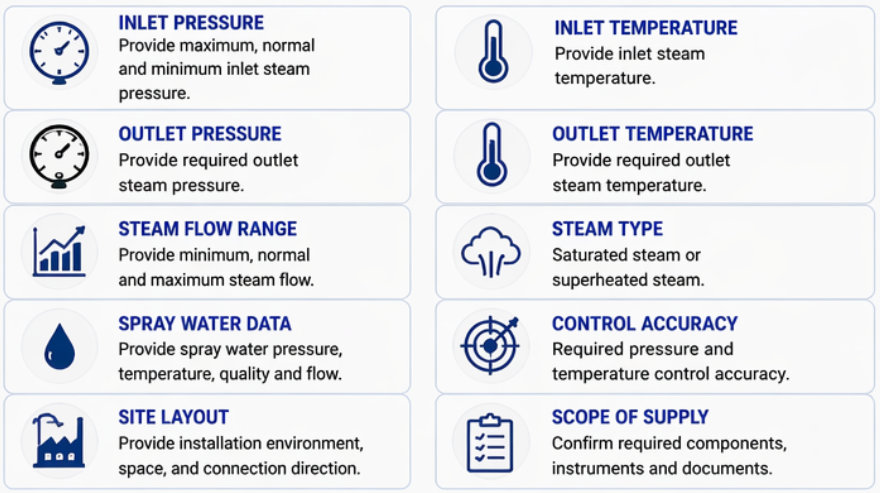
Basic Steam Data Checklist
| Required Information | Why It Matters |
|---|---|
| Inlet Steam Pressure | Determines pressure class, valve structure, and pressure reduction method. |
| Inlet Steam Temperature | Affects material selection, thermal design, and desuperheating requirement. |
| Outlet Pressure | Defines the required process steam pressure after regulation. |
| Outlet Temperature | Confirms whether a desuperheating section is required. |
| Steam Flow Range | Helps select valves that can operate across minimum, normal, and peak loads. |
2. Process Requirements And Control Accuracy
A steam pressure control skid should be quoted according to the real process requirement, not only according to pipe size. Buyers should explain what the downstream equipment is, how sensitive it is to pressure fluctuation, and whether the system needs pressure control only or both pressure and temperature control.
Some steam systems only supply general utility steam, while others support turbines, heat exchangers, reactors, sterilization lines, drying systems, or critical production equipment. The required control accuracy and response speed may be very different. If the downstream process is sensitive, the skid may need better control valves, more accurate transmitters, automatic control logic, and additional safety protection.
The buyer should also define whether the system operates continuously, intermittently, or under frequent load changes. This information helps the manufacturer evaluate valve turndown, actuator performance, noise control, and control stability.
Process Information To Confirm
Downstream equipment or process application
Required pressure control accuracy
Required temperature control accuracy
Continuous or intermittent operation
Load fluctuation range
Acceptable pressure fluctuation
Noise or vibration limitation
Automation and remote monitoring requirement
3. Spray Water Conditions For Desuperheating
If the steam pressure control skid includes desuperheating, spray water information is essential. The manufacturer needs to know the spray water pressure, spray water temperature, water quality, available flow rate, and control method. Without this data, the desuperheater and spray water control valve cannot be sized accurately.
Good atomization is the key to stable desuperheating. If spray water pressure is too low or the nozzle design is unsuitable, water droplets may not evaporate fully. This can lead to wet steam, pipe erosion, temperature instability, thermal stress, and damage to downstream equipment.
Buyers should also provide information about straight pipe length after the desuperheater, drainage arrangement, and whether the downstream pipeline has enough distance for complete evaporation and temperature measurement.
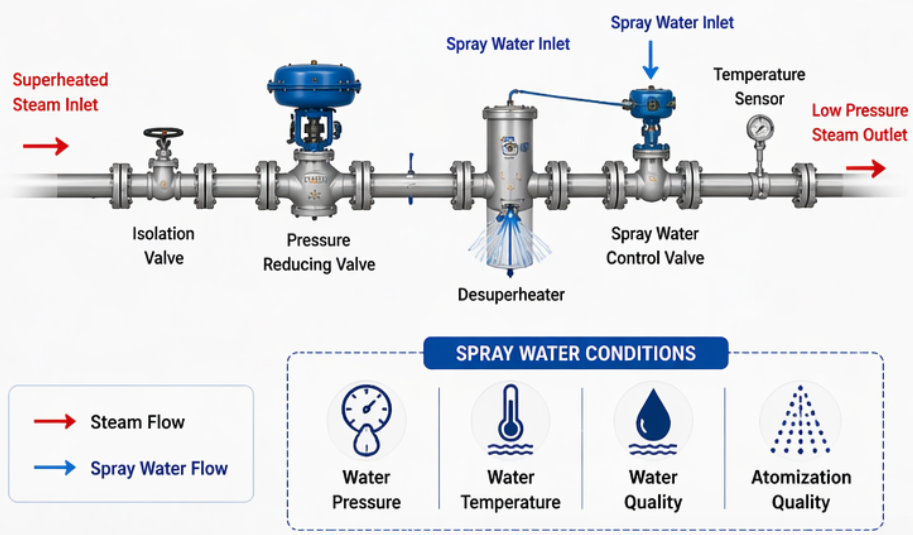
| Spray Water Data | Purpose |
|---|---|
| Spray Water Pressure | Supports proper atomization and stable temperature reduction. |
| Spray Water Temperature | Affects required water quantity and evaporation performance. |
| Water Quality | Helps prevent nozzle blockage, scaling, and downstream contamination. |
| Available Water Flow | Confirms whether enough cooling water is available for the required outlet temperature. |
4. Scope Of Supply, Instruments, And Control System
Before quoting, the buyer should define the required supply scope. Some projects only require a mechanical skid, while others need a complete package with control cabinet, actuators, positioners, transmitters, wiring, terminal box, alarms, and remote signal interface.
A steam pressure control skid may include pressure reducing valve, desuperheater, spray water control valve, safety valve, isolation valves, bypass valves, pressure gauges, pressure transmitters, temperature sensors, flow measurement devices, drain valves, vent valves, control cabinet, skid frame, and interconnecting piping.
Clear scope definition prevents quotation differences. If one supplier includes control instruments and another supplier excludes them, the prices cannot be compared directly.
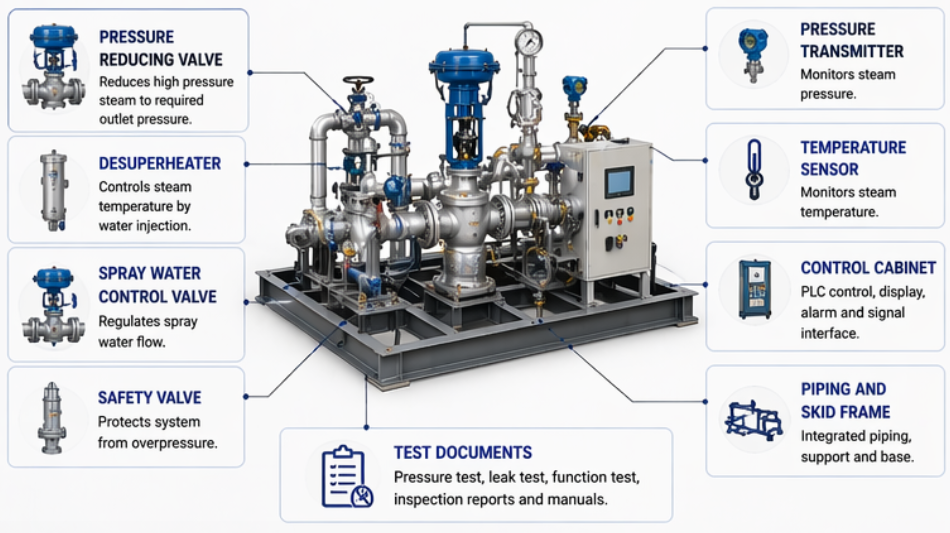
Common Scope Items
| Scope Category | Typical Items |
|---|---|
| Steam Control Components | Pressure reducing valve, desuperheater, spray water control valve, safety valve. |
| Instruments | Pressure gauges, transmitters, temperature sensors, flow instruments. |
| Control System | Control cabinet, actuator, positioner, signal interface, alarm output. |
| Skid Package | Piping, valves, skid base, supports, drains, vents, insulation interface. |
| Documents | Drawings, data sheets, test reports, manuals, packing details. |
5. Site Conditions, Layout, And Documentation Requirements
Site conditions also influence the quotation. The buyer should provide installation location, indoor or outdoor environment, available space, inlet and outlet direction, pipe connection standard, foundation conditions, maintenance access, and any transportation size limits. For skid-mounted systems, these details affect skid dimensions, piping layout, frame design, lifting points, and packaging method.
The required documentation should also be defined before quotation. A complete quotation may include general arrangement drawing, P&ID, technical data sheet, component list, control logic description, test reports, operation manual, and recommended spare parts list. If the project needs specific certificates or inspection documents, these should be stated early.
Clear site and documentation requirements help reduce project delays and avoid extra cost after order confirmation.
Practical Tip
The more complete the quotation data, the more accurate the technical proposal will be. For a steam pressure control skid, pressure, temperature, flow range, spray water conditions, control requirements, and site layout should always be confirmed before final pricing.
Final Quotation Checklist
Inlet steam pressure and temperature
Outlet steam pressure and temperature
Maximum, normal, and minimum steam flow
Saturated or superheated steam condition
Spray water pressure, temperature, and quality
Required pressure and temperature control accuracy
Downstream process application
Scope of supply and control system requirement
Pipe size, flange standard, and connection direction
Indoor or outdoor installation environment
Testing, documentation, and packing requirements
Conclusion
Before quoting a steam pressure control skid, the buyer should prepare complete technical information instead of only asking for a general price. Key data includes steam pressure, temperature, flow range, steam type, spray water conditions, control accuracy, safety requirements, scope of supply, site layout, and documentation needs.
A complete inquiry helps the manufacturer select the right valves, desuperheater, instruments, control system, and skid structure. It also helps the buyer receive a more accurate quotation, compare proposals fairly, and reduce procurement risk before production starts.
FAQ
What is the most important information before quoting a steam pressure control skid?
The most important information includes inlet pressure, inlet temperature, outlet pressure, outlet temperature, and steam flow range.
Why is spray water data needed?
Spray water pressure, temperature, quality, and flow affect desuperheater sizing, atomization quality, and outlet temperature stability.
Should buyers provide minimum and maximum steam flow?
Yes. Minimum, normal, and maximum flow values help ensure the valve and control system can operate stably across the full working range.
What documents should be requested with the quotation?
Useful documents include preliminary layout drawing, P&ID, technical data sheet, component list, test scope, and commercial scope of supply.
Need A Quotation For A Steam Pressure Control Skid?
Send us your steam pressure, temperature, flow range, spray water data, site conditions, and control requirements. Our engineering team can help you review the working conditions and provide a suitable skid-mounted steam pressure control solution.
Get Quote Contact Us