



What Should Be Included In A Gas Pressure Regulating Skid Specification
2026-05-02 12:141. Basic Project Information And Operating Conditions
The first section of a gas pressure regulating skid specification should define the project background and the basic operating conditions. This is the foundation of the entire selection process. Without these details, the manufacturer cannot accurately size the regulator, select the right filter, determine the pipe diameter, or confirm whether a single-line or dual-line skid is appropriate.
At a minimum, the specification should state the project name, installation location, application type, gas medium, design capacity, operating pressure range, outlet pressure requirement, temperature conditions, and operating mode. It should also explain whether the skid is intended for continuous service, peak-load operation, standby duty, or a critical process line that cannot tolerate shutdown. These details directly affect regulator sizing, component redundancy, and safety logic.
It is also helpful to indicate the installation environment. For example, the skid may be installed outdoors, in a utility station, within a process plant, or in a corrosive coastal environment. Such conditions influence coating requirements, cabinet protection grade, instrument enclosure selection, and anti-corrosion design.
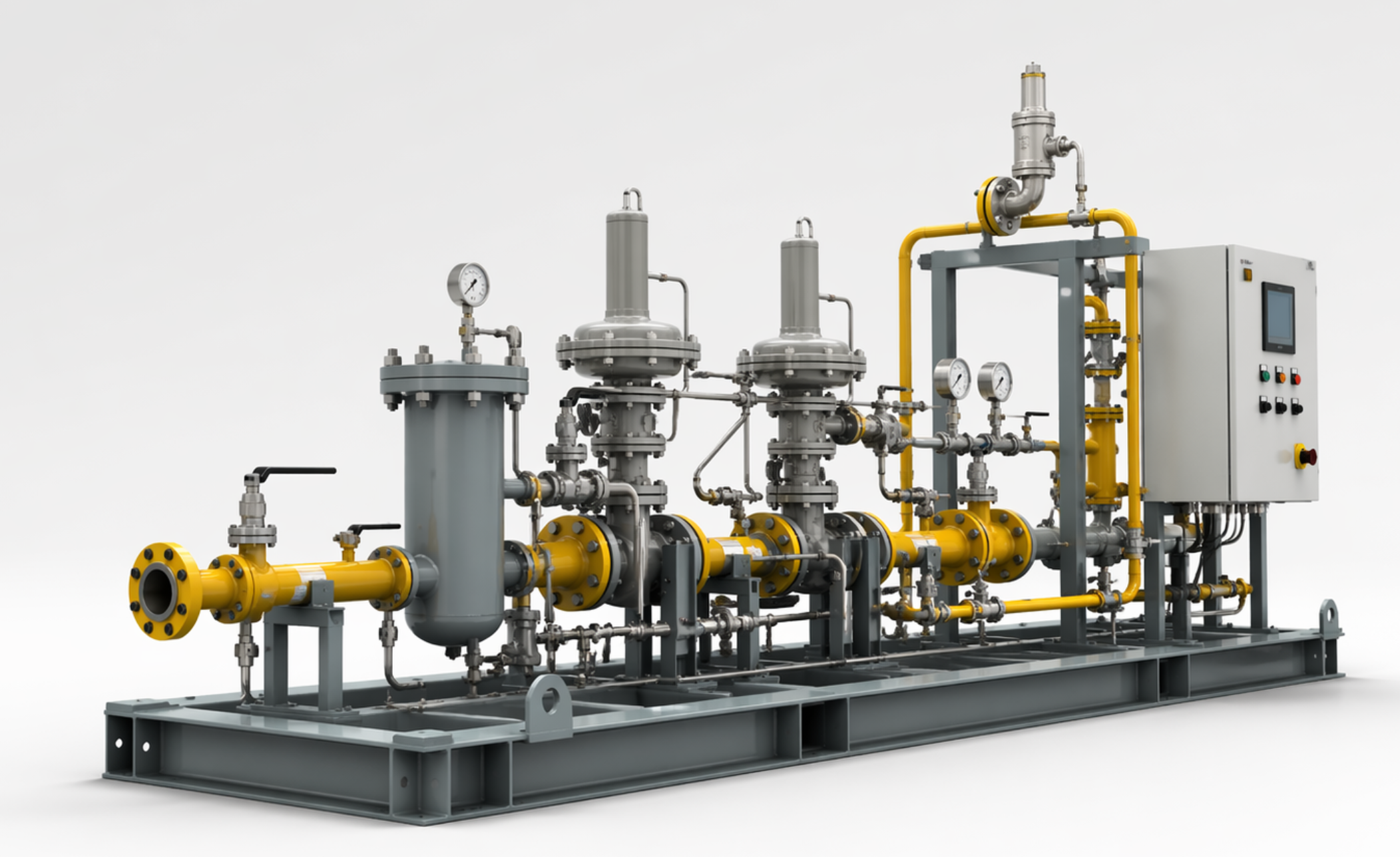
Typical Basic Data To Include
| Specification Item | Description |
|---|---|
| Gas Medium | Natural gas, LNG vapor, process gas, or other clean industrial gas |
| Inlet Pressure | Maximum, minimum, and normal operating inlet pressure |
| Outlet Pressure | Required downstream pressure and allowable pressure fluctuation |
| Flow Rate | Maximum, minimum, and normal flow demand |
| Ambient Conditions | Temperature, humidity, outdoor exposure, corrosive environment |
2. Process Scope And Main Equipment Configuration
A strong gas pressure regulating skid specification must clearly define what is included in the skid scope. Many procurement issues happen because the buyer assumes certain components are included, while the supplier quotes only a basic regulation assembly. The specification should list the exact process functions required and identify the major equipment to be included within the skid package.
In most industrial projects, the gas pressure regulating skid should include inlet isolation, filtration, pressure reduction, safety shut-off, relief protection, pressure indication, outlet isolation, and structural skid framing. Depending on project needs, it may also include bypass lines, heaters, flow meters, pressure transmitters, temperature transmitters, a control cabinet, local alarms, or remote communication capability.
The specification should also state whether the skid is single-line, dual-line, or one-duty-one-standby. If a redundancy requirement exists, it should be clearly written. This is especially important for plants where gas interruption could stop production or create safety risks.
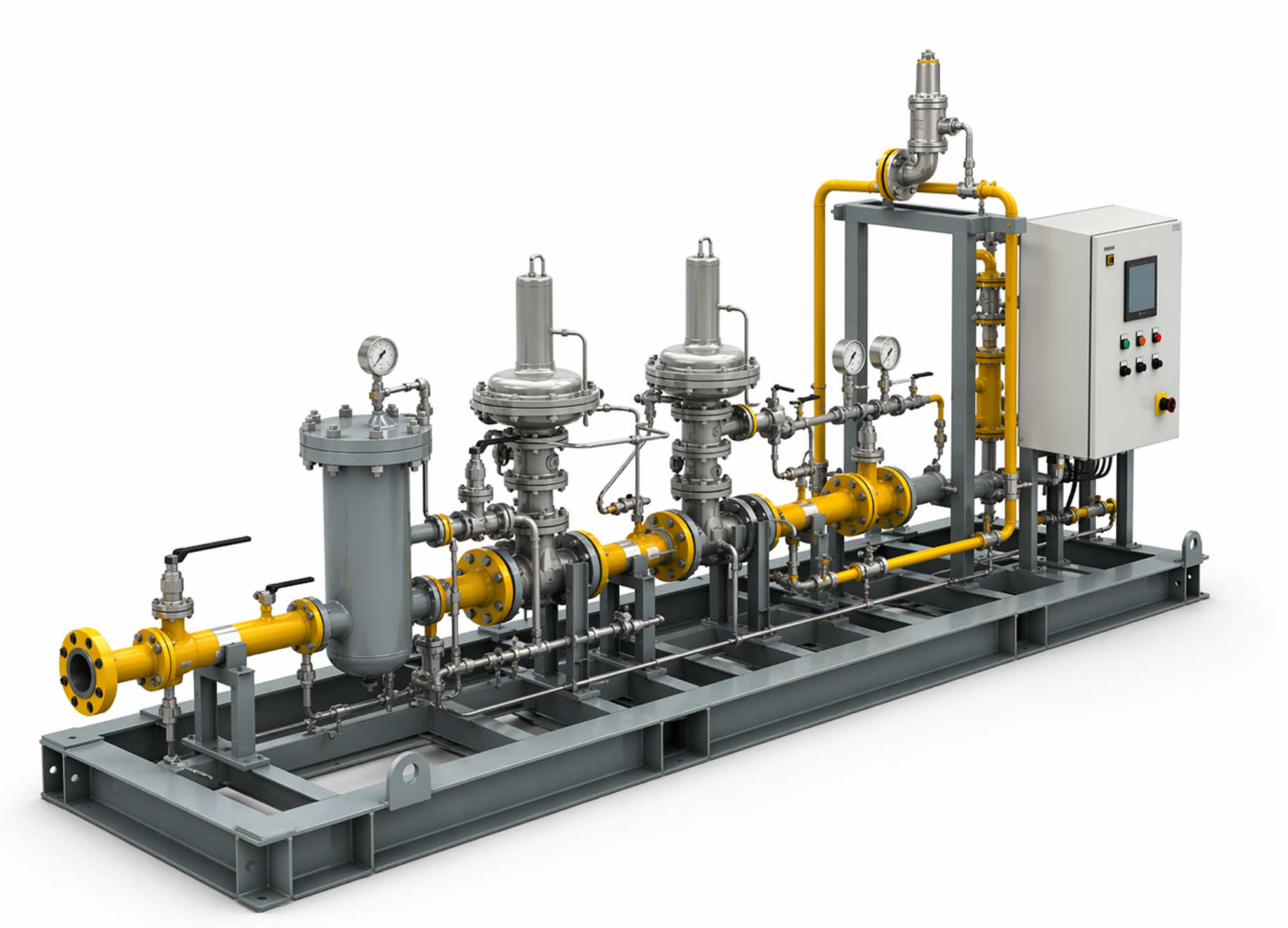
Main Components That May Be Required
Inlet isolation valve
Filter or filter separator
Pressure regulator
Slam shut valve or safety shut-off valve
Relief valve or monitor regulator
Pressure gauges and transmitters
Temperature indicators or transmitters
Flow metering section when required
Manual bypass line
Outlet isolation valve
Steel skid base and support structure
Control cabinet and electrical accessories when required
3. Design Standards, Materials, And Instrumentation Requirements
The specification should also define the design basis. This section is important because it ensures that the skid is designed, fabricated, and tested according to the standards required by the project owner or local regulations. If applicable, the buyer should state the preferred design codes, pressure class, flange standards, electrical standards, and inspection requirements.
Material requirements should not be overlooked. The specification should define the preferred body material, pipe material, flange material, seal type, and any corrosion protection expectations. In some projects, carbon steel is acceptable. In others, stainless steel or upgraded internals may be necessary depending on gas quality, moisture content, or site conditions.
Instrumentation requirements should be clearly listed as well. If the buyer needs local indication only, the skid may be simpler. If the project requires remote monitoring, then transmitters, terminal boxes, cable routing, or signal interface points should be included in the skid scope. The specification should define whether the skid needs pressure transmitters, temperature transmitters, alarm switches, local control, PLC interface, or communication with a plant control system.
Important Design And Material Points
| Category | What To Define In The Specification |
|---|---|
| Design Standard | Applicable pressure piping, mechanical, and electrical standards |
| Material | Pipe, valve body, flange, gasket, fastener, coating, and sealing material |
| Pressure Class | Required design pressure and flange class |
| Instrumentation | Gauge type, transmitter type, alarm points, local or remote control |
| Painting And Protection | Surface preparation, coating system, outdoor protection level |
4. Safety Protection, Performance Requirements, And Maintenance Considerations
A gas pressure regulating skid specification should clearly state the required safety philosophy. This is especially important for industrial gas systems where pressure instability or equipment failure could affect downstream burners, boilers, furnaces, or process units. The buyer should define whether overpressure protection is achieved by a relief valve, monitor regulator, slam shut device, or a combination of these methods.
The specification should also define the required pressure control accuracy, maximum allowable pressure drop, noise limits if applicable, and response expectations during load variation. Some projects also require emergency shut-off logic, local emergency stop, or signal interlocks with the upstream or downstream process.
Maintenance should be considered at the specification stage. The document should mention whether the skid layout must allow safe access to filters, regulators, and instruments. If spare parts or maintenance tools are required, they should be listed in the scope. A skid with poor maintenance accessibility can increase downtime and raise operating cost throughout the life of the project.
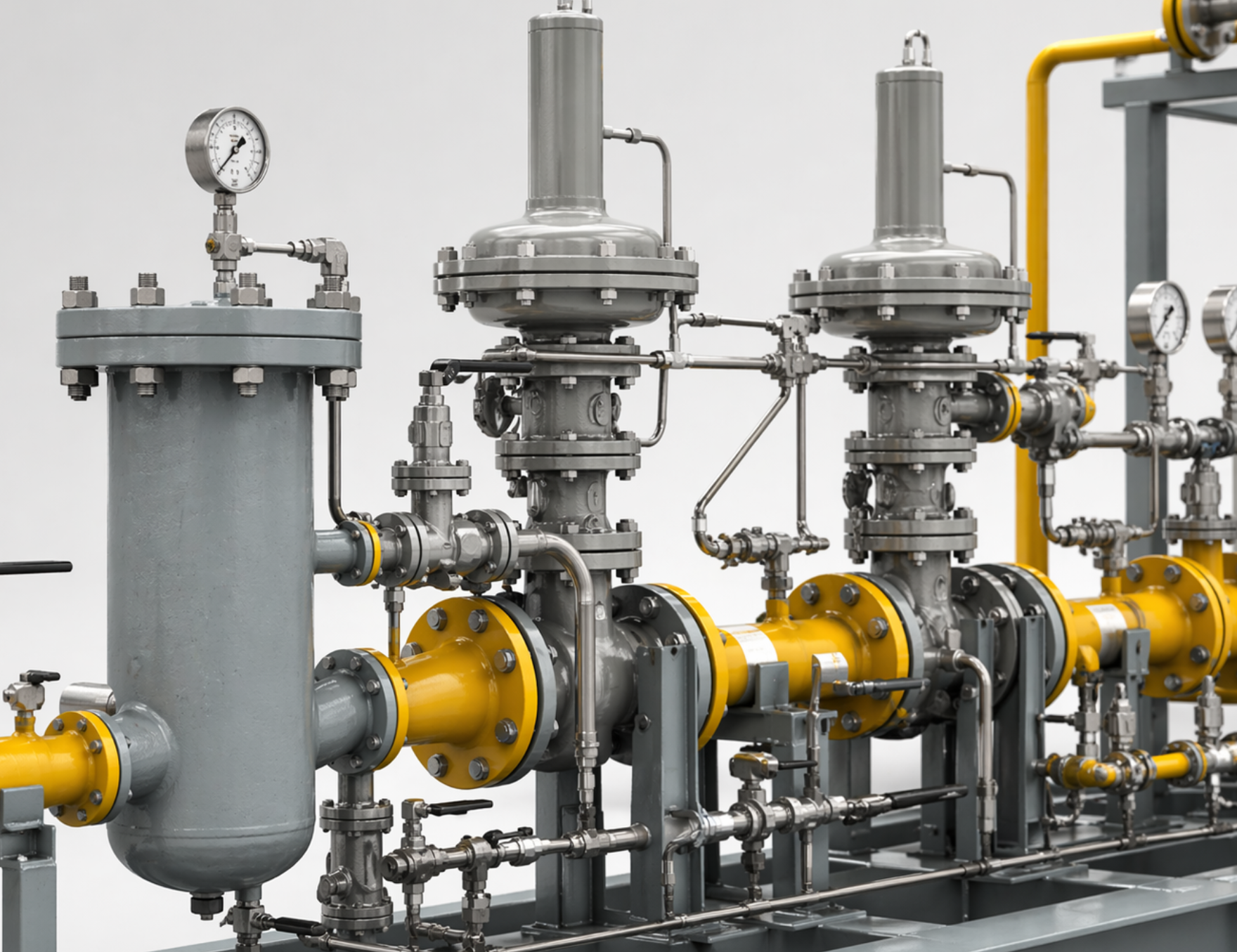
Practical Tip For Buyers
If the specification only mentions pressure and flow, it is incomplete. A better specification should also describe safety devices, instrument scope, material expectations, testing standards, drawing requirements, and operating philosophy. A detailed specification leads to more accurate quotations and fewer project surprises.
5. Testing, Documentation, Delivery Scope, And Final Checklist
A professional gas pressure regulating skid specification should finish with clear requirements for inspection, testing, documentation, packaging, and delivery. This section helps prevent disputes after fabrication begins. It also ensures the buyer receives the right drawings and reports for installation, approval, commissioning, and future maintenance.
Testing requirements may include pressure test, leak test, functional test, visual inspection, instrument checking, and factory acceptance test if required. Documentation may include the general arrangement drawing, piping and instrumentation diagram, data sheets, bill of materials, component manuals, test reports, and operation manual. The specification should also mention packaging expectations, shipping marking, and whether the skid will be delivered fully assembled, partially dismantled, or containerized in sections.
If spare parts, commissioning assistance, or after-sales technical support are required, these should also be clearly included in the specification or inquiry document. The more complete the technical and commercial scope, the easier it is to compare suppliers on a like-for-like basis.
Final Checklist For A Gas Pressure Regulating Skid Specification
Project background and application
Gas medium and working condition data
Pressure and flow parameters
Main equipment and skid scope
Single-line or dual-line design requirement
Design standards and pressure class
Material and coating requirements
Instrumentation and control scope
Safety protection philosophy
Performance requirements
Testing and inspection requirements
Drawing and documentation package
Packaging and delivery requirements
Spare parts and service expectations
Conclusion
A gas pressure regulating skid specification should be a practical engineering document, not just a simple request for price. It should define the full working condition, equipment scope, design basis, material requirements, instrument needs, safety philosophy, test expectations, and documentation package. When the specification is complete, the supplier can provide a more accurate technical proposal, and the buyer can evaluate quotations more fairly and reduce project risk.
For industrial projects, a detailed specification is one of the best ways to improve procurement efficiency, avoid change orders, and ensure that the final skid performs safely and reliably in real operating conditions.
FAQ
Why is a skid specification important?
It helps define the technical scope clearly, improves quotation accuracy, and reduces misunderstanding during design, fabrication, and commissioning.
What is the most important information to provide first?
The most important starting points are gas medium, inlet pressure, outlet pressure, flow rate, and installation conditions.
Should the specification include testing and documents?
Yes. Testing requirements and document deliverables are critical for acceptance, installation, maintenance, and project approval.
Can a gas pressure regulating skid be customized?
Yes. Most industrial skids are customized according to process requirements, gas conditions, pressure range, control philosophy, and site layout.
Need Support For A Custom Gas Pressure Regulating Skid?
Send us your working conditions, pressure range, flow data, and project requirements. Our team can help you review the specification and provide a suitable gas pressure regulating skid solution for your industrial project.
Get Quote Contact Us