



What Testing Points Matter Most Before Industrial Skid Delivery
2026-04-05 17:58Before an industrial skid is delivered, the most important question is not whether the assembly looks complete, but whether the skid has been tested in a way that proves pressure integrity, functional performance, electrical and instrument readiness, and documentation completeness. In process industries, FAT, loop checks, calibration, and later SAT/SIT are treated as related but distinct steps, while process piping codes also treat leak testing as a core requirement rather than an optional extra. That is why the most important pre-delivery testing points are usually the ones that verify containment, control, and handover readiness together, not separately.
Pressure Integrity And Leak Tightness Come First
The first testing priority is always the pressure boundary. Before shipment, the skid should have a clearly defined pressure test and leak test plan for its pressure-containing piping, valves, and other pressure-retaining parts. ISA’s hydrostatic testing standard for control valves specifically describes hydrostatic shell testing as a way to prove the structural integrity and leak tightness of pressure-retaining parts, and ASME B31.3 requires leak testing for process piping other than Category D fluid service. For a real skid project, this means the test scope should be clear line by line: what was tested, what medium was used, what pressure was applied, how long it was held, and what acceptance criteria were used.
It is also important to distinguish between pressure containment and shutoff performance. Manufacturer test literature commonly separates shell tests from seat leakage tests and body or stem seal leakage checks, which shows that “the skid does not leak externally” and “the valve shuts off properly” are not the same thing. So before delivery, the most important test point is not only whether the skid can hold pressure, but also whether critical isolation valves, regulators, and control valves perform their intended sealing function under the specified conditions.

Functional Testing, Loop Checks, And Calibration Matter Just As Much
Pressure testing alone does not prove that an industrial skid is ready to run. ISA’s FAT/SAT/SIT framework describes FAT as a structured methodology that includes readiness checks, execution procedures, punch list tracking, and detailed checklists covering documentation, hardware, software, operator interfaces, and communication paths. In practice, that means a meaningful pre-delivery FAT should verify alarm actions, permissives, interlocks, sequence logic, HMI displays, tag mapping, communication links, and other control functions that affect how the skid will actually behave in operation.
Loop verification is another testing point that should never be skipped. ISA states that electrical and instrumentation loop checks are the activities carried out after loop construction is complete and before cold commissioning begins. ISA’s calibration guidance also explains that loop calibration verifies the entire connected loop within tolerance, while individual instrument calibration checks only one device at a time. For skid delivery, this means transmitters, switches, local indicators, PLC or DCS inputs, outputs, alarms, and final elements should be checked end-to-end as one functioning loop, not only as separate parts.
For skids with tight control requirements, valve dynamic response is also worth checking before shipment. ISA’s control valve response standard focuses on response characteristics such as dead time, rise time, settling time, and overshoot, because these directly affect how accurately and smoothly a control loop performs. So if the skid includes control valves that are critical to temperature, pressure, or flow stability, response testing or at least functional stroke verification can be one of the most valuable FAT items before delivery.
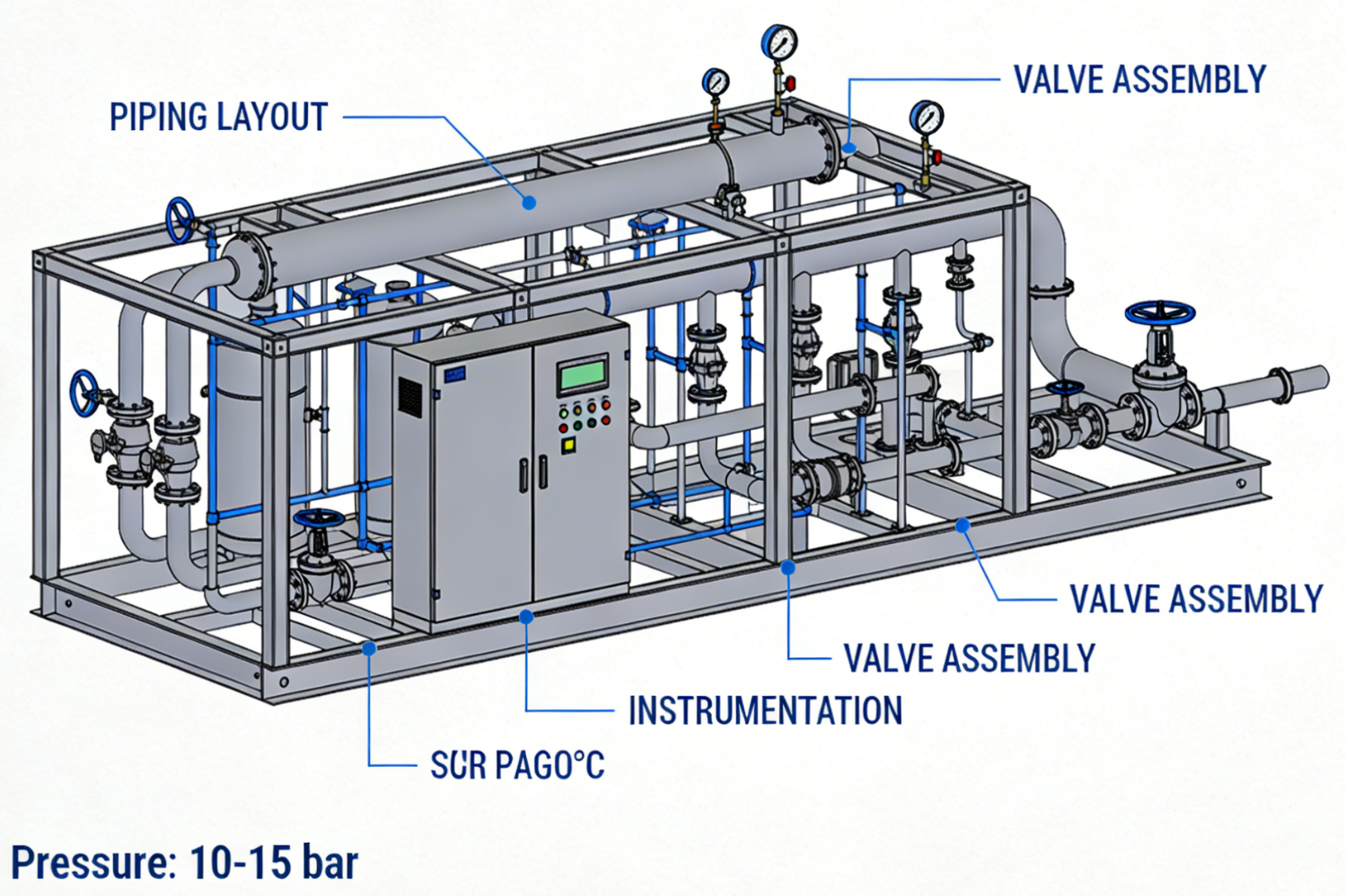
Safety Actions, Electrical Readiness, And Documentation Must Be Closed Out Before
Shipment
A skid should not be considered ready for delivery until safety-related actions and electrical or automation readiness have been checked in a practical way. The ISA FAT framework emphasizes punch list tracking and defined completion criteria, and commissioning guidance from Spirax Sarco emphasizes that systems and components should be safe, correctly fitted, tested to requirements, and supported by clear reporting and handover documents. So one of the most important pre-delivery testing points is whether all unresolved FAT findings are either closed or formally documented, and whether the evidence package is strong enough for installation, startup, and later troubleshooting.
This is also where test records become as important as the tests themselves. A good delivery package usually includes FAT reports, punch lists, calibration and loop-check records, pressure or leak test records, and the latest approved drawings and manuals. Where actuated or safety-related valves are involved, proof that the valve assembly moves on demand can also be valuable; Emerson, for example, describes partial stroke testing as a way to confirm that a valve assembly moves when required. In other words, the final test point before shipment is not just “did the skid run in the workshop,” but “is there clear evidence that the skid was tested, deviations were managed, and the delivered package matches the approved design.”
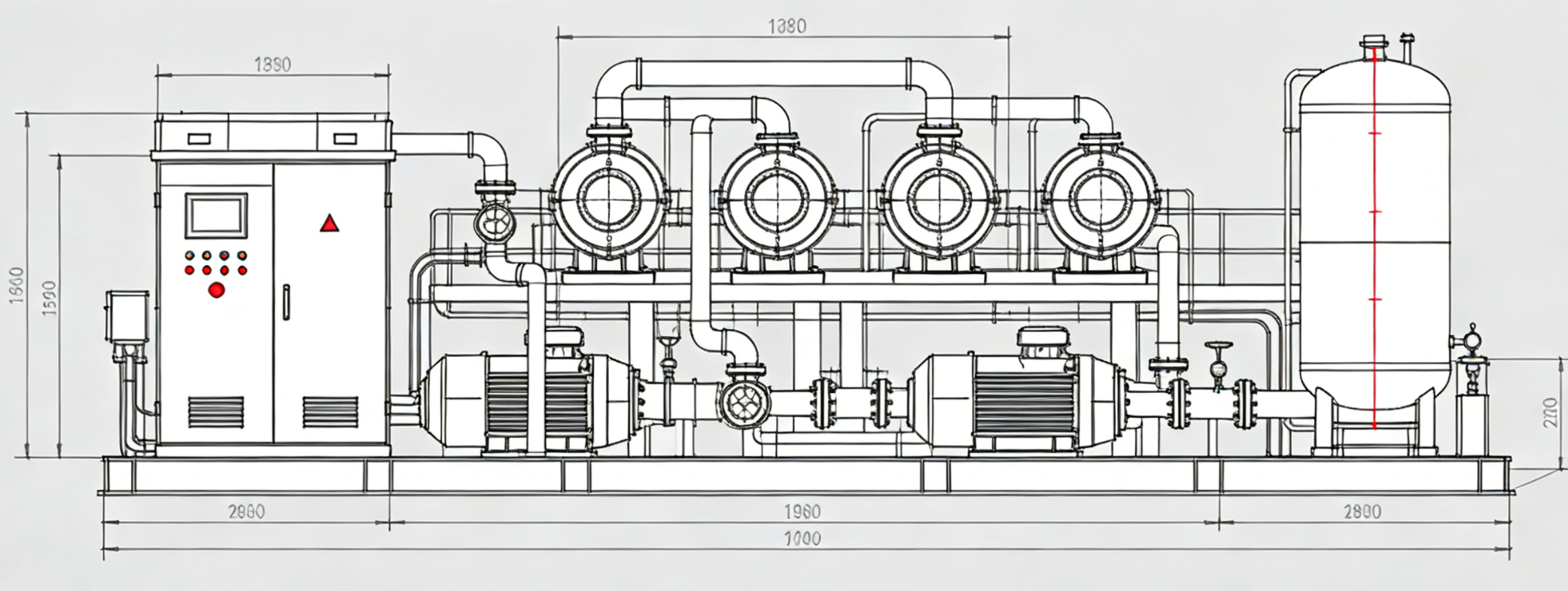
The testing points that matter most before industrial skid delivery are usually the ones that prove three things at the same time: the skid can safely contain pressure, the control and instrument loops work as intended, and the delivered package is fully documented and ready for handover. Pressure and leak testing answer the containment question; FAT, loop checks, and calibration answer the functionality question; and punch-list closure plus documented records answer the delivery-readiness question. When these three areas are covered properly, skid delivery becomes far more reliable and project risk drops significantly.