


How Condensate Build Up Affects Steam Pressure Reducing Skids
2026-07-03 16:16Need To Solve Condensate Problems In Your Steam Skid?
Send us your inlet steam pressure, outlet pressure, steam temperature, steam flow range, skid layout, drain point arrangement, steam trap type, pipe slope, startup procedure, and current condensate symptoms. Our engineering team can help review whether your steam pressure reducing skid needs drainage optimization.
1. Why Condensate Build-Up Happens In Steam Pressure Reducing Skids
Steam pressure reducing skids usually handle high-temperature steam passing through strainers, pressure reducing valves, safety valves, gauges, transmitters, bypass lines, and downstream piping. During startup, heat loss, pressure reduction, and contact with colder pipe surfaces can create condensate inside the system.
If the skid does not have proper drain points, steam traps, pipe slope, warm-up arrangement, or low-point drainage, condensate can collect inside the piping and around the pressure reducing valve. This affects steam quality and pressure control.
Condensate build-up is especially common during cold startup, low-load operation, long standby periods, poor insulation conditions, and systems where drainage was not considered during skid design.
Common Signs Of Condensate Problems
Loud knocking noise or water hammer during startup.
Pressure reducing valve vibrates or responds slowly.
Outlet pressure fluctuates after the steam skid.
Drain valves discharge large amounts of water.
Steam traps fail frequently or remain overloaded.
Downstream equipment receives unstable steam pressure or poor heating performance.
2. How Condensate Affects Steam Pressure Reducing Skid Performance
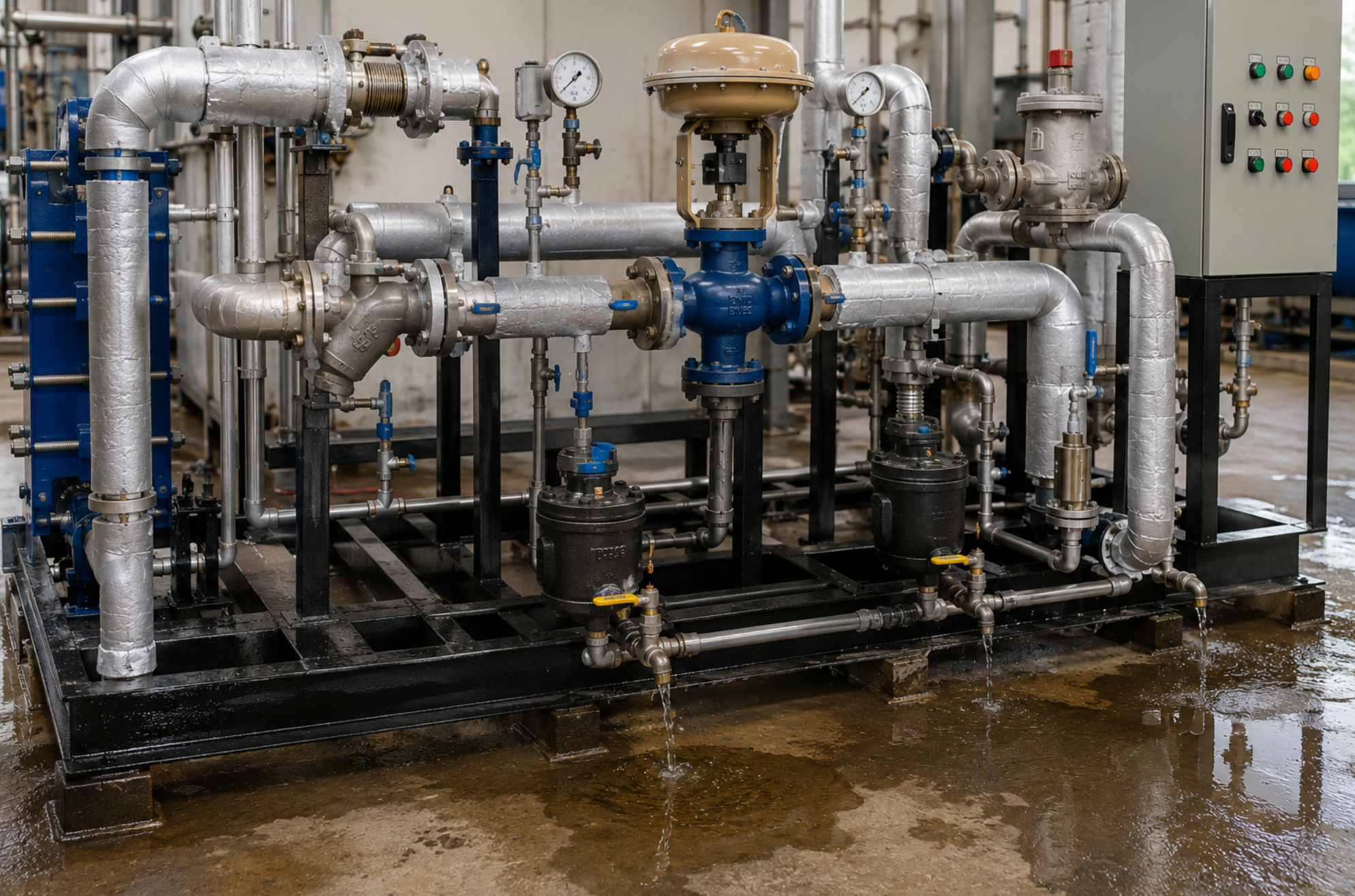
Condensate can affect a steam pressure reducing skid in several ways. It can reduce effective flow area, disturb steam velocity, create impact force, damage valve trim, block instrument lines, and create unstable pressure feedback. In serious cases, water hammer may damage piping and equipment.
Troubleshooting Table
| Condensate Issue | Typical Result | What To Check |
|---|---|---|
| Low-Point Condensate Build-Up | Steam flow becomes restricted and unstable. | Low points, pipe slope, drain valves, and drip legs. |
| Poor Steam Trap Performance | Condensate cannot be removed continuously. | Trap size, type, blockage, leakage, and back pressure. |
| Water Hammer | Pipe vibration, valve damage, and flange leakage occur. | Startup procedure, drainage before opening, and pipe support. |
| Condensate Near PRV | Valve vibration and unstable pressure control appear. | Drain points before and after the pressure reducing valve. |
| Wet Steam To Downstream Equipment | Heating performance becomes poor and unstable. | Insulation, drainage, steam quality, and equipment inlet condition. |
| Blocked Instrument Impulse Lines | Pressure feedback becomes delayed or inaccurate. | Pressure transmitter tubing and condensate pockets. |
3. Drainage Design Should Be Planned Before Fabrication
Drainage design should not be added only after condensate problems appear on site. For a steam pressure reducing skid, drain points should be considered before and after the strainer, before and after the pressure reducing valve, at low points, and near downstream distribution lines.
If the skid is compact but ignores drainage access, operators may find it difficult to discharge condensate, maintain steam traps, or inspect drain valves. This creates long-term maintenance problems and may shorten valve service life.
Drainage Design Checklist
Drain points at all low positions in the skid.
Drainage before and after the pressure reducing valve.
Steam trap size and type suitable for real condensate load.
Bypass and manual drain arrangement for startup.
Pipe slope that guides condensate toward drain points.
Maintenance access for trap replacement and drain inspection.
4. Condensate Build-Up Can Cause Valve Vibration And Pressure Hunting
When condensate collects near the pressure reducing valve, high-speed steam may push water through the valve and downstream pipe. This can cause water hammer, impact noise, vibration, and unstable flow. The valve actuator and positioner may also respond to unstable pressure feedback.
In some cases, operators may think the pressure reducing valve is oversized or incorrectly tuned. But the root cause may be condensate and poor drainage. Before changing the control valve, drainage and steam trap performance should be checked first.
Valve Stability Checklist
Check whether vibration happens during startup or continuous operation.
Drain condensate before fully opening the steam line.
Inspect drain valves and steam traps near the PRV station.
Check pressure gauge fluctuation before and after the PRV.
Review whether instrument lines contain condensate pockets.
Confirm whether pipe support is sufficient near the valve station.
5. Startup Operation Has A Big Impact On Condensate Risk
During startup, cold pipes and equipment create more condensate. If steam is introduced too quickly, condensate may be pushed through the skid before it can be drained. This is a common reason for water hammer and valve impact during startup.
A good startup procedure should include slow warm-up, initial drainage, steam trap inspection, gradual valve opening, and pressure monitoring. For automated steam pressure reducing skids, control logic should also consider warm-up and low-load conditions.
Startup Checklist
Open warm-up line or bypass slowly before full operation.
Drain condensate before increasing steam flow.
Check steam traps and drain valves before startup.
Monitor pressure before and after the pressure reducing valve.
Listen for knocking noise, vibration, or water hammer.
Increase load gradually instead of opening the valve too quickly.
6. How A Proper Steam Pressure Reducing Skid Reduces Condensate Problems
A properly designed steam pressure reducing skid should not only focus on the pressure reducing valve. It should also include strainer, safety valve, pressure gauges, pressure transmitters, drain valves, steam trap connections, bypass line, pipe supports, control cabinet, and a skid-mounted frame designed for operation and maintenance.
The skid should be designed with correct pipe slope, accessible drain points, proper trap arrangement, and enough support around the valve station. If both pressure and temperature control are needed, a PRDS system should also consider drainage after desuperheating.
Practical Tip
If a steam pressure reducing skid has pressure fluctuation, vibration, or water hammer, do not only check the control valve. Check drain points, steam traps, condensate return, pipe slope, startup procedure, and low-point drainage together.
Engineering Review Checklist
Confirm inlet pressure, outlet pressure, steam temperature, and flow range.
Review skid layout and low-point drainage.
Check drain valves before and after the PRV.
Review steam trap type, size, and discharge route.
Check pipe slope and condensate return pressure.
Inspect insulation condition and heat loss.
Review startup procedure and warm-up arrangement.
Consider a custom steam pressure reducing skid with optimized drainage design.
Conclusion
Condensate build-up can affect steam pressure reducing skids by restricting steam flow, causing pressure fluctuation, triggering water hammer, damaging valves, disturbing instruments, and reducing downstream heating performance.
A reliable steam pressure reducing skid should include proper drainage, steam trap arrangement, pipe slope, maintenance access, warm-up operation, and factory layout review to reduce condensate-related failures.
FAQ
How does condensate build-up affect a steam pressure reducing skid?
Condensate can restrict steam flow, cause water hammer, damage valves, disturb pressure control, create vibration, and reduce downstream heating performance.
Can condensate cause pressure fluctuation?
Yes. Condensate inside the steam line can disturb steam flow and cause unstable pressure before or after the pressure reducing valve.
Why are drain points important in steam skids?
Drain points remove condensate from low areas and critical sections. Without proper drainage, condensate may build up and cause water hammer or valve damage.
How can condensate problems be reduced?
Use correct drain points, steam traps, pipe slope, insulation, warm-up procedure, condensate return design, and a properly engineered steam pressure reducing skid layout.
Need Help With Condensate Problems In Steam Skids?
Send us your steam pressure, flow range, skid layout, drain points, steam trap arrangement, and current condensate symptoms. Our engineering team can help review the working conditions and provide a suitable steam pressure reducing skid solution.
Get Quote Contact UsRelated Product Paths For This Project
How Condensate Build Up Affects Steam Pressure Reducing Skids should connect the troubleshooting topic with Shenqi's real equipment categories. For gas pressure, steam pressure reducing, PRDS, skid module, valve, and prefabricated pipeline projects, buyers usually need to compare the fault symptom with the full system scope before requesting a quotation. The related pages below help the engineering team move from diagnosis to product selection without leaving the site.
- Gas Pressure Regulating Skid
- Temperature and Pressure Reducing Device
- Prefabricated Pipeline
- Skid Module
- Pressure Vessel
- Accessories
- Valves
- Contact Shenqi Machinery
For a project specific review, prepare inlet pressure, outlet pressure, flow range, medium, temperature, control accuracy, valve configuration, instrument requirement, site layout, and commissioning schedule before contacting Shenqi Machinery.