


How To Reduce Water Hammer Risk In Steam Pressure Reducing Systems
2026-06-17 21:21Need To Reduce Water Hammer In Your Steam System?
Send us your inlet pressure, outlet pressure, steam temperature, steam flow range, pipe layout, drainage points, steam trap arrangement, current vibration symptoms, and existing pressure reducing valve data. Our engineering team can help review whether a steam pressure reducing skid solution is suitable for your project.
1. Why Water Hammer Happens In Steam Pressure Reducing Systems
Steam pressure reducing systems lower high-pressure steam to a pressure suitable for downstream equipment. During startup, load change, or pressure reduction, condensate can form inside the piping. If condensate is not drained properly, high-speed steam may push water slugs through the pipe, causing sudden impact and vibration.
This impact is commonly known as water hammer. It may damage pressure reducing valves, safety valves, strainers, flanges, steam traps, pressure gauges, transmitters, and downstream production equipment. In severe cases, it can create serious safety risks for the whole steam system.
For boiler rooms, heat exchangers, drying lines, sterilization systems, textile plants, food factories, chemical plants, and power utility systems, water hammer prevention should be considered during steam pressure reducing skid design, not only after the problem appears.
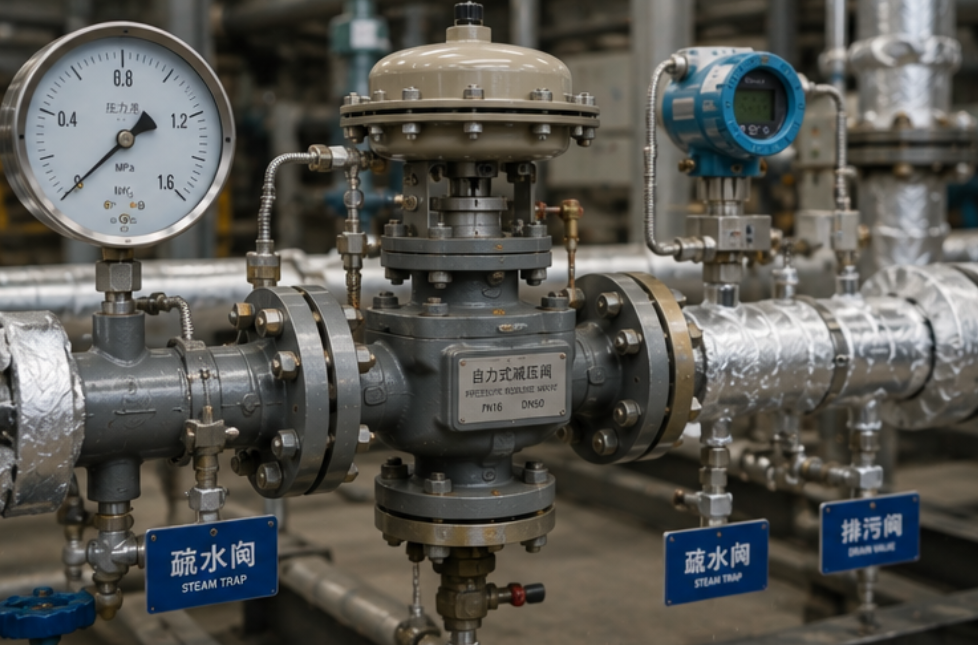
Common Signs Of Water Hammer
Loud knocking noise inside steam pipelines.
Strong vibration around pressure reducing valves or pipe bends.
Pressure gauge needles shaking during startup or load change.
Steam traps discharging abnormally or failing frequently.
Flange leakage or valve damage after repeated impact.
Downstream equipment receives unstable steam pressure.
2. Main Causes Of Water Hammer In Steam Systems
Water hammer is usually related to condensate and steam flow behavior. Before replacing a valve, buyers should check whether the system has proper drainage, correct pipe slope, suitable steam trap arrangement, stable pressure control, and enough warm-up time.
Troubleshooting Table
| Possible Cause | Typical Result | What To Check |
|---|---|---|
| Condensate Accumulation | Water slugs are pushed by high-speed steam. | Low points, drain valves, steam traps, and pipe slope. |
| Poor Warm-Up Procedure | Cold pipes generate condensate quickly. | Startup speed, bypass operation, and initial drainage. |
| Fast Valve Opening | Steam flow accelerates and pushes condensate suddenly. | Control logic, actuator speed, and startup sequence. |
| Incorrect PRV Sizing | Pressure control becomes unstable and causes vibration. | Minimum, normal, and maximum steam flow. |
| Blocked Strainer | Steam flow becomes restricted and unstable. | Strainer screen, rust, scale, and differential pressure. |
| Missing Drain Points | Condensate remains inside the pressure reducing section. | Drain locations before and after the pressure reducing valve. |
3. Drainage Design Is The First Step To Prevention
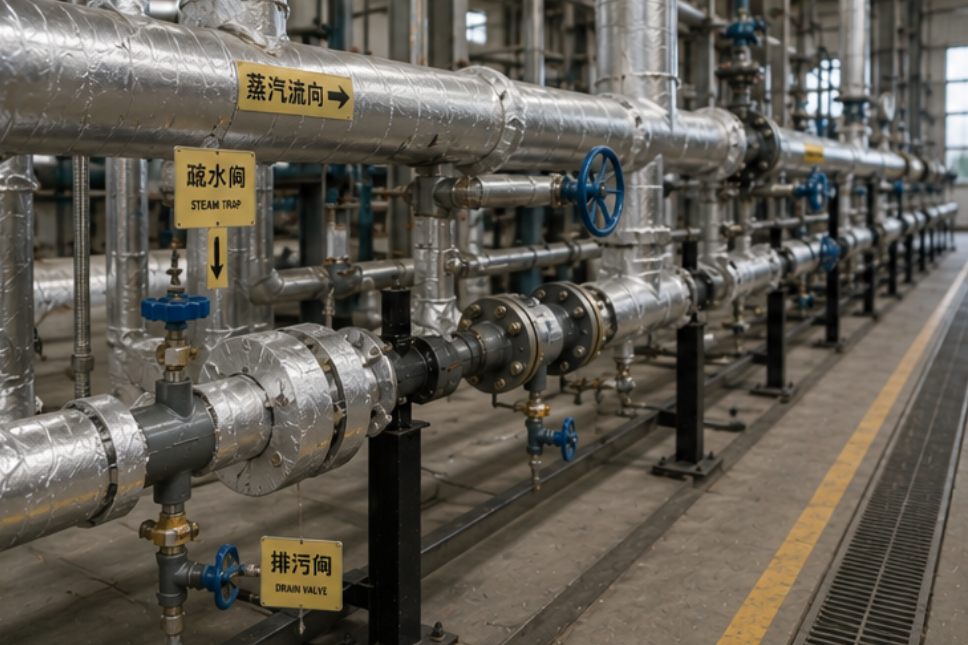
Proper drainage is the most important factor in reducing water hammer risk. Steam lines should avoid condensate accumulation, especially near low points, pipe bends, pressure reducing valves, control valves, strainers, and downstream equipment inlets.
Drain valves, steam traps, drip legs, and correct pipe slope should be arranged before and after the pressure reducing section. During startup, condensate should be discharged before full steam flow enters the system.
Drainage Checklist
Install drain points at low positions in the steam line.
Arrange drainage before and after the pressure reducing valve.
Check whether steam traps are correctly sized and maintained.
Confirm pipe slope allows condensate to move toward drain points.
Inspect strainers regularly for blockage and accumulated dirt.
Remove condensate before opening the system to full load.
4. Pressure Reducing Valve Selection Also Affects Water Hammer Risk
A pressure reducing valve that is too large may hunt at low flow, causing pressure instability and vibration. A valve that is too small may stay fully open during peak demand and fail to control pressure properly. Both situations can increase system instability and make water hammer problems worse.
Correct valve selection should be based on inlet pressure, outlet pressure, steam temperature, minimum flow, normal flow, maximum flow, downstream equipment demand, and control accuracy. For large pressure drops or wide flow ranges, a staged pressure reducing design may be more stable.
PRV Selection Data To Prepare
Inlet steam pressure and temperature.
Required outlet pressure.
Minimum, normal, and maximum steam flow.
Downstream equipment pressure requirement.
Startup and peak-load operating conditions.
Required control signal, actuator type, and control cabinet interface.
5. How A Steam Pressure Reducing Skid Reduces Water Hammer Risk
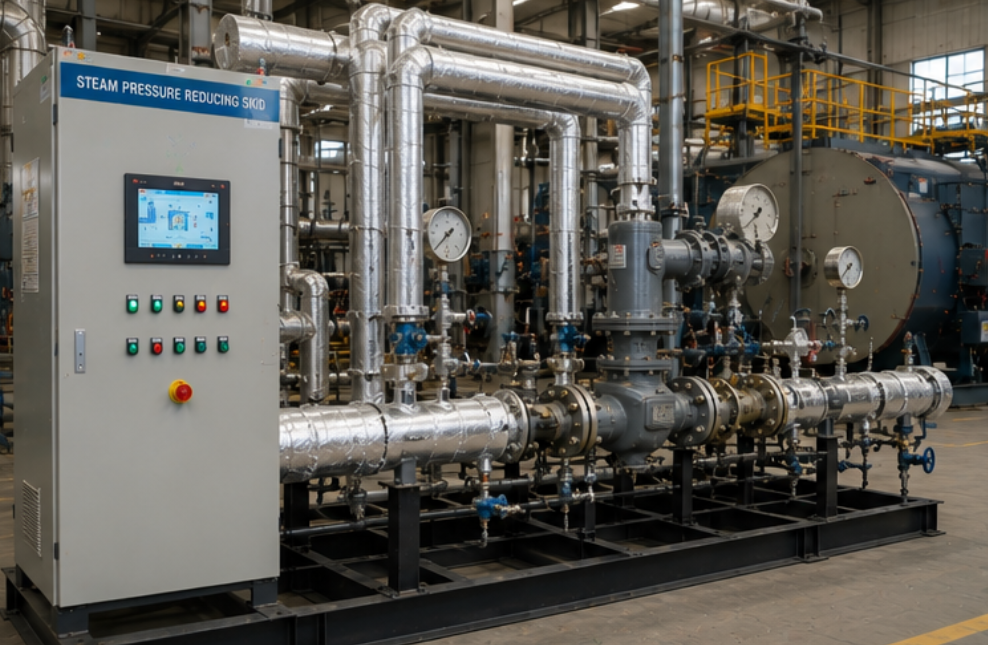
A steam pressure reducing skid can integrate pressure reducing control valve, strainer, safety valve, pressure gauges, pressure transmitters, drain valves, bypass line, control cabinet, piping, pipe supports, and skid-mounted frame into one engineered package.
Compared with loose site assembly, a skid-mounted system allows drainage points, pipe supports, instrument locations, valve layout, and testing requirements to be reviewed together before delivery. This helps reduce installation mistakes and makes maintenance easier.
Practical Tip
If water hammer happens near the pressure reducing station, check drainage and startup operation first. Then review PRV sizing, pipe slope, strainer condition, valve opening speed, and skid layout.
Water Hammer Risk Reduction Checklist
Warm up the steam line slowly before full-load operation.
Drain condensate before opening the pressure reducing valve fully.
Check strainer blockage and clean the screen regularly.
Confirm steam trap position, capacity, and working condition.
Review pressure reducing valve sizing and control response.
Check pipe supports, pipe slope, low points, and elbows.
Install monitoring points before and after the pressure reducing section.
Use a skid-mounted design when factory assembly and layout review are needed.
Conclusion
Water hammer in steam pressure reducing systems is usually caused by condensate accumulation, poor drainage, fast valve opening, incorrect pressure reducing valve sizing, blocked strainers, wrong pipe slope, or poor startup operation.
A properly designed steam pressure reducing skid can help improve drainage, stabilize pressure reduction, reduce vibration, protect valves and instruments, and support safer long-term steam system operation.
FAQ
What causes water hammer in steam pressure reducing systems?
Common causes include condensate accumulation, poor drainage, fast valve opening, blocked strainers, wrong pipe slope, incorrect PRV sizing, and poor startup operation.
Can a pressure reducing valve cause water hammer?
Yes. If the valve opens too quickly, is incorrectly sized, or is installed without proper drainage, it may increase pressure instability and water hammer risk.
How can water hammer be reduced?
Use proper drainage, slow warm-up, correct steam trap arrangement, suitable PRV sizing, clean strainers, correct pipe slope, and stable control logic.
Why choose a skid-mounted steam pressure reducing system?
A skid-mounted system can integrate valves, strainers, instruments, drainage points, safety devices, piping, control cabinet, and factory testing into one organized package.
Need Help Reducing Water Hammer In Your Steam System?
Send us your steam pressure, temperature, flow range, pipe layout, drainage points, current vibration symptoms, and existing pressure reducing valve data. Our engineering team can help review the working conditions and provide a suitable steam pressure reducing skid solution.
Get Quote Contact Us