



LNG Station Gas Pressure Alarm Common Causes And Fixes
2026-06-24 21:26Need To Solve LNG Station Gas Pressure Alarm?
Send us your LNG vaporizer capacity, vaporizer outlet pressure, gas temperature, required outlet pressure, peak gas demand, alarm setpoints, downstream users, filter separator condition, and gas regulating skid layout. Our engineering team can help review the working conditions and provide a suitable gas regulating skid solution.
1. Why Gas Pressure Alarms Happen In LNG Stations
An LNG station gas pressure alarm usually means that system pressure has moved outside the allowed operating range. It may be a low pressure alarm, high pressure alarm, unstable pressure alarm, or pressure transmitter signal alarm. The alarm may occur at the vaporizer outlet, gas regulating skid inlet, skid outlet, or downstream user line.
LNG stations involve several connected sections: LNG storage, vaporization, filtration, pressure regulation, safety protection, monitoring, and downstream gas distribution. If one section cannot match the real operating demand, pressure alarms may appear even when the station looks normal during low-load operation.
For industrial users, repeated pressure alarms may cause burner shutdown, boiler trip, furnace instability, heating interruption, emergency maintenance, or production delay.
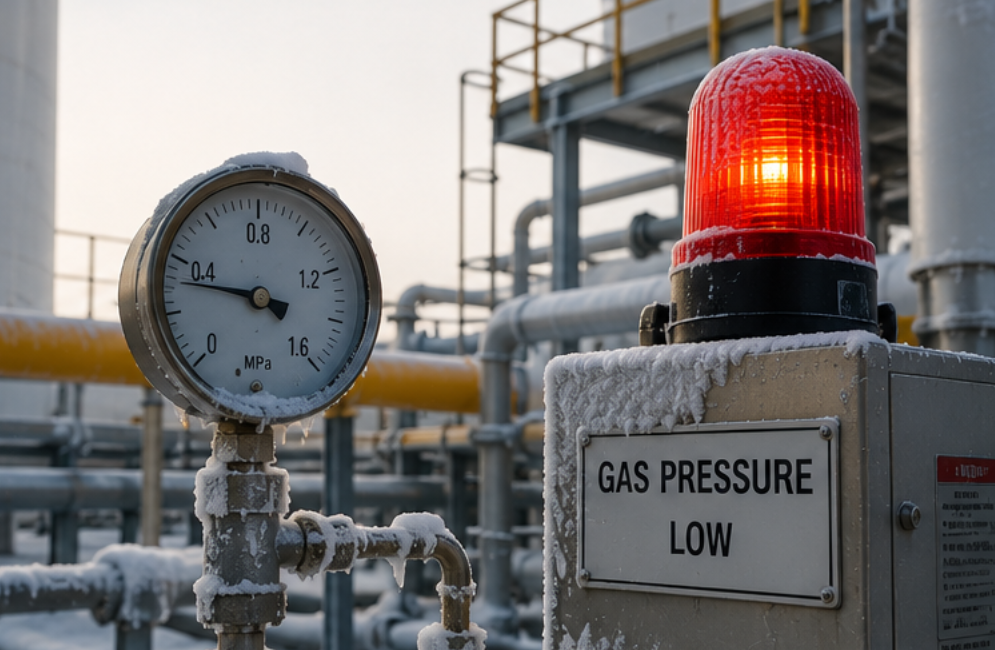
Common Alarm Symptoms
Low pressure alarm during peak gas demand.
High pressure alarm after downstream users suddenly stop.
Outlet pressure fluctuates after LNG vaporization.
Pressure alarm appears during cold weather or heavy vaporizer frost.
Alarm occurs when multiple boilers or burners start together.
Pressure transmitter signal is unstable or inconsistent with local gauge reading.
2. Common Causes Of LNG Station Gas Pressure Alarm
LNG station pressure alarms should be diagnosed by checking the full gas supply path. The problem may come from vaporizer capacity, gas temperature, filter separator blockage, regulator selection, downstream demand, pressure transmitter location, or alarm setpoint configuration.
Troubleshooting Table
| Possible Cause | Typical Alarm Result | What To Check |
|---|---|---|
| Vaporizer Capacity Too Small | Low pressure alarm during peak gas demand. | Rated vaporization capacity and real peak gas consumption. |
| Heavy Frost On Vaporizer | Outlet gas pressure and temperature drop. | Ambient temperature, frost condition, airflow, and standby vaporizer plan. |
| Blocked Filter Separator | Pressure drop before the regulator. | Filter element, liquid, rust, dirt, and differential pressure. |
| Regulator Undersized | Outlet pressure cannot hold under high flow. | Minimum, normal, and maximum gas flow range. |
| Sudden Downstream Shutdown | Short-time high pressure alarm may appear. | Downstream burner stop sequence and relief protection. |
| Wrong Alarm Setpoint | Frequent alarms even when operation is acceptable. | Alarm range, transmitter calibration, control logic, and site requirement. |
3. Check Whether The Alarm Is A Real Pressure Problem Or A Signal Problem
Before changing regulators or valves, operators should confirm whether the alarm reflects real pressure change. A local pressure gauge, pressure transmitter, control cabinet display, and alarm record should be compared at the same operating moment.
If the local gauge is stable but the control system shows alarm, the issue may be transmitter calibration, wiring, signal interference, wrong alarm setpoint, or control logic. If both the gauge and transmitter show pressure drop, the cause is more likely related to vaporizer capacity, filter blockage, regulator capacity, or downstream peak demand.
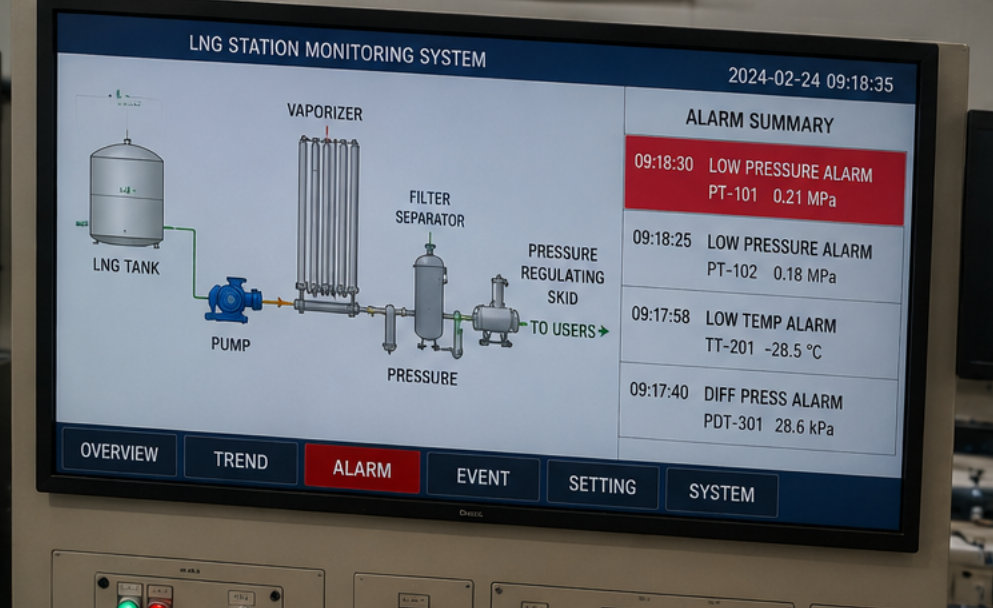
Pressure Alarm Verification Checklist
Compare local gauge reading with transmitter reading.
Check alarm time and operating status when alarm occurred.
Confirm whether the alarm happens during startup, shutdown, or peak demand.
Check transmitter calibration and signal wiring.
Review alarm setpoint and delay time in the control system.
Record pressure before and after the filter separator and regulator.
4. Vaporizer, Filter Separator, And Regulator Should Be Reviewed Together
In an LNG station, the vaporizer supplies gas to the downstream regulating skid. If the vaporizer outlet pressure or gas temperature becomes unstable, the regulator may not be able to keep stable outlet pressure. If the filter separator is blocked, the regulator may receive insufficient gas flow. If the regulator is incorrectly sized, outlet pressure may fluctuate under changing demand.
These sections are connected. Checking only one pressure regulator may miss the real cause. A correct review should include LNG vaporization capacity, gas temperature, filter condition, pressure drop across filter separator, regulator capacity, and downstream gas consumption.
System Review Checklist
Vaporizer rated capacity and actual peak gas demand.
Vaporizer outlet pressure and gas temperature.
Frost condition during continuous high-flow operation.
Filter separator pressure loss and drain condition.
Regulator sizing under minimum, normal, and maximum flow.
Downstream pipeline pressure loss and far-end user pressure.
5. How A Proper Gas Regulating Skid Helps Reduce Pressure Alarms
A gas regulating skid after LNG vaporization is designed to stabilize outlet pressure, protect downstream users, and provide monitoring points for station operation. A complete skid may include filter separator, pressure regulator, safety shut-off valve, relief valve, pressure gauges, pressure transmitters, vent line, bypass line, control cabinet, piping, supports, and skid-mounted frame.
For LNG stations with repeated pressure alarms, the skid should be reviewed according to vaporizer outlet pressure, gas temperature, outlet pressure target, peak flow demand, filter pressure loss, safety protection, alarm setpoints, and downstream gas users.
Practical Tip
If an LNG station has repeated gas pressure alarms, do not only reset the alarm. Compare local gauge and transmitter readings, then check vaporizer capacity, frost condition, filter separator pressure drop, regulator sizing, and downstream peak demand.
Data To Send For Engineering Review
LNG vaporizer capacity and operating mode.
Vaporizer outlet pressure and gas temperature.
Required outlet pressure and alarm setpoint.
Minimum, normal, and maximum gas flow.
Downstream users and peak gas demand.
Filter separator condition and differential pressure.
Existing gas regulating skid photos or drawings.
Alarm records, pressure trend data, and station layout.
Conclusion
LNG station gas pressure alarms may be caused by vaporizer capacity mismatch, heavy vaporizer frost, low gas temperature, blocked filter separator, incorrect regulator sizing, downstream peak gas demand, sudden user shutdown, wrong alarm setpoint, or transmitter signal problems.
A reliable LNG gas supply system should match vaporizer capacity, filter separator performance, gas regulating skid capacity, pressure monitoring, alarm logic, safety protection, and downstream peak demand together.
FAQ
Why does an LNG station gas pressure alarm happen?
Common reasons include vaporizer capacity mismatch, frost, low gas temperature, blocked filter separator, regulator sizing problems, downstream peak demand, and wrong alarm setpoints.
Can frost on the vaporizer cause a pressure alarm?
Yes. Heavy frost can reduce heat exchange efficiency, lower gas temperature, reduce vaporization capacity, and trigger low pressure alarms during high demand.
Should the alarm setpoint be checked?
Yes. If the station frequently alarms while local pressure looks acceptable, alarm setpoint, delay time, transmitter calibration, and signal wiring should be checked.
What data is needed for LNG gas regulating skid review?
Buyers should provide vaporizer capacity, outlet pressure, gas temperature, alarm setpoints, peak gas demand, downstream users, filter condition, skid layout, and alarm records.
Need Help With LNG Station Pressure Alarm Problems?
Send us your LNG vaporizer capacity, gas pressure, gas temperature, alarm records, peak demand, downstream users, and station layout. Our engineering team can help review the working conditions and provide a suitable gas regulating skid solution.
Get Quote Contact UsRelated Product Paths For This Project
LNG Station Gas Pressure Alarm Common Causes And Fixes should connect the troubleshooting topic with Shenqi's real equipment categories. For gas pressure, steam pressure reducing, PRDS, skid module, valve, and prefabricated pipeline projects, buyers usually need to compare the fault symptom with the full system scope before requesting a quotation. The related pages below help the engineering team move from diagnosis to product selection without leaving the site.
- Gas Pressure Regulating Skid
- Temperature and Pressure Reducing Device
- Prefabricated Pipeline
- Skid Module
- Pressure Vessel
- Accessories
- Valves
- Contact Shenqi Machinery
For a project specific review, prepare inlet pressure, outlet pressure, flow range, medium, temperature, control accuracy, valve configuration, instrument requirement, site layout, and commissioning schedule before contacting Shenqi Machinery.