



Why LNG Vaporizer Outlet Pressure Drops During Peak Gas Demand
2026-06-23 21:22Need To Solve LNG Vaporizer Outlet Pressure Drop?
Send us your LNG vaporizer capacity, outlet pressure, gas temperature, required downstream pressure, peak flow demand, ambient temperature, downstream users, and gas regulating skid layout. Our engineering team can help review whether your vaporizer and regulating skid configuration matches real peak demand.
1. Why LNG Vaporizer Outlet Pressure Drops During Peak Demand
LNG vaporizers convert liquid natural gas into gaseous natural gas before it enters the downstream pressure regulating system. During low or normal demand, the vaporizer may provide enough gas flow and stable outlet pressure. But when downstream users suddenly increase consumption, the vaporizer must supply a much larger gas volume in a short time.
If the actual peak demand is higher than the vaporizer capacity, or if ambient conditions reduce heat exchange efficiency, the outlet pressure may drop. This pressure drop can then affect the gas regulating skid and downstream equipment such as boilers, burners, furnaces, ovens, dryers, or industrial heating systems.
In many projects, the LNG vaporizer is not the only problem. The gas regulating skid, filter separator, downstream pipeline, regulator capacity, and factory peak demand should all be reviewed together.
Common Symptoms
Vaporizer outlet pressure is stable during normal demand but drops during peak gas use.
Downstream burners or boilers shut down when multiple users start together.
Outlet gas temperature becomes low during high-flow operation.
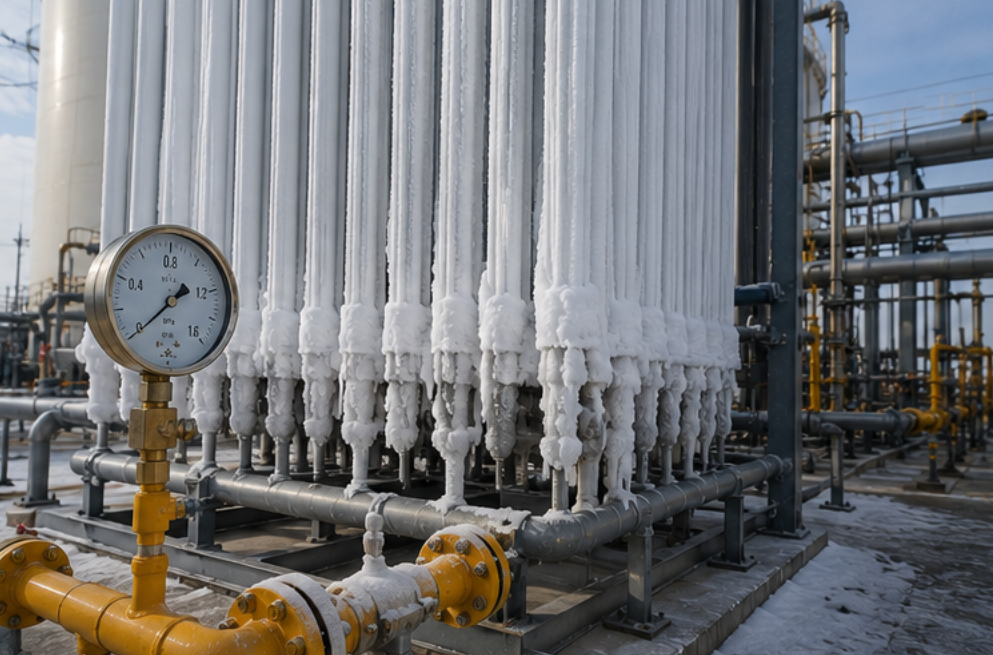
Heavy frost appears on the vaporizer during continuous peak demand.
The gas regulating skid outlet pressure becomes unstable after vaporizer pressure drops.
Pressure alarms occur during cold weather, morning startup, or production peak hours.
2. Main Causes Of LNG Vaporizer Outlet Pressure Drop
Outlet pressure drop usually means the vaporizer, regulating skid, or downstream system cannot keep up with real gas demand. Before replacing one component, buyers should identify whether the limitation comes from vaporization capacity, pressure regulation, filtration, piping, or downstream load changes.
Troubleshooting Table
| Possible Cause | Typical Result | What To Check |
|---|---|---|
| Vaporizer Capacity Too Small | Outlet pressure drops when peak gas flow increases. | Rated vaporization capacity and actual peak demand. |
| Low Ambient Temperature | Heat exchange efficiency drops, especially for ambient vaporizers. | Winter temperature, wind, rain, snow, and vaporizer frost condition. |
| Heavy Frost On Vaporizer | Heat transfer becomes weaker and gas outlet pressure drops. | Frost thickness, operating time, defrost plan, and standby vaporizer design. |
| Regulator Undersized After Vaporizer | Pressure cannot remain stable after regulation. | Minimum, normal, and maximum gas flow through the regulating skid. |
| Blocked Filter Separator | Flow is restricted before the regulator. | Filter element, liquid, rust, dirt, and differential pressure. |
| Downstream Demand Surge | Pressure drops when boilers, burners, or production lines start together. | Startup sequence and total industrial gas consumption. |
3. Peak Gas Demand Must Be Calculated Correctly
Many LNG satellite station pressure problems happen because the system was designed according to normal gas demand, not peak demand. In real operation, several boilers, furnaces, burners, dryers, or production lines may start together. The instant gas demand may be much higher than the average daily demand.
The LNG vaporizer and gas regulating skid should be selected based on minimum, normal, and maximum gas flow. If only normal flow is considered, the system may work most of the time but fail during peak operation.
Peak Demand Data Buyers Should Prepare
Number and type of downstream gas users.
Gas consumption of each boiler, burner, furnace, dryer, or production line.
Minimum, normal, and maximum total gas flow.
Whether multiple users may start at the same time.
Required pressure at the gas regulating skid outlet.
Required pressure at far-end equipment inlets.
4. Ambient Vaporizer Frost And Temperature Should Not Be Ignored
Ambient vaporizers depend on heat exchange with surrounding air. When gas flow increases, the vaporizer needs more heat to convert LNG into gas. If the ambient temperature is low, air flow is poor, or frost becomes heavy on the vaporizer surface, vaporization capacity may decrease.
When vaporization becomes insufficient, outlet gas temperature and pressure may drop together. This can affect the performance of the downstream gas pressure regulating skid and may cause unstable pressure at industrial users.
Vaporizer Operation Checklist
Check vaporizer outlet pressure under low, normal, and peak demand.
Measure gas temperature after vaporization.
Inspect frost condition during continuous operation.
Confirm whether the vaporizer has enough capacity in winter.
Review whether standby vaporizers or switching operation are needed.
Check whether downstream gas demand has increased after project expansion.
5. How A Gas Regulating Skid Helps Stabilize Pressure After Vaporization
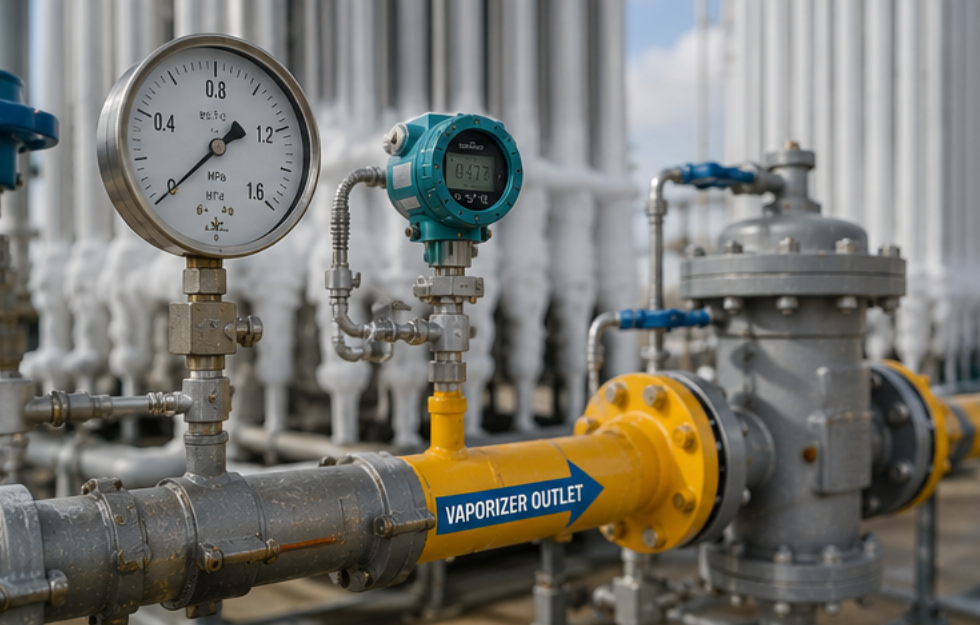
After LNG vaporization, the gas regulating skid is responsible for reducing, stabilizing, monitoring, and protecting downstream gas pressure. A complete skid may include filter separator, pressure regulator, safety shut-off valve, relief valve, pressure gauges, pressure transmitters, bypass line, vent line, control cabinet, piping, supports, and skid-mounted frame.
However, the regulating skid cannot fully solve a vaporizer capacity problem. If vaporizer outlet pressure drops because gas production is insufficient, the regulating skid will not have enough stable inlet pressure to work properly. Therefore, vaporizer capacity and skid capacity must be matched together.
Practical Tip
If LNG vaporizer outlet pressure drops only during peak gas demand, do not check the regulator alone. Review vaporizer capacity, frost condition, outlet gas temperature, filter blockage, downstream peak flow, and gas regulating skid selection together.
Engineering Review Checklist
Confirm LNG vaporizer rated capacity and actual peak demand.
Check vaporizer outlet pressure and outlet gas temperature.
Review ambient temperature and frost condition during operation.
Inspect filter separator and pressure loss before the regulator.
Review regulator capacity under maximum flow.
Calculate downstream pipeline pressure loss.
Check whether multiple downstream users start at the same time.
Consider a custom gas regulating skid matched with vaporizer capacity.
Conclusion
LNG vaporizer outlet pressure may drop during peak gas demand because the vaporizer capacity is too small, ambient temperature reduces heat exchange, frost affects vaporization, downstream demand rises suddenly, filters are blocked, or the gas regulating skid does not match the actual flow range.
A reliable LNG satellite station should match vaporizer capacity, gas regulating skid capacity, downstream peak demand, safety protection, pressure monitoring, and site layout together to ensure stable long-term gas supply.
FAQ
Why does LNG vaporizer outlet pressure drop during peak gas demand?
The most common reason is that peak gas demand exceeds the vaporizer or regulating skid capacity. Low ambient temperature, frost, blocked filters, and downstream pressure loss can make the problem worse.
Can frost on the vaporizer cause pressure drop?
Yes. Heavy frost can reduce heat exchange efficiency, especially for ambient vaporizers. This may reduce vaporization capacity and cause outlet pressure or gas temperature to drop.
Should the regulator be replaced first?
Not always. If the vaporizer cannot supply enough gas during peak demand, replacing only the regulator may not solve the problem. Vaporizer capacity and skid capacity should be reviewed together.
What data is needed for an LNG gas regulating skid review?
Buyers should provide vaporizer capacity, outlet pressure, gas temperature, peak gas demand, downstream users, ambient temperature, filter condition, pipe layout, and required outlet pressure.
Need Help With LNG Vaporizer Outlet Pressure Problems?
Send us your LNG vaporizer capacity, outlet pressure, gas temperature, peak flow demand, downstream users, and station layout. Our engineering team can help review the working conditions and provide a suitable gas regulating skid solution.
Get Quote Contact UsRelated Product Paths For This Project
Why LNG Vaporizer Outlet Pressure Drops During Peak Gas Demand should connect the troubleshooting topic with Shenqi's real equipment categories. For gas pressure, steam pressure reducing, PRDS, skid module, valve, and prefabricated pipeline projects, buyers usually need to compare the fault symptom with the full system scope before requesting a quotation. The related pages below help the engineering team move from diagnosis to product selection without leaving the site.
- Gas Pressure Regulating Skid
- Temperature and Pressure Reducing Device
- Prefabricated Pipeline
- Skid Module
- Pressure Vessel
- Accessories
- Valves
- Contact Shenqi Machinery
For a project specific review, prepare inlet pressure, outlet pressure, flow range, medium, temperature, control accuracy, valve configuration, instrument requirement, site layout, and commissioning schedule before contacting Shenqi Machinery.