


What Causes Low Gas Pressure In Factory Gas Supply Systems
2026-06-11 20:58Need To Solve Low Gas Pressure In Your Factory?
Send us your gas medium, inlet pressure range, required outlet pressure, flow range, downstream equipment, factory layout, and current low-pressure symptoms. Our engineering team can help review whether a gas pressure regulating skid solution is suitable for your project.
1. Why Low Gas Pressure Is A Serious Factory Problem
Factory gas supply systems usually serve multiple production users. Boilers, burners, furnaces, dryers, ovens, and heating lines may start or stop at different times. When gas pressure is too low, equipment may fail to ignite, heating output may drop, burner flame may become unstable, or production temperature may fluctuate.
Low gas pressure can also cause repeated alarms and shutdowns. In some factories, the gas supply looks normal at the inlet side, but the pressure drops after filtration, regulation, long-distance piping, or peak-load operation. This means the problem should be checked across the complete system.
A stable gas pressure regulating system helps protect downstream equipment, reduce downtime, and support continuous factory operation.
Common Signs Of Low Gas Pressure
Burners fail to ignite or shut down during operation.
Boiler output drops during peak production hours.
Furnaces, ovens, or dryers cannot reach target temperature.
Pressure gauge readings are normal at the inlet but low at the outlet.
Gas pressure drops when multiple production lines start together.
Operators frequently reset pressure alarms or burner protection systems.
2. Main Causes Of Low Gas Pressure In Factory Systems
Low gas pressure may come from the upstream gas source, the pressure regulating section, the filter, the pipe network, or the downstream load. Before replacing a regulator or adding new equipment, buyers should identify where the pressure loss happens.
Troubleshooting Table
| Possible Cause | Typical Result | What To Check |
|---|---|---|
| Insufficient Inlet Pressure | The regulator cannot maintain required outlet pressure. | Minimum and maximum upstream gas pressure. |
| Regulator Undersized | Pressure drops when factory demand increases. | Minimum, normal, and maximum gas flow. |
| Blocked Filter | Gas flow is restricted before the regulator or downstream users. | Filter element, dirt, rust, liquid, and differential pressure. |
| Pipe Size Too Small | Large pressure loss along the gas supply line. | Pipe diameter, pipe length, elbows, and pressure drop. |
| Peak Demand Too High | Pressure drops when several users run at the same time. | Total gas consumption of all boilers, burners, furnaces, and process lines. |
| Poor Skid Configuration | Pressure control is unstable or insufficient. | Regulator sizing, filtration, safety valves, monitoring points, and layout. |
3. Why Factory Gas Demand Changes Must Be Calculated
Many factory gas supply problems happen because the system was designed only for one operating point. In real production, one boiler may run at low load in the morning, several burners may start together during peak production, and some process lines may start or stop suddenly.
If the gas pressure regulating skid is selected only by pipe size, it may not handle the real flow range. The regulator may be too small for peak demand, or the pipe network may create excessive pressure loss before the gas reaches downstream equipment.
Gas Demand Data Buyers Should Prepare
Number of boilers, burners, furnaces, dryers, or production users.
Gas consumption of each downstream equipment.
Minimum, normal, and maximum total gas flow.
Peak demand when multiple users start together.
Required outlet pressure for each gas user.
Distance between regulating skid and downstream equipment.
4. How A Gas Pressure Regulating Skid Helps Solve Low Pressure
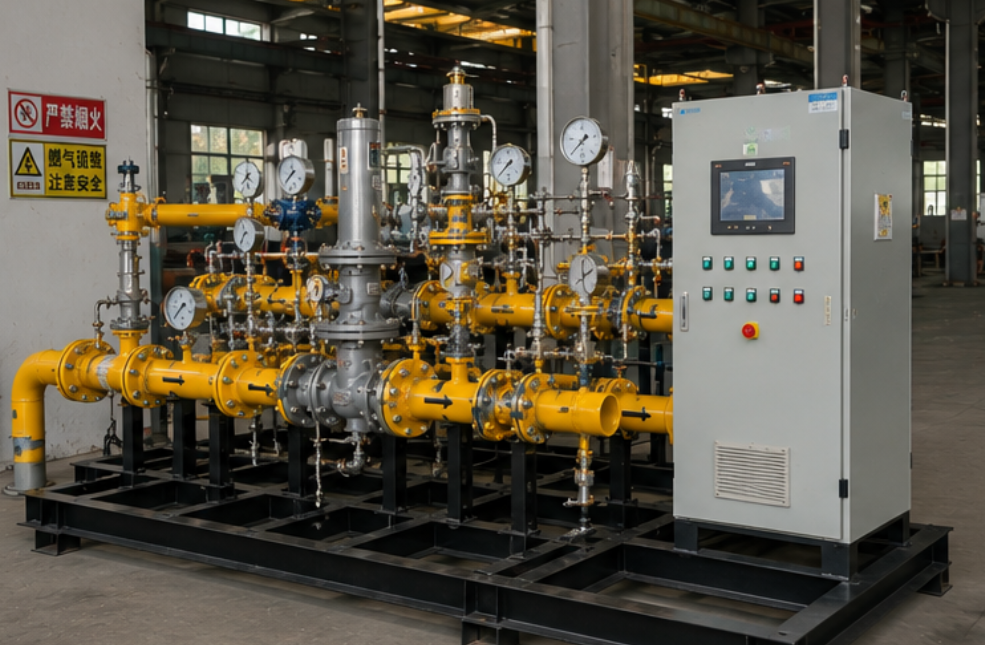
A gas pressure regulating skid is designed to treat gas pressure control as a complete system. Instead of using separate components on site, the skid can integrate filtration, pressure regulation, safety shut-off, relief protection, pressure monitoring, venting, bypass, piping, control cabinet, and skid frame.
For factories with low gas pressure problems, a properly selected skid can reduce pressure loss, improve regulator response, protect downstream equipment, provide clearer monitoring points, and make maintenance easier.
Skid Components That Should Be Reviewed
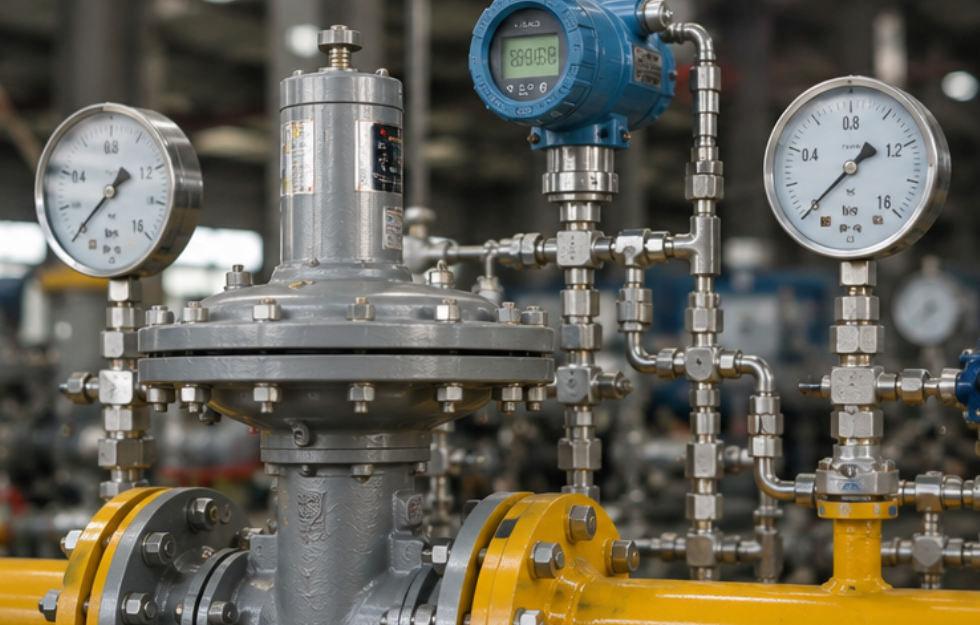
Filter or filter separator: removes impurities before regulation.
Pressure regulator: reduces and stabilizes gas pressure.
Safety shut-off valve: protects the system during abnormal pressure conditions.
Relief valve or monitor regulator: helps protect downstream users from overpressure.
Pressure gauges and transmitters: provide local and remote pressure monitoring.
Control cabinet: supports alarms, signals, and plant monitoring interface when required.
5. Practical Steps To Fix Low Gas Pressure
Fixing low gas pressure should start with data collection. Buyers should record inlet pressure, outlet pressure, gas flow, equipment running status, and pressure changes under low-load and peak-load conditions. This helps identify whether the problem comes from supply pressure, filtration, regulation, pipe loss, or downstream demand.
If the existing system is old, overloaded, or missing key safety and monitoring devices, it may be more reliable to review the complete gas supply station and consider a custom skid-mounted pressure regulating solution.
Practical Tip
Do not judge low gas pressure only by one pressure gauge. Check inlet pressure, outlet pressure, filter condition, regulator capacity, pipe pressure loss, and factory peak demand together.
Low Gas Pressure Fix Checklist
Measure inlet and outlet pressure under different operating loads.
Check filter blockage and differential pressure.
Confirm total factory gas demand during peak production.
Review regulator capacity and pressure reduction ratio.
Check pipe diameter, pipe length, elbows, and pressure loss.
Confirm whether downstream users require different pressure levels.
Review safety shut-off, relief protection, and monitoring devices.
Consider a custom gas pressure regulating skid for factory expansion or unstable gas supply.
Conclusion
Low gas pressure in factory gas supply systems can be caused by insufficient inlet pressure, undersized regulators, blocked filters, excessive pipe pressure loss, peak gas demand, or incomplete skid configuration. The correct solution should be based on real pressure data, flow range, downstream equipment demand, and site layout.
A properly designed gas pressure regulating skid can help stabilize factory gas supply, reduce pressure drop, protect downstream equipment, improve monitoring, and support safer long-term production operation.
FAQ
What causes low gas pressure in factory gas supply systems?
Common causes include low inlet pressure, undersized regulator, blocked filter, small pipe size, excessive pressure loss, peak gas demand, or poor pressure regulating skid design.
Why does gas pressure drop during peak production?
When multiple boilers, burners, furnaces, or process lines run at the same time, total gas demand increases. If the regulator or pipe network is not sized for peak flow, pressure may drop.
Can a blocked filter cause low gas pressure?
Yes. A dirty or blocked filter restricts gas flow before the regulator or downstream users, which can cause low outlet pressure and unstable equipment operation.
What data is needed for a gas regulating skid quote?
Buyers should provide gas medium, inlet pressure, outlet pressure, flow range, downstream equipment, site layout, safety requirements, and current low-pressure symptoms.
Need Help With Low Factory Gas Pressure?
Send us your gas medium, inlet pressure, outlet pressure, flow range, downstream equipment, current pressure problem, and factory layout. Our engineering team can help review the working conditions and provide a suitable gas pressure regulating skid solution.
Get Quote Contact Us