



Why Gas Pressure Fluctuates In Industrial Boiler Rooms And How To Fix It
2026-06-10 19:43Need To Solve Gas Pressure Fluctuation In Your Boiler Room?
Send us your gas medium, inlet pressure range, outlet pressure requirement, boiler capacity, burner gas demand, flow range, site layout, and current pressure problem. Our engineering team can help review whether a gas pressure regulating skid solution is suitable for your project.
1. Why Gas Pressure Stability Matters In Boiler Rooms
Industrial boilers need stable fuel gas pressure to maintain safe ignition, stable flame, proper combustion, and continuous steam output. If the gas pressure fluctuates frequently, the burner control system may respond with alarms, shutdowns, flame failure protection, or unstable load adjustment.
For factories, hotels, hospitals, chemical plants, food processing plants, textile mills, and industrial parks, unstable boiler room gas pressure can cause production interruption, poor heating performance, higher maintenance cost, and unnecessary safety risk.
That is why gas pressure regulation should be reviewed as a complete system, not only as a single regulator. Filters, regulators, safety shut-off valves, relief protection, pressure transmitters, control logic, piping layout, and gas demand changes all affect final pressure stability.
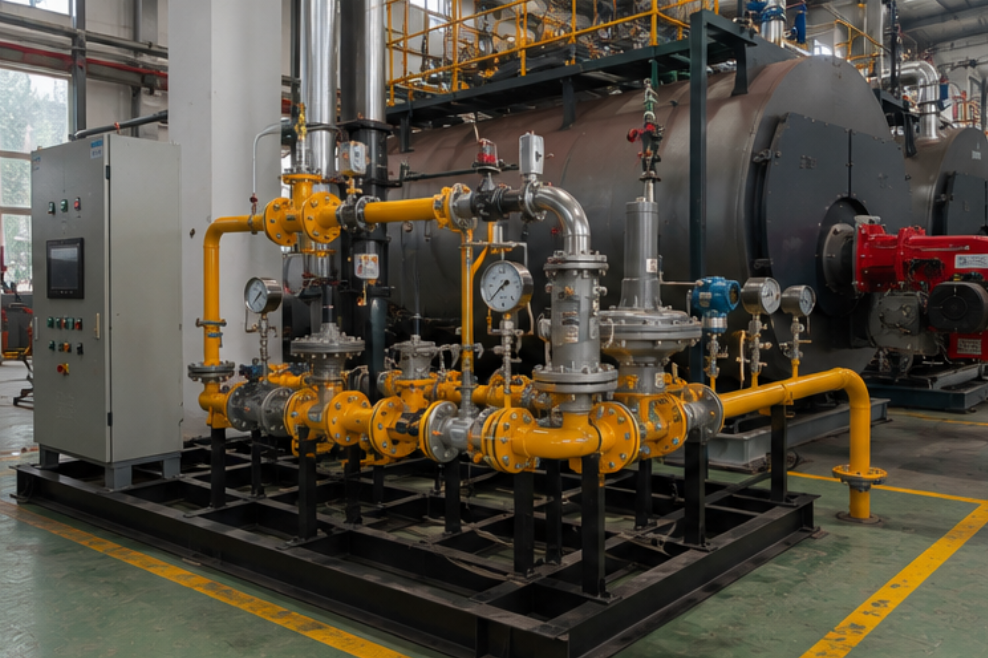
Common Symptoms Of Gas Pressure Fluctuation
Burner ignition failure or unstable flame
Boiler pressure or burner pressure alarm
Unexpected burner shutdown during production
Steam output becomes unstable during peak load
Pressure gauge readings change quickly at the outlet side
Regulator noise, vibration, hunting, or delayed response
2. Common Causes Of Gas Pressure Fluctuation
Gas pressure fluctuation can come from upstream supply, downstream load changes, incorrect regulator sizing, dirty gas, blocked filters, poor piping design, or incomplete skid configuration. Before replacing components, buyers should identify whether the problem is caused by supply instability, equipment selection, or system design.
Troubleshooting Table
| Possible Cause | Typical Result | What To Check |
|---|---|---|
| Regulator Oversized | Outlet pressure hunts at low flow. | Minimum, normal, and maximum gas flow. |
| Regulator Undersized | Pressure drops during peak boiler demand. | Boiler capacity and burner gas consumption. |
| Blocked Filter | Gas flow is restricted before regulation. | Filter condition and differential pressure. |
| Upstream Pressure Instability | Outlet pressure cannot remain stable. | Minimum and maximum inlet pressure range. |
| Sudden Load Change | Pressure changes when multiple boilers start or stop. | Boiler operating sequence and peak demand. |
| Poor Piping Layout | Regulator response becomes unstable. | Pipe size, bends, distance, and skid layout. |
3. Why A Single Regulator May Not Solve The Problem
Some boiler room projects try to solve pressure fluctuation by replacing the pressure regulator only. However, if the upstream gas is dirty, the filter is blocked, the flow range is too wide, the safety shut-off valve is not suitable, or the piping layout is poor, a new regulator may still not solve the problem.
A gas pressure regulating skid treats pressure control as a complete package. It can include filtration, pressure regulation, safety shut-off, relief protection, pressure monitoring, gas leak detection interface, control cabinet, vent line, bypass line, piping, supports, and skid-mounted steel frame.
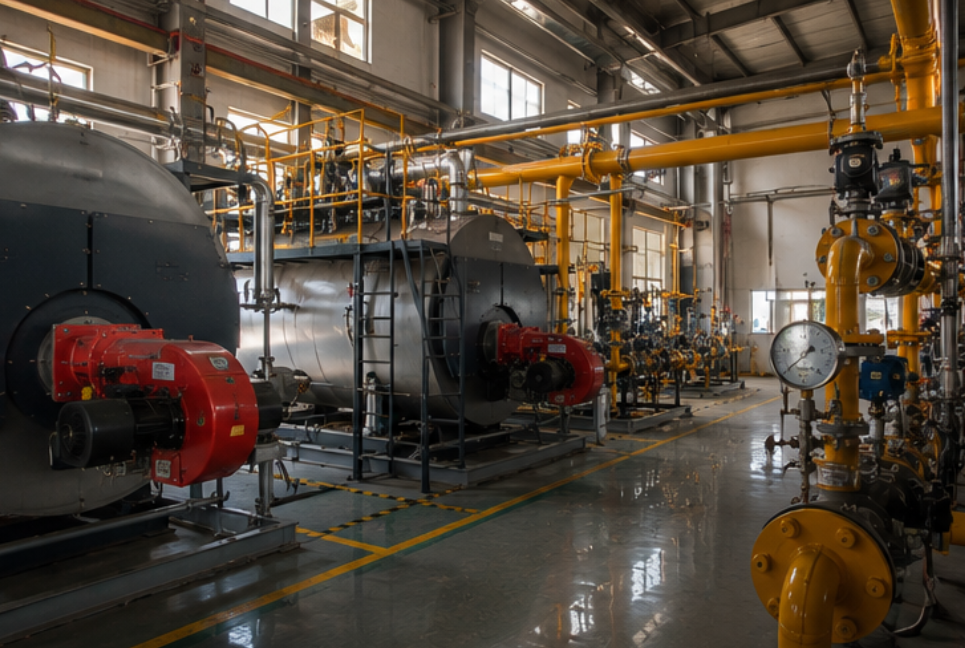
Key Components That Improve Pressure Stability
Filter or filter separator: protects the regulator and burner gas train from impurities.
Pressure regulator: reduces and stabilizes inlet gas pressure.
Safety shut-off valve: cuts off gas supply under abnormal pressure conditions.
Relief valve or monitor regulator: helps protect downstream equipment from overpressure.
Pressure transmitter: provides pressure signal for monitoring and alarm output.
Control cabinet: supports local display, alarm logic, and remote signal interface when required.
4. How To Fix Gas Pressure Fluctuation In Boiler Rooms
To fix gas pressure fluctuation, the first step is to collect real operating data. This includes inlet pressure range, outlet pressure requirement, minimum flow, normal flow, maximum flow, boiler capacity, burner pressure requirement, and pressure changes during startup and peak load.
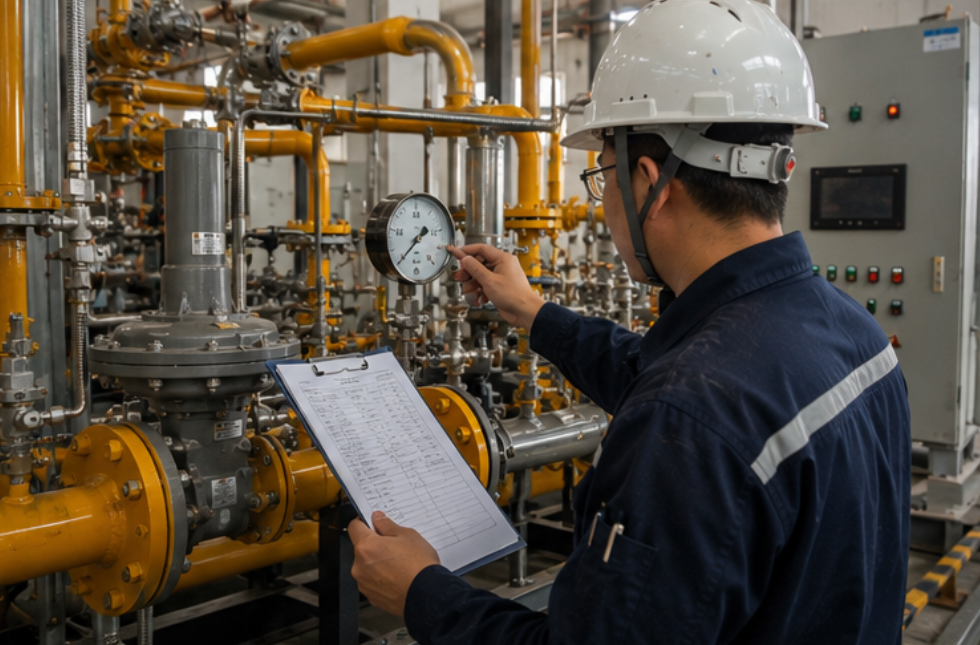
The second step is to check the existing gas train and pressure regulating section. Buyers should inspect filter blockage, regulator sizing, safety shut-off valve condition, pressure transmitter location, pipe diameter, bypass arrangement, and whether the system has enough monitoring points.
Practical Fix Checklist
Record inlet pressure and outlet pressure under different operating loads.
Check whether the regulator is selected for minimum, normal, and maximum flow.
Inspect filter blockage and replace or clean filter elements when needed.
Confirm burner gas demand and peak boiler load.
Review pipe size, pressure loss, bends, and distance from regulator to burner.
Check safety shut-off valve, relief protection, and pressure transmitter settings.
Review whether a one-stage or two-stage pressure regulation design is needed.
Consider a skid-mounted gas regulating system for better factory assembly and testing.
5. When Should Buyers Consider A New Gas Pressure Regulating Skid?
If pressure fluctuation happens frequently, if the boiler room has added new boilers, if the existing gas train has missing safety devices, or if the regulator cannot handle both low-load and peak-load operation, a new gas pressure regulating skid may be a more reliable solution than only replacing one valve.
For industrial projects, a skid-mounted system can be designed, assembled, inspected, and tested before delivery. This helps reduce site installation work, avoid missing components, improve layout quality, and make maintenance easier.
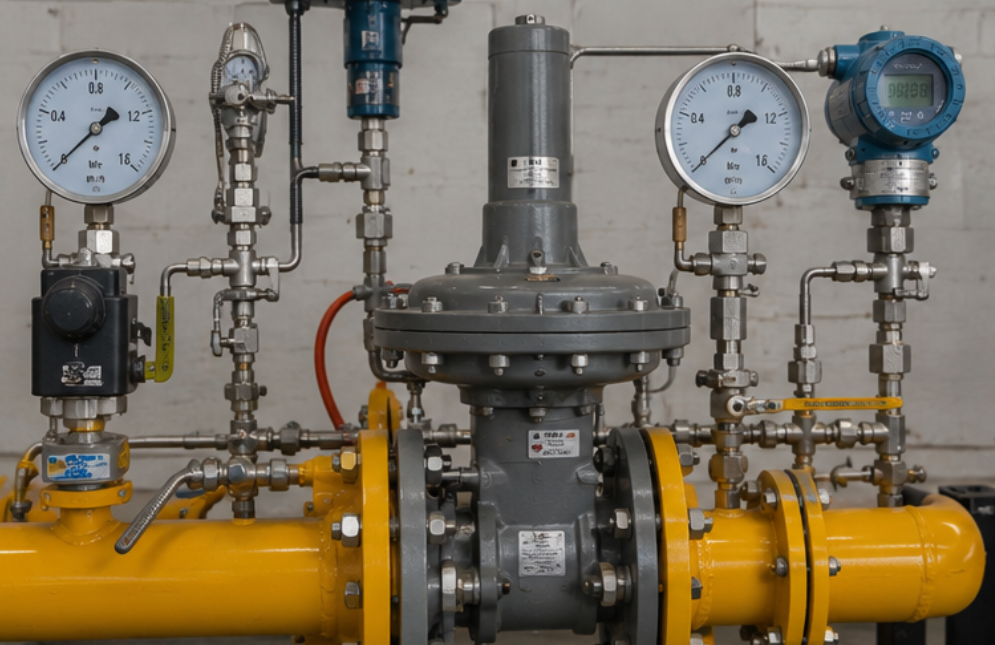
Practical Tip
If boiler room gas pressure fluctuates, do not judge the problem only by one pressure gauge reading. Check inlet pressure, outlet pressure, filter condition, regulator sizing, burner demand, load changes, and safety protection together.
Data To Send For Engineering Review
Gas medium and inlet pressure range
Required outlet pressure for boiler burners
Minimum, normal, and maximum gas flow
Boiler capacity and number of boilers
Burner model or gas consumption data if available
Existing gas train photos or drawings
Current pressure fluctuation symptoms and alarm records
Site layout, pipe size, and installation space
Conclusion
Gas pressure fluctuation in industrial boiler rooms can be caused by unstable upstream supply, incorrect regulator sizing, blocked filters, sudden load changes, poor piping layout, or incomplete safety and monitoring design. The solution should be based on real working conditions and a complete system review.
A properly designed gas pressure regulating skid can help stabilize outlet pressure, protect boiler burners, reduce shutdown risk, improve maintenance access, and support safer long-term boiler room operation.
FAQ
Why does gas pressure fluctuate in industrial boiler rooms?
Common causes include unstable inlet pressure, wrong regulator sizing, blocked filters, sudden burner load changes, poor piping layout, or incomplete pressure monitoring.
Can replacing the regulator solve the problem?
Not always. If the filter, piping, flow range, safety shut-off valve, or upstream supply condition is the real cause, replacing only the regulator may not solve pressure fluctuation.
What data is needed before selecting a gas regulating skid?
Buyers should provide gas medium, inlet pressure range, outlet pressure, flow range, boiler capacity, burner demand, safety requirements, and site layout.
Why choose a skid-mounted gas regulating system?
A skid-mounted system can integrate filters, regulators, safety devices, instruments, piping, and control cabinet into one factory-assembled and tested package.
Need Help With Boiler Room Gas Pressure Problems?
Send us your gas pressure data, flow range, boiler capacity, burner requirements, current problem description, and site layout. Our engineering team can help review the working conditions and provide a suitable gas pressure regulating skid solution.
Get Quote Contact Us