



Why Natural Gas Regulators Make Noise During Boiler Operation
2026-07-04 16:24Need To Solve Regulator Noise In A Boiler Room?
Send us your gas medium, inlet pressure, outlet pressure, boiler capacity, burner gas consumption, flow range, noise location, regulator model, filter condition, and site layout. Our engineering team can help review whether your gas pressure regulating skid needs sizing, filtration, or layout optimization.
1. Why Regulator Noise Matters During Boiler Operation
A natural gas regulator is used to reduce and stabilize gas pressure before gas reaches boiler burners. During boiler operation, gas demand changes from ignition to low fire, normal load, and high fire. If the regulator is not matched to the real pressure and flow range, noise may appear during these changes.
Some noise is caused by high-speed gas passing through the regulator. Other noise may come from vibration, valve chatter, unstable diaphragm movement, resonance in the piping, or pressure hunting after regulation.
If the noise becomes stronger during peak boiler demand, multiple boiler startup, or sudden load changes, the gas regulating system should be reviewed before the problem affects burner stability or safety protection.
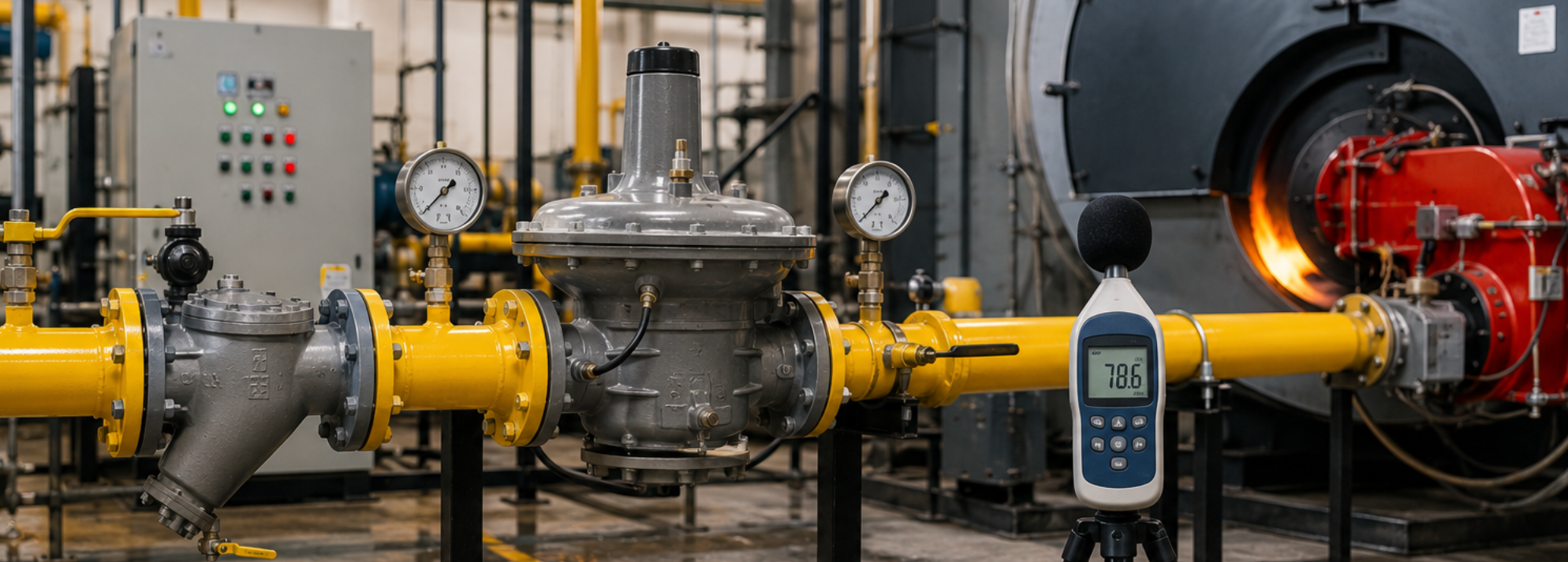
Common Noise Symptoms
Whistling sound appears when boiler burner reaches high fire.
Regulator hums or vibrates during continuous operation.
Noise becomes stronger when multiple boilers start together.
Pressure gauge fluctuates while the regulator makes noise.
Gas pipeline vibrates near the regulator or filter separator.
Burner operation becomes unstable after noise appears.
2. Common Causes Of Natural Gas Regulator Noise
Regulator noise should be diagnosed as a system problem. The inlet pressure, outlet pressure, pressure drop, regulator size, gas flow range, filter condition, burner load, and downstream piping should all be checked together.
Troubleshooting Table
| Possible Cause | Typical Result | What To Check |
|---|---|---|
| Excessive Pressure Drop | High gas velocity and loud regulator noise. | Inlet pressure, outlet pressure, and pressure reduction ratio. |
| Regulator Oversized | Chatter or unstable control at low flow. | Minimum boiler gas demand and regulator controllable range. |
| Regulator Undersized | Noise and pressure drop during peak burner demand. | Maximum boiler gas flow and high-fire demand. |
| Blocked Filter Separator | Restricted flow causes pressure instability and noise. | Filter element, liquid, rust, dirt, and differential pressure. |
| Poor Piping Layout | Flow turbulence and resonance near the regulator. | Elbows, reducers, straight pipe length, and pipe support. |
| Sudden Burner Load Change | Regulator response becomes unstable and noisy. | Burner startup sequence and load change speed. |
3. Check Whether The Regulator Matches Real Boiler Demand
Many regulator noise problems come from incorrect sizing. If the regulator is too large for real boiler load, it may operate at a very small opening and become unstable. If it is too small, gas velocity may become too high during peak demand, causing pressure drop and noise.
The regulator should be selected according to minimum, normal, and maximum gas flow. For boiler rooms, the gas demand should include ignition flow, low-fire flow, high-fire flow, and the total flow when multiple boilers operate together.
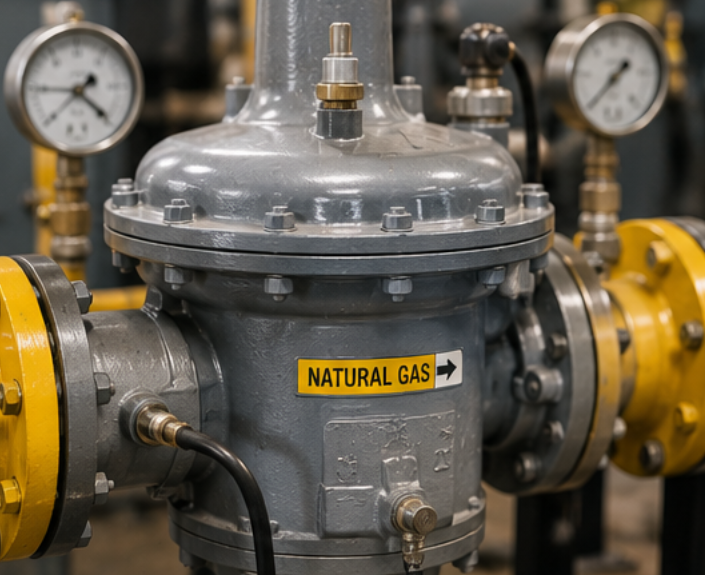
Sizing Data To Prepare
Gas medium and gas composition if available.
Minimum and maximum inlet pressure.
Required outlet pressure before boiler burners.
Minimum, normal, and maximum gas flow.
Boiler capacity and burner gas consumption.
Whether multiple boilers may run at the same time.
4. Filter Blockage And Dirty Gas Can Make Noise Worse
Dirty gas can carry rust, dust, liquid droplets, oil mist, or pipe debris into the gas pressure regulating system. If the filter separator becomes blocked, the regulator may receive unstable gas flow and insufficient inlet pressure during high demand.
This can make the regulator work harder, create pressure fluctuation, and increase noise. In some cases, dirt may also affect regulator internal parts and cause unstable movement or leakage.
Filter And Gas Quality Checklist
Check filter element condition and replacement schedule.
Check differential pressure before and after the filter separator.
Inspect liquid, rust, dust, and debris inside the filter body.
Review whether upstream gas treatment is sufficient.
Confirm whether the filter size matches peak gas flow.
Check whether pressure noise appears after filter pressure loss increases.
5. Piping Layout And Pipe Support Can Cause Resonance
Sometimes the regulator is not the only source of noise. Poor piping layout can create turbulence and resonance. Elbows too close to the regulator, sudden reducers, unsupported pipe sections, long straight pipes with poor support, or flexible connections may amplify noise and vibration.
If the noise is heard not only at the regulator but also along the pipeline, the pipe layout and supports should be checked. A well-designed gas pressure regulating skid should include proper pipe support, reasonable component spacing, and stable skid frame structure.
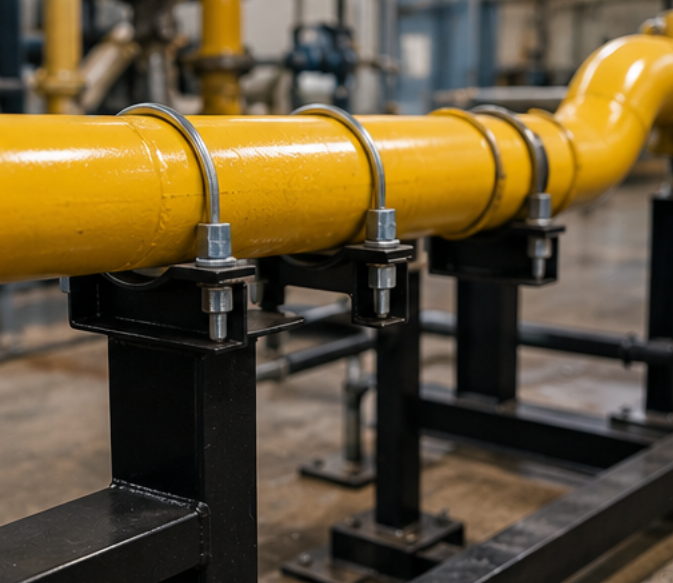
Piping Review Checklist
Check elbows and reducers near the regulator inlet and outlet.
Review pipe diameter and gas velocity under peak flow.
Inspect pipe supports, anchors, and skid frame rigidity.
Check whether small instrument tubing vibrates.
Review bypass line and branch line layout.
Check whether noise changes when boiler load changes.
6. How A Gas Pressure Regulating Skid Helps Reduce Regulator Noise
A gas pressure regulating skid can integrate filter separator, pressure regulator, safety shut-off valve, relief valve, pressure gauges, pressure transmitters, bypass line, vent line, control cabinet, pipe supports, and skid-mounted frame into one engineered package.
A properly designed skid can help reduce noise by selecting a suitable regulator, controlling gas velocity, improving filtration, stabilizing pressure, reducing pipe vibration, and arranging instruments and safety devices correctly.
Practical Tip
If a natural gas regulator makes noise during boiler operation, do not only replace the regulator. Check pressure drop, regulator sizing, filter blockage, gas velocity, burner load changes, piping layout, and skid support together.
Engineering Review Checklist
Confirm inlet pressure, outlet pressure, and pressure reduction ratio.
Review minimum, normal, and maximum gas flow.
Check whether regulator size matches real boiler demand.
Inspect filter separator and differential pressure.
Check gas velocity and downstream pipe pressure loss.
Review pipe supports, elbows, reducers, and skid frame.
Check pressure fluctuation during burner startup and high-fire operation.
Consider a custom gas pressure regulating skid for quieter and more stable operation.
Conclusion
Natural gas regulators may make noise during boiler operation because of excessive pressure drop, high gas velocity, incorrect regulator sizing, blocked filters, dirty gas, sudden burner load changes, pipe resonance, or poor gas regulating skid layout.
A properly designed gas pressure regulating skid can help stabilize outlet pressure, reduce regulator noise, improve filtration, protect boiler burners, and support safer long-term gas supply operation.
FAQ
Why does a natural gas regulator make noise during boiler operation?
Common causes include excessive pressure drop, high gas velocity, wrong regulator sizing, blocked filters, dirty gas, burner load changes, and poor piping layout.
Can a blocked gas filter cause regulator noise?
Yes. A blocked filter restricts gas flow and may cause pressure instability before the regulator, making noise and vibration worse during high demand.
Can regulator oversizing cause noise?
Yes. An oversized regulator may operate unstably at low flow and create chatter, vibration, or pressure hunting.
How can regulator noise be reduced?
Check regulator sizing, pressure drop, gas velocity, filter condition, burner demand, piping layout, and skid support. A properly engineered gas pressure regulating skid can help reduce noise.
Need Help With Natural Gas Regulator Noise?
Send us your gas pressure, flow range, boiler capacity, burner demand, regulator model, filter condition, noise symptoms, and site layout. Our engineering team can help review the working conditions and provide a suitable gas pressure regulating skid solution.
Get Quote Contact UsRelated Product Paths For This Project
Why Natural Gas Regulators Make Noise During Boiler Operation should connect the troubleshooting topic with Shenqi's real equipment categories. For gas pressure, steam pressure reducing, PRDS, skid module, valve, and prefabricated pipeline projects, buyers usually need to compare the fault symptom with the full system scope before requesting a quotation. The related pages below help the engineering team move from diagnosis to product selection without leaving the site.
- Gas Pressure Regulating Skid
- Temperature and Pressure Reducing Device
- Prefabricated Pipeline
- Skid Module
- Pressure Vessel
- Accessories
- Valves
- Contact Shenqi Machinery
For a project specific review, prepare inlet pressure, outlet pressure, flow range, medium, temperature, control accuracy, valve configuration, instrument requirement, site layout, and commissioning schedule before contacting Shenqi Machinery.