

Why Steam Pressure Drops Before Reaching Production Equipment
2026-06-15 21:12Need To Solve Steam Pressure Drop In Your Plant?
Send us your boiler outlet pressure, required equipment pressure, steam flow range, pipe size, distance, downstream equipment type, pressure reducing valve data, and current pressure drop symptoms. Our engineering team can help review whether a steam pressure reducing skid or PRDS solution is suitable for your project.
1. Why Steam Pressure Drop Affects Production Stability
Production equipment usually needs steam at a stable pressure to maintain heat transfer, process temperature, drying speed, sterilization performance, or heating efficiency. If steam pressure drops before reaching the equipment, the process may become slow, unstable, or unable to meet target temperature.
In some plants, the boiler room pressure gauge shows enough pressure, but the equipment inlet pressure is much lower. This means pressure loss happens somewhere between the boiler header, steam pressure reducing station, distribution pipeline, and production equipment inlet.
The problem should be checked as a complete steam supply system, not only as a single valve problem. Pipe size, flow demand, condensate, strainers, traps, insulation, pressure reducing valve selection, and skid layout all affect final pressure at the equipment.
Common Symptoms Of Steam Pressure Drop
Production equipment cannot reach target temperature.
Steam pressure is normal at the boiler room but low near the equipment.
Heat exchangers, dryers, or sterilizers work slower than expected.
Pressure drops when several production lines run together.
Steam control valves stay fully open but pressure remains insufficient.
Water hammer, vibration, or condensate problems appear in the steam line.
2. Main Causes Of Steam Pressure Drop Before Equipment
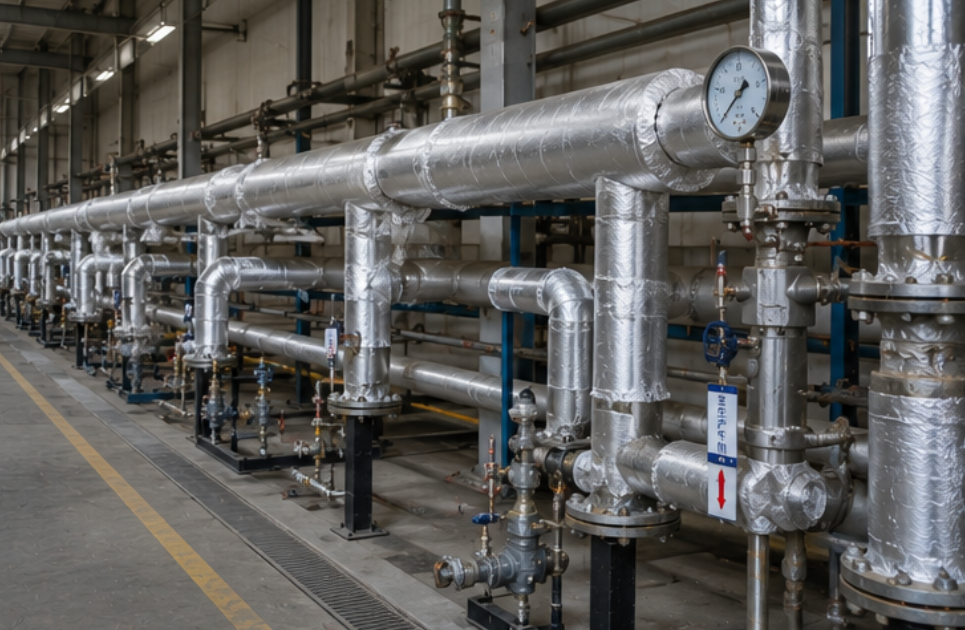
Steam pressure drop may come from pipeline design, steam demand, pressure reducing valve selection, condensate accumulation, blocked strainers, poor insulation, or unstable boiler operation. Before changing the valve, buyers should find where the pressure loss actually happens.
Troubleshooting Table
| Possible Cause | Typical Result | What To Check |
|---|---|---|
| Pipe Size Too Small | Pressure loss increases when steam flow rises. | Pipe diameter, steam velocity, and maximum flow demand. |
| Long Steam Distribution Line | Pressure decreases before reaching production equipment. | Pipe length, elbows, valves, reducers, and pressure loss. |
| Blocked Strainer | Steam flow is restricted before the control valve or equipment. | Strainer screen, dirt, rust, scale, and differential pressure. |
| Undersized Pressure Reducing Valve | Outlet pressure cannot hold during peak load. | Minimum, normal, and maximum steam flow. |
| Condensate Accumulation | Water hammer, vibration, and flow restriction occur. | Steam traps, drain points, pipe slope, and low points. |
| Sudden Load Increase | Pressure drops when several users start together. | Production sequence and total steam demand. |
3. Check Pressure At Different Points, Not Only At The Boiler Room
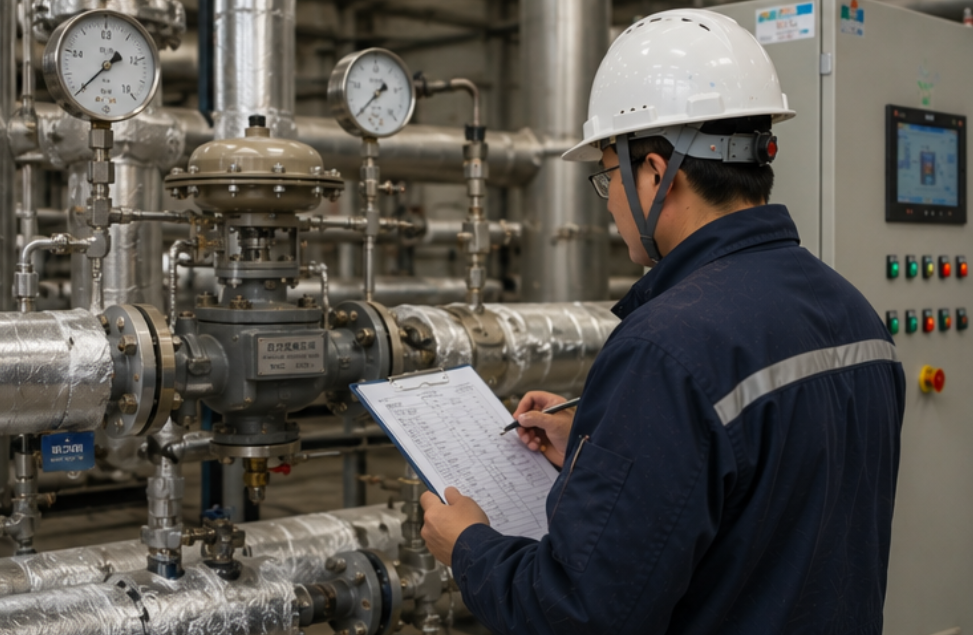
A common mistake is checking only the boiler room pressure gauge. To understand the real problem, pressure should be measured at several points: boiler outlet, steam header, pressure reducing skid inlet, pressure reducing skid outlet, distribution pipe, and production equipment inlet.
If pressure is normal before the reducing valve but low after it, valve sizing or control may be the problem. If pressure is normal after the skid but low near the equipment, the problem may be pipe pressure loss, long distance, small pipe size, blocked strainer, or condensate accumulation.
Pressure Data To Record
Boiler outlet pressure during normal and peak load.
Steam header pressure before the reducing station.
Pressure reducing skid inlet and outlet pressure.
Pressure at the production equipment inlet.
Pressure when one equipment runs and when multiple users run together.
Pressure change during startup, load increase, and continuous operation.
4. Why Condensate And Drainage Problems Reduce Steam Performance
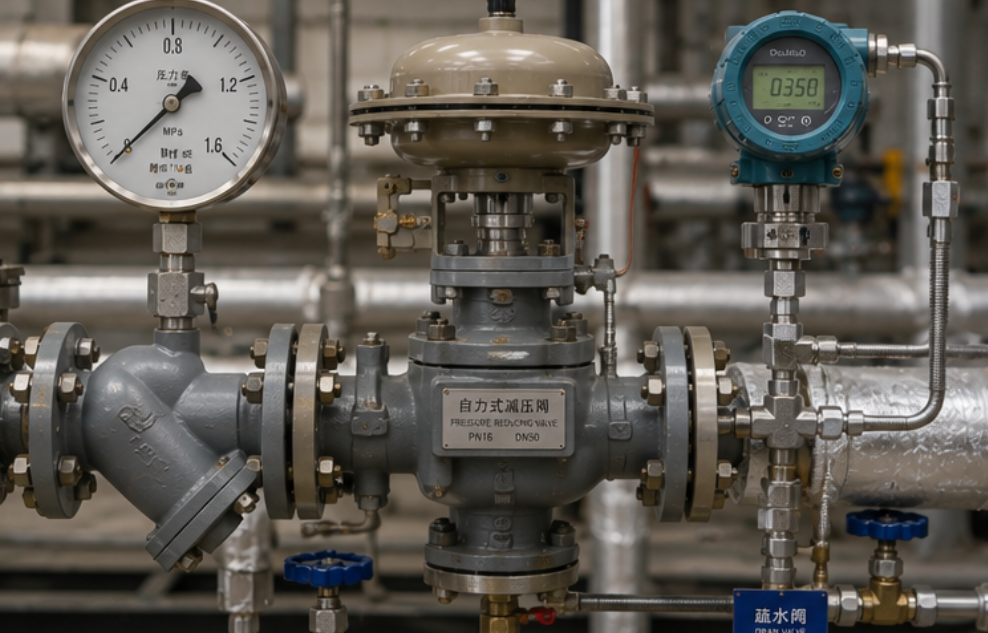
Steam pressure drop is often related to condensate. If condensate is not removed properly, it can occupy pipe space, reduce steam flow, create water hammer, damage valves, and make pressure control unstable. Long steam lines, low points, poor pipe slope, damaged traps, and missing drain points can all increase the problem.
Damaged or missing insulation can also increase heat loss, causing more condensate to form before steam reaches the production equipment. In this case, the equipment receives less effective steam energy even when the boiler side appears normal.
Drainage And Condensate Checklist
Check steam traps near low points and equipment inlets.
Inspect whether drain valves are installed in the correct positions.
Check whether pipe slope allows condensate to flow out properly.
Look for water hammer, vibration, or knocking noise in the steam line.
Inspect insulation damage, missing insulation, or wet insulation.
Check whether condensate return is blocked or undersized.
5. How A Steam Pressure Reducing Skid Can Help Stabilize Supply
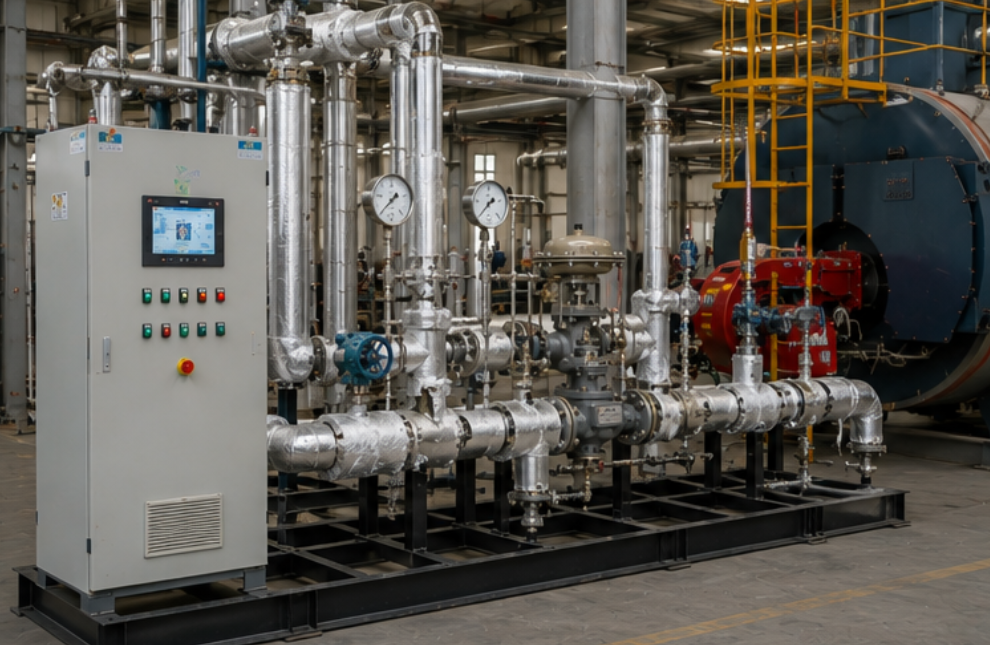
A steam pressure reducing skid is designed to reduce and stabilize steam pressure before steam enters downstream production systems. A complete skid can include strainer, pressure reducing control valve, actuator, positioner, safety valve, pressure gauges, pressure transmitters, drain valves, bypass line, control cabinet, piping, pipe supports, and skid-mounted frame.
For plants with pressure drop problems, a properly designed skid can improve pressure control, provide better monitoring points, reduce installation errors, support factory testing, and make maintenance easier. If temperature control is also required, a PRDS system with desuperheating may be considered.
Practical Tip
If production equipment has low steam pressure, do not only increase boiler pressure. First check pipe pressure loss, PRV sizing, strainer blockage, condensate drainage, insulation, and actual peak steam demand.
Data To Send For Engineering Review
Boiler outlet pressure and steam header pressure.
Required production equipment inlet pressure.
Minimum, normal, and maximum steam flow.
Steam temperature and whether desuperheating is required.
Pipe size, pipe length, and layout between boiler room and equipment.
Current pressure reducing valve or skid configuration.
Strainer, drain point, trap, and condensate return information.
Photos or drawings of the existing steam distribution system.
Conclusion
Steam pressure may drop before reaching production equipment because of small pipe size, long transmission distance, blocked strainers, undersized pressure reducing valves, condensate accumulation, poor drainage, damaged insulation, or sudden peak steam demand.
A properly designed steam pressure reducing skid can help stabilize downstream steam pressure, protect production equipment, improve process heating performance, reduce pressure loss problems, and support safer long-term plant operation.
FAQ
Why does steam pressure drop before reaching production equipment?
Common causes include undersized pipe, long distance, blocked strainer, pressure reducing valve problems, condensate accumulation, poor drainage, insulation damage, and peak steam demand.
Should boiler pressure be increased to fix low equipment pressure?
Not necessarily. Increasing boiler pressure may not solve pipe pressure loss, blocked strainers, condensate, or wrong PRV sizing. The complete steam system should be checked first.
Can condensate cause steam pressure problems?
Yes. Condensate can restrict steam flow, cause water hammer, damage valves, and reduce effective steam supply to production equipment.
When is a steam pressure reducing skid needed?
A skid-mounted system is useful when the plant needs stable steam pressure, integrated valves and instruments, better safety protection, factory testing, and easier installation.
Need Help With Steam Pressure Drop Problems?
Send us your boiler pressure, equipment pressure requirement, steam flow range, pipe layout, current pressure reducing system, and pressure drop symptoms. Our engineering team can help review the working conditions and provide a suitable steam pressure reducing skid solution.
Get Quote Contact Us