

Why Steam Pressure Drops When Production Lines Start Together
2026-06-25 21:33Need To Solve Steam Pressure Drop During Production Startup?
Send us your boiler pressure, required production line pressure, steam temperature, minimum / normal / peak steam flow, number of production lines, startup sequence, pipe layout, drainage condition, and existing PRV or skid information. Our engineering team can help review whether a steam pressure reducing skid or PRDS solution is suitable for your project.
1. Why Steam Pressure Drops During Simultaneous Production Startup
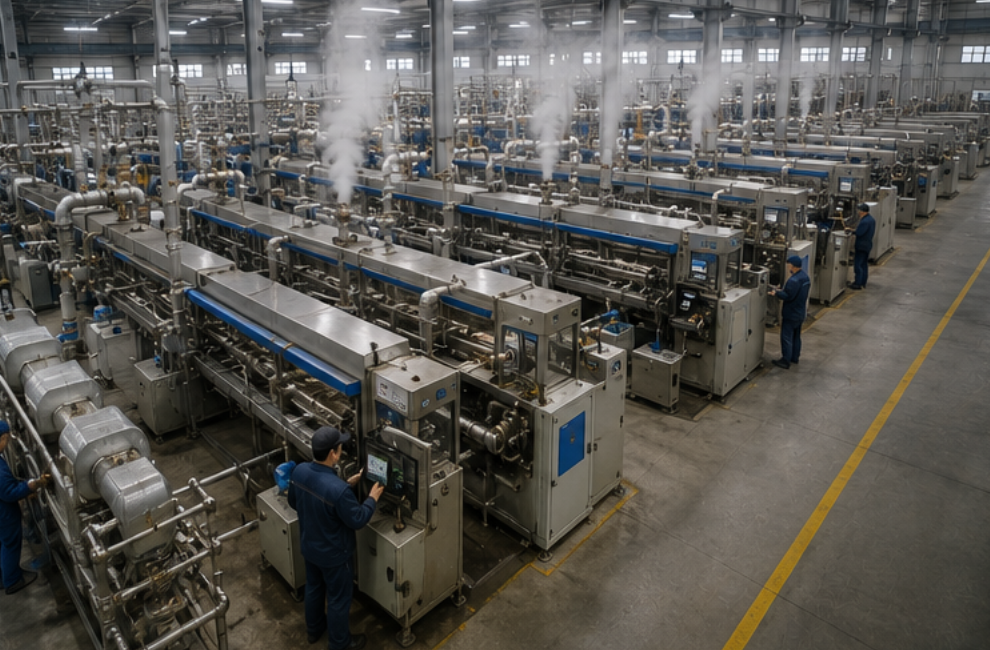
Each production line consumes steam for heating, drying, sterilization, reaction, cleaning, or process temperature control. When one line starts, the steam system may remain stable. But when several lines start together, total steam demand rises quickly within a short time.
If the boiler, steam header, pressure reducing valve, steam pipeline, or downstream distribution network cannot supply enough steam under peak demand, the pressure will drop. This pressure drop may be temporary, but it can still affect product quality, heating speed, drying efficiency, and production continuity.
For food processing plants, textile factories, chemical plants, pharmaceutical facilities, paper mills, rubber processing lines, and industrial drying systems, steam pressure stability is directly related to production efficiency and process reliability.
Common Symptoms
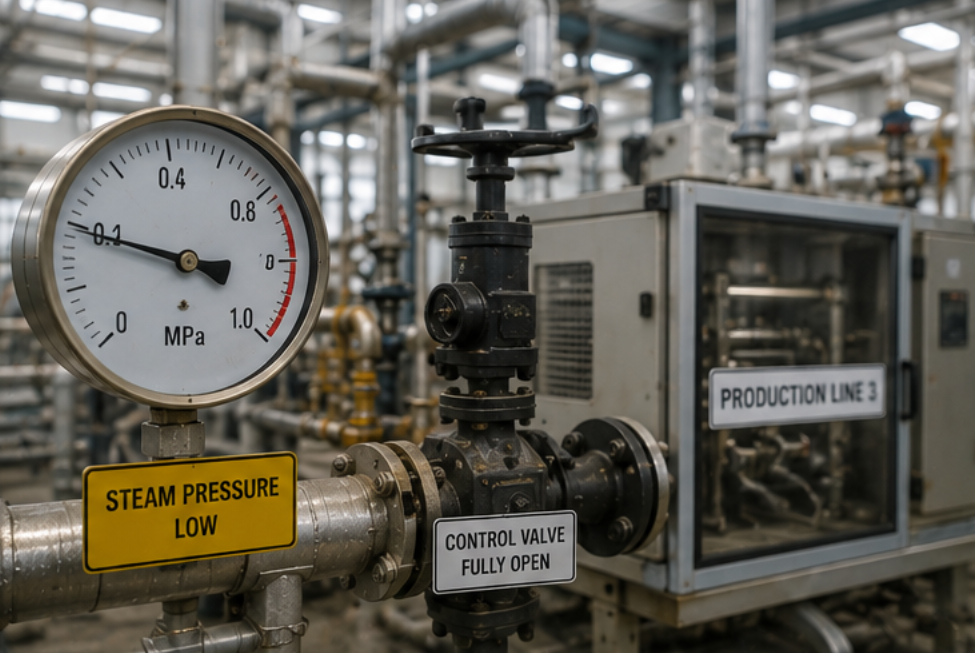
Steam pressure is stable with one production line but drops when several lines start together.
Production equipment cannot reach target temperature during startup.
Steam control valves remain fully open but pressure stays low.
Heating, drying, sterilization, or process temperature becomes slow and unstable.
Pressure drops during morning startup or peak production hours.
Operators need to start production lines one by one to avoid pressure collapse.
2. Main Causes Of Steam Pressure Drop When Lines Start Together
Steam pressure drop during simultaneous startup is usually a peak-load problem. The system may work well during normal operation, but it may fail when several production users demand steam at the same time.
Troubleshooting Table
| Possible Cause | Typical Result | What To Check |
|---|---|---|
| Peak Steam Demand Too High | Pressure drops when multiple lines start together. | Total steam consumption of all production lines during startup. |
| Pressure Reducing Valve Undersized | Outlet pressure cannot hold under high flow. | Minimum, normal, and maximum steam flow through the PRV. |
| Steam Pipe Size Too Small | Pressure loss increases sharply when flow rises. | Pipe diameter, pipe length, elbows, valves, and steam velocity. |
| Blocked Strainer | Steam flow is restricted before valve or equipment. | Strainer screen, rust, scale, dirt, and differential pressure. |
| Condensate Accumulation | Steam flow becomes unstable and pressure drops. | Steam traps, drain points, pipe slope, and low points. |
| Poor Startup Sequence | Instant steam demand rises faster than system response. | Production line startup order and control logic. |
3. Calculate Peak Steam Demand, Not Only Normal Consumption
A common design mistake is calculating steam demand only by normal production consumption. In real factory operation, startup load may be much higher than normal running load. Cold equipment, empty pipelines, heat-up demand, and several lines starting together can create a short-time steam demand surge.
If the steam pressure reducing system is selected only for normal flow, the outlet pressure may drop during startup. Therefore, minimum flow, normal flow, maximum flow, startup flow, and peak simultaneous demand should all be reviewed before selecting a pressure reducing valve or skid-mounted system.
Steam Demand Data Buyers Should Prepare
Number of production lines using steam.
Steam consumption of each line during startup and normal operation.
Required pressure and temperature for each production line.
Whether several lines may start at the same time.
Startup time, heat-up time, and peak production schedule.
Distance from boiler room or steam skid to each production line.
4. Check Pressure At Different Points During Startup
One pressure gauge in the boiler room is not enough to diagnose this problem. Pressure should be checked at the boiler outlet, steam header, pressure reducing skid inlet, skid outlet, main distribution line, branch line, and production equipment inlet.
If pressure is stable before the skid but low after the skid, the PRV or skid capacity should be reviewed. If pressure is stable after the skid but low near production equipment, the downstream pipeline may be too small, too long, blocked, or poorly drained.
Pressure Recording Checklist
Boiler outlet pressure during production startup.
Steam header pressure before pressure reduction.
Steam pressure reducing skid inlet and outlet pressure.
Pressure at main distribution pipe and branch lines.
Pressure at each production equipment inlet.
Pressure trend when one line starts and when multiple lines start together.
5. How A Steam Pressure Reducing Skid Helps Stabilize Production Supply
A steam pressure reducing skid is designed to reduce and stabilize steam pressure before steam enters downstream production systems. A complete skid may include strainer, pressure reducing control valve, actuator, positioner, safety valve, pressure gauges, pressure transmitters, drain valves, bypass line, control cabinet, piping, supports, and skid-mounted frame.
For factories with several production lines, the skid should be selected according to total peak steam demand, load changes, startup sequence, pressure control accuracy, drainage requirements, and downstream equipment pressure. If temperature also needs to be controlled, a PRDS system with desuperheating may be required.
Practical Tip
If steam pressure drops only when multiple production lines start together, do not only increase boiler pressure. First review peak steam demand, PRV capacity, pipe pressure loss, strainer blockage, condensate drainage, and startup sequence.
Engineering Review Checklist
Confirm total steam demand when all production lines start together.
Review pressure reducing valve capacity under peak flow.
Check strainer blockage and pressure drop before the PRV.
Calculate pipe pressure loss to far-end production equipment.
Inspect steam traps, drain points, and condensate return condition.
Review whether startup sequence should be staggered.
Check whether downstream equipment needs both pressure and temperature control.
Consider a custom steam pressure reducing skid or PRDS system for stable operation.
Conclusion
Steam pressure may drop when production lines start together because total steam demand rises suddenly. Common causes include insufficient peak capacity, undersized pressure reducing valve, small steam pipe size, blocked strainers, condensate accumulation, poor drainage, and poor startup sequence.
A properly designed steam pressure reducing skid can help stabilize outlet pressure, protect production equipment, reduce pressure drop during startup, improve process heating performance, and support safer long-term factory operation.
FAQ
Why does steam pressure drop when production lines start together?
Because several production lines increase steam demand at the same time. If the boiler, PRV, skid, or pipeline cannot meet peak flow, pressure will drop.
Can an undersized pressure reducing valve cause pressure drop?
Yes. If the PRV is not sized for maximum steam flow, outlet pressure may become unstable during peak production demand.
Should production lines be started one by one?
Staggered startup can reduce instant peak demand, but the steam supply system should still be reviewed to confirm whether it can support full production capacity.
When is a steam pressure reducing skid needed?
A skid-mounted system is useful when the plant needs stable steam pressure, integrated valves and instruments, better drainage, factory testing, and easier installation.
Need Help With Steam Pressure Drop During Production Startup?
Send us your boiler pressure, production line steam demand, pipe layout, pressure drop symptoms, existing PRV data, and drainage condition. Our engineering team can help review the working conditions and provide a suitable steam pressure reducing skid solution.
Get Quote Contact UsRelated Product Paths For This Project
Why Steam Pressure Drops When Production Lines Start Together should connect the troubleshooting topic with Shenqi's real equipment categories. For gas pressure, steam pressure reducing, PRDS, skid module, valve, and prefabricated pipeline projects, buyers usually need to compare the fault symptom with the full system scope before requesting a quotation. The related pages below help the engineering team move from diagnosis to product selection without leaving the site.
- Gas Pressure Regulating Skid
- Temperature and Pressure Reducing Device
- Prefabricated Pipeline
- Skid Module
- Pressure Vessel
- Accessories
- Valves
- Contact Shenqi Machinery
For a project specific review, prepare inlet pressure, outlet pressure, flow range, medium, temperature, control accuracy, valve configuration, instrument requirement, site layout, and commissioning schedule before contacting Shenqi Machinery.